
Clients & Ventures

Product/systems design that turns AI tech into business results






















Contact Us
Contact form or information will go here.
Project Detail

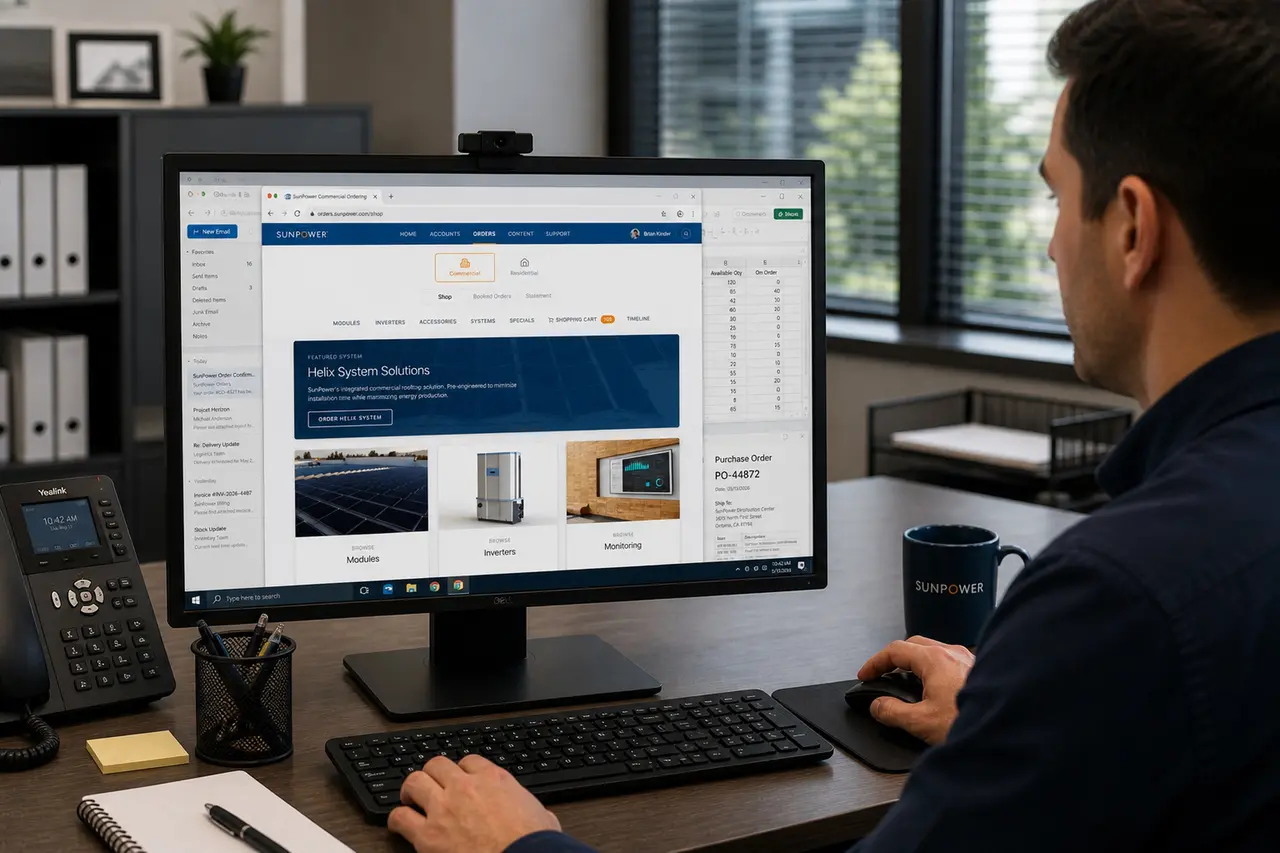

Commercial Ordering System
Summary

A redesigned commercial ordering workflow that turned complex solar BOMs into faster, reusable dealer orders.
Commercial dealers were stuck rebuilding complex solar orders manually, creating delays, errors, and frustration across the ordering process.
I redesigned the experience around reusable BOMs, guided product selection, checkout clarity, and order tracking, helping dealers move from painful manual work to a faster commercial ordering flow.
Outcome
A dealer workflow that felt dramatically more usable
The redesigned Commercial Ordering System gave dealers a clearer, faster way to build and submit commercial solar orders. It reduced the burden of assembling complex BOMs manually and made the ordering process feel more reliable.
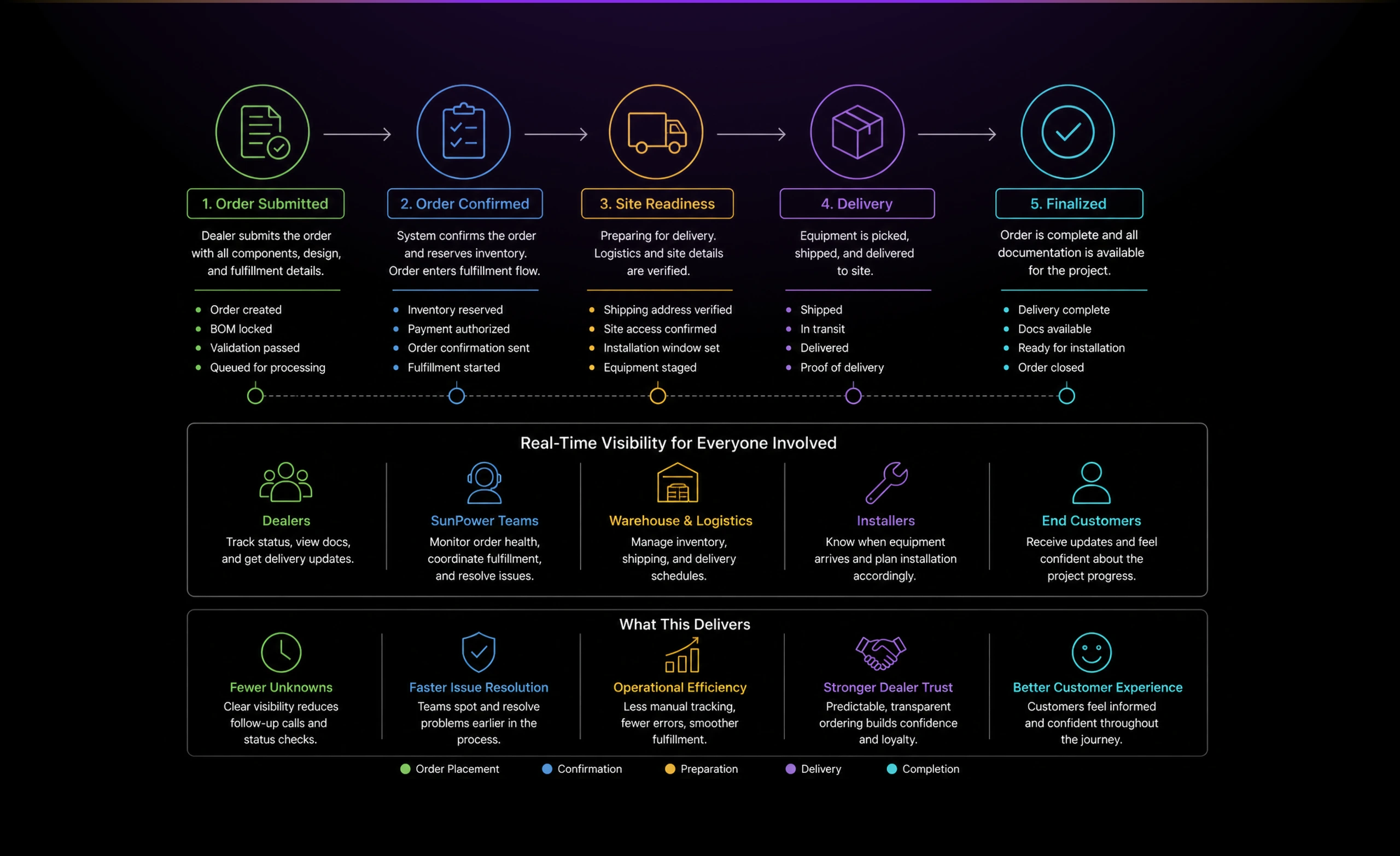
The work also gave SunPower a stronger commercial platform pattern: product categories, cart logic, opportunity context, design selection, checkout, and timeline tracking working together as one connected experience.
Estimated impact based on project context:
- Faster commercial order creation
- Fewer manual ordering mistakes
- Clearer BOM assembly
- Better dealer confidence
- Stronger visibility after submission
- Reduced internal correction work
The project became one of the clearest examples of how product design could remove operational pain, not just improve screens.
The Problem
A critical workflow buried inside a painful ordering experience.
Commercial solar ordering was one of the most important workflows in SunPower’s dealer ecosystem. Dealers needed to assemble modules, inverters, accessories, monitoring equipment, and system packages into complete commercial orders.
The old experience made that work harder than it needed to be. Dealers had to navigate dense product lists, manually rebuild repeated configurations, and rely on error-prone steps to submit complex commercial orders.
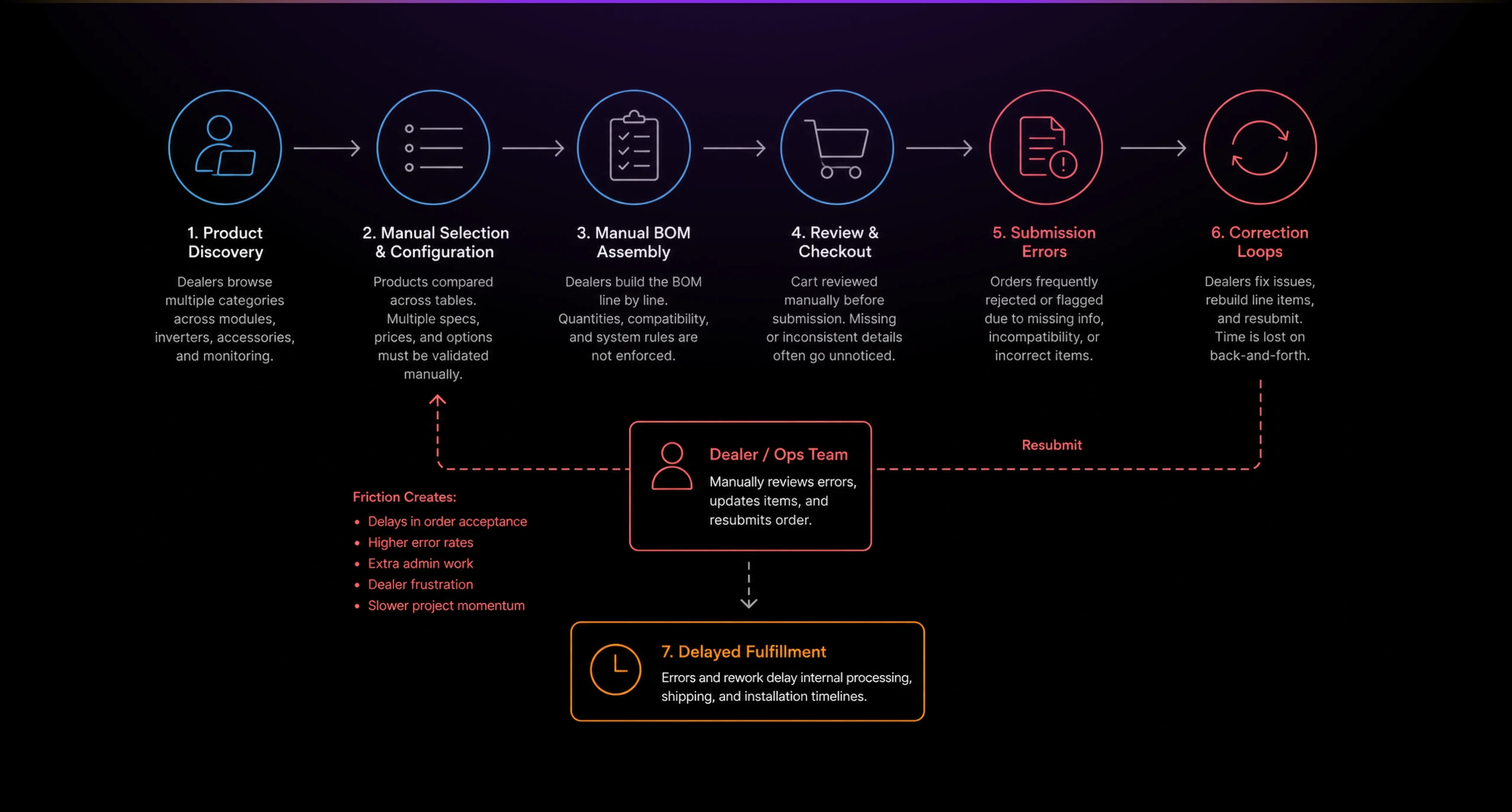
The business problem was not just usability. Ordering errors affected fulfillment, back-office correction cycles, dealer confidence, and project momentum.
SunPower needed a faster ordering experience that helped dealers place accurate commercial orders without depending on internal teams to clean up avoidable mistakes.
Solution
Turning ordering into a guided commercial workflow.
I redesigned the ordering experience around the way commercial dealers actually thought about solar systems: categories, system components, reusable configurations, and operational status.
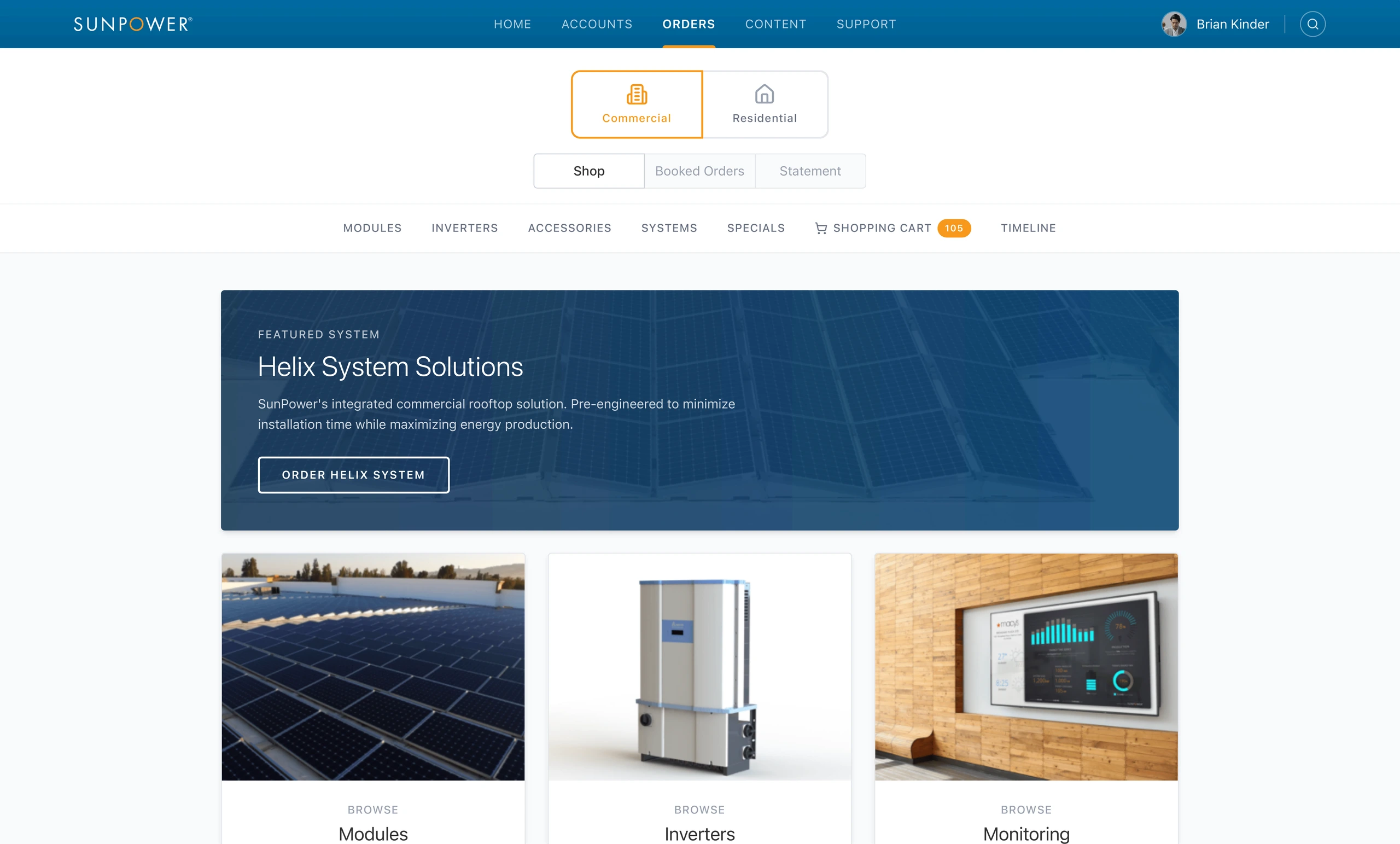
Instead of treating the interface like a static product catalog, the new experience behaved more like a guided ordering workspace.
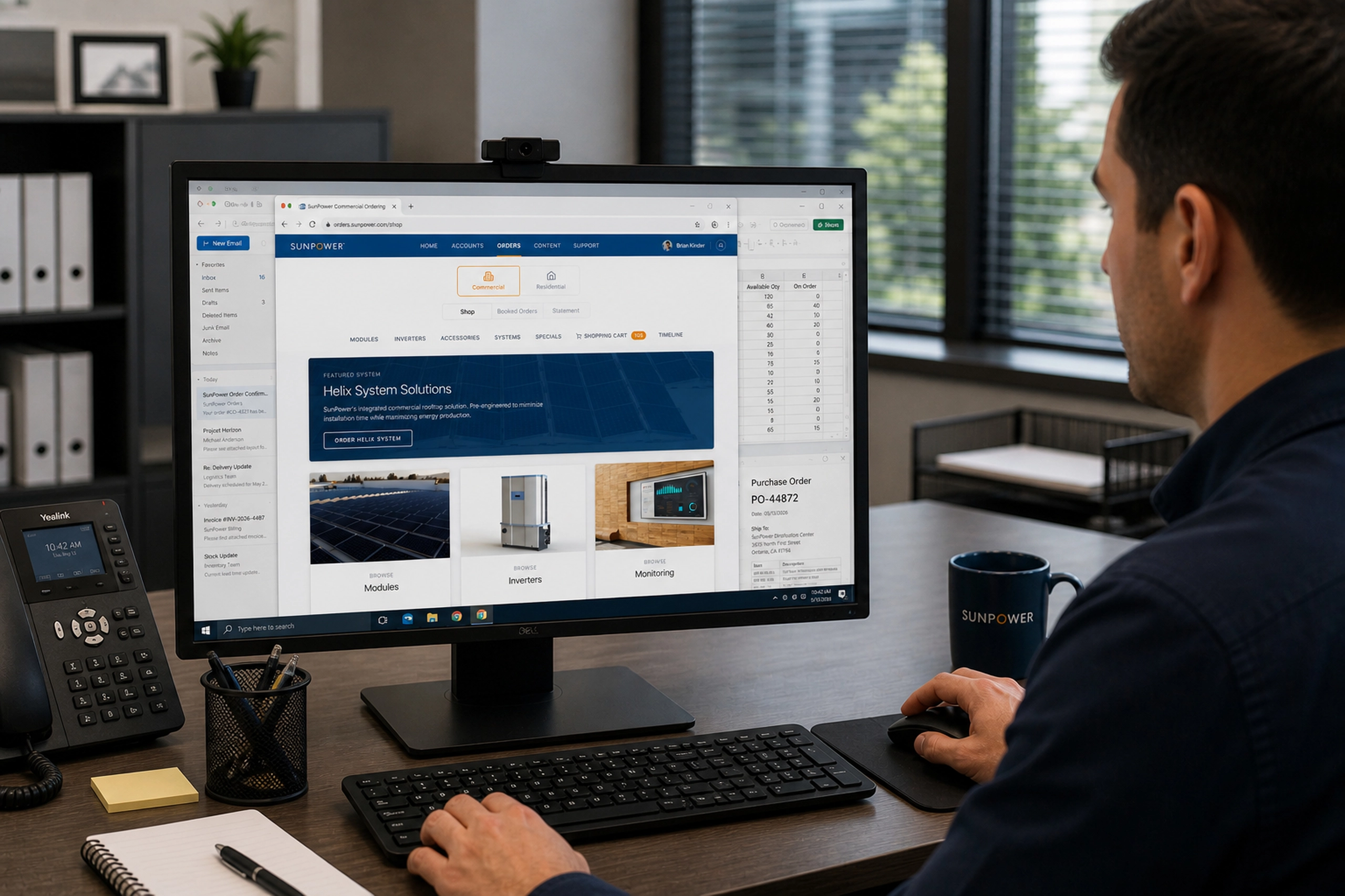
Dealers could browse product categories, add quantities, review cart contents, and move toward checkout with a clearer sense of what they were building.
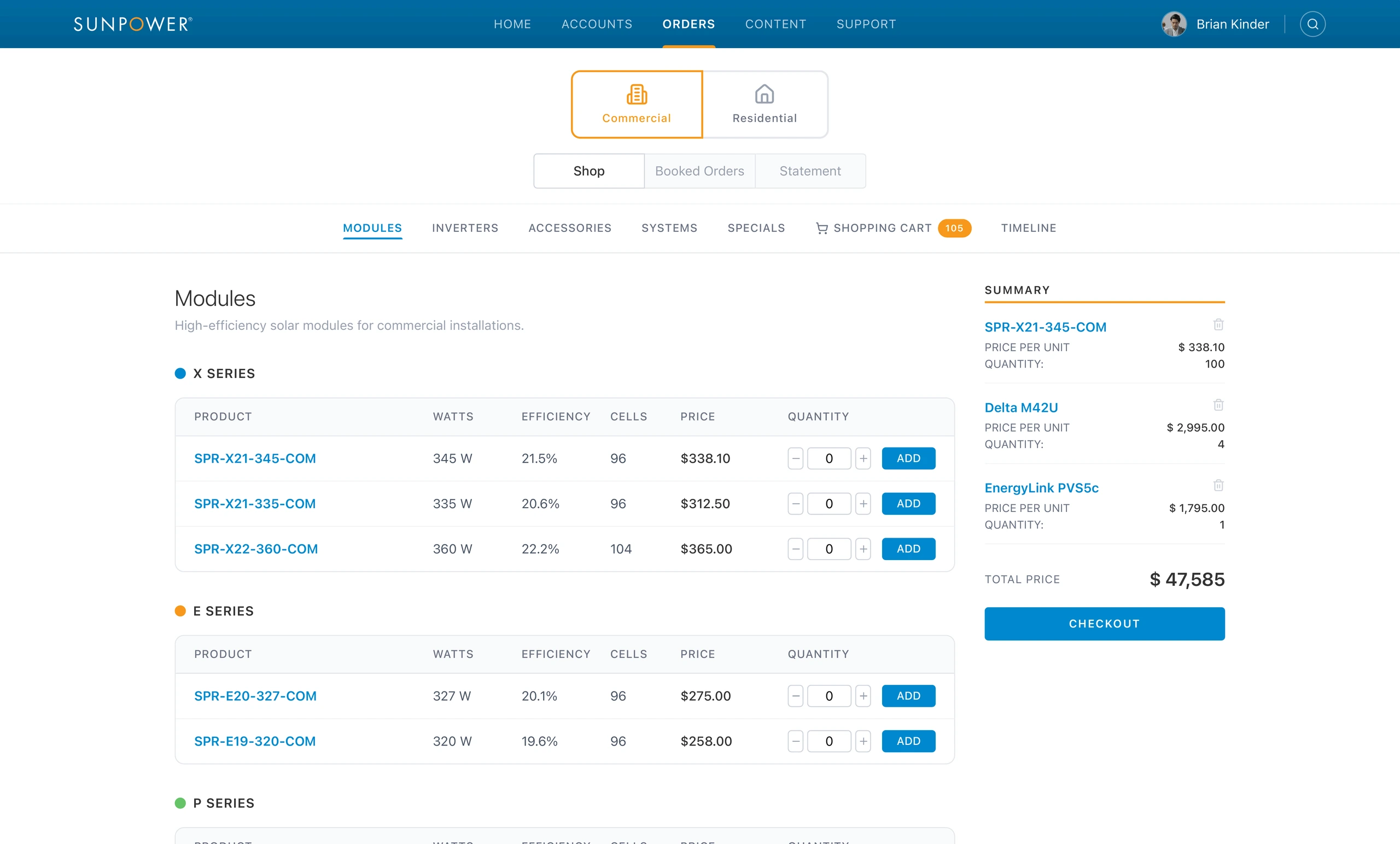
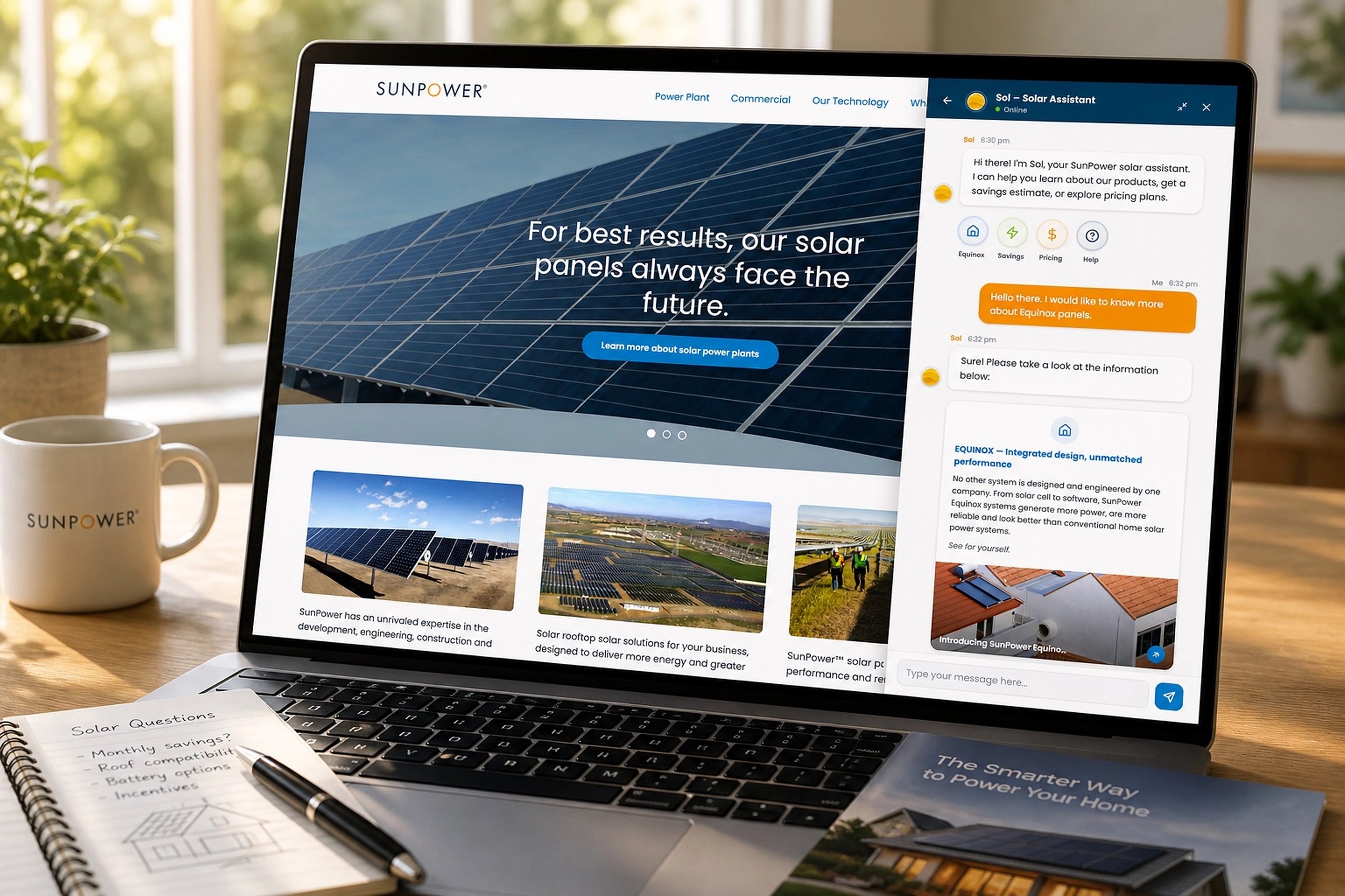
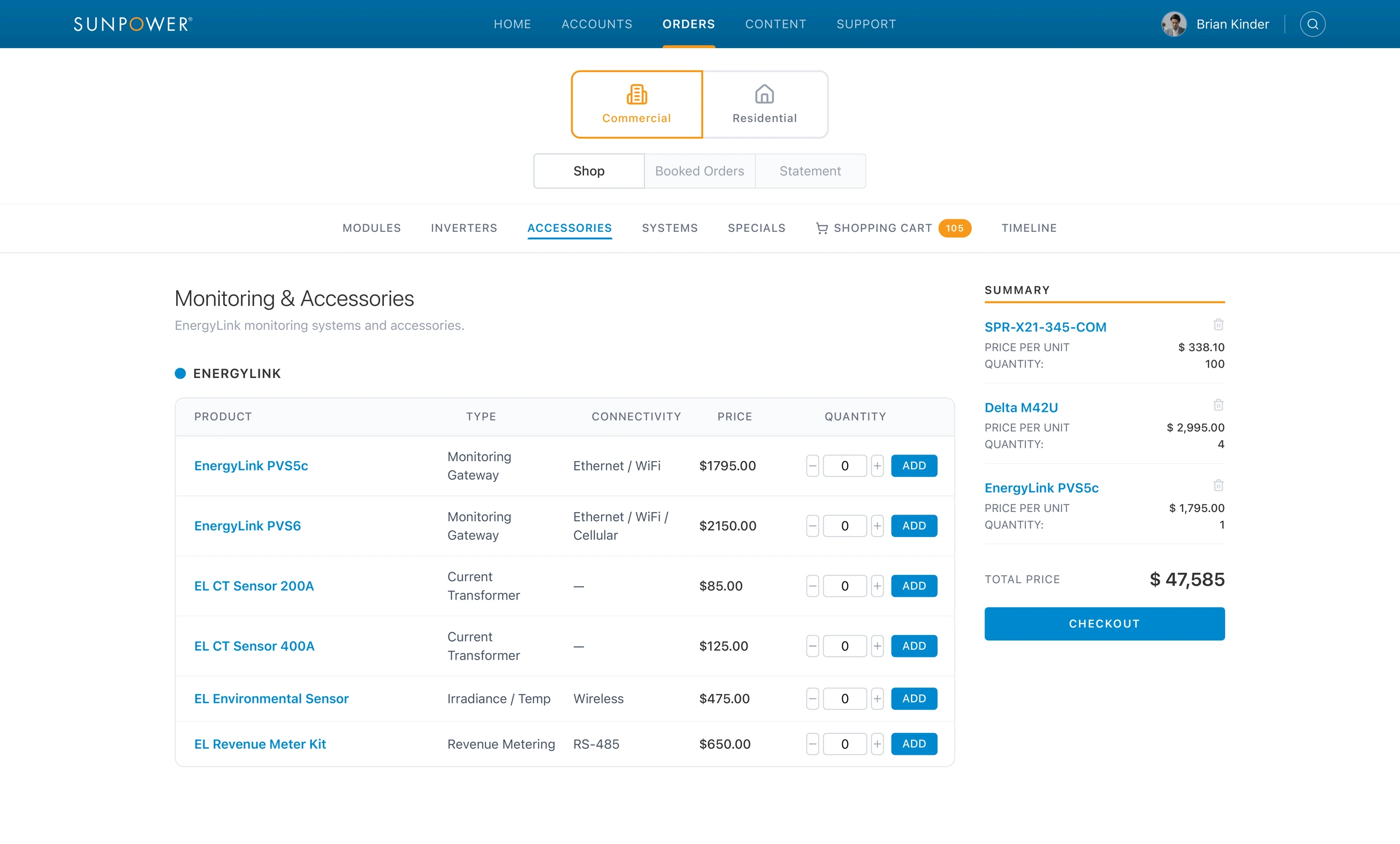
The interface organized complex solar components into recognizable commercial categories: modules, inverters, accessories, systems, specials, shopping cart, and timeline.
That structure reduced cognitive load. Dealers no longer had to hold the entire order in their heads while jumping through disconnected screens.
Designing for reuse, accuracy, and operational confidence
The strongest improvement was the shift from one-off order entry to reusable commercial ordering logic.
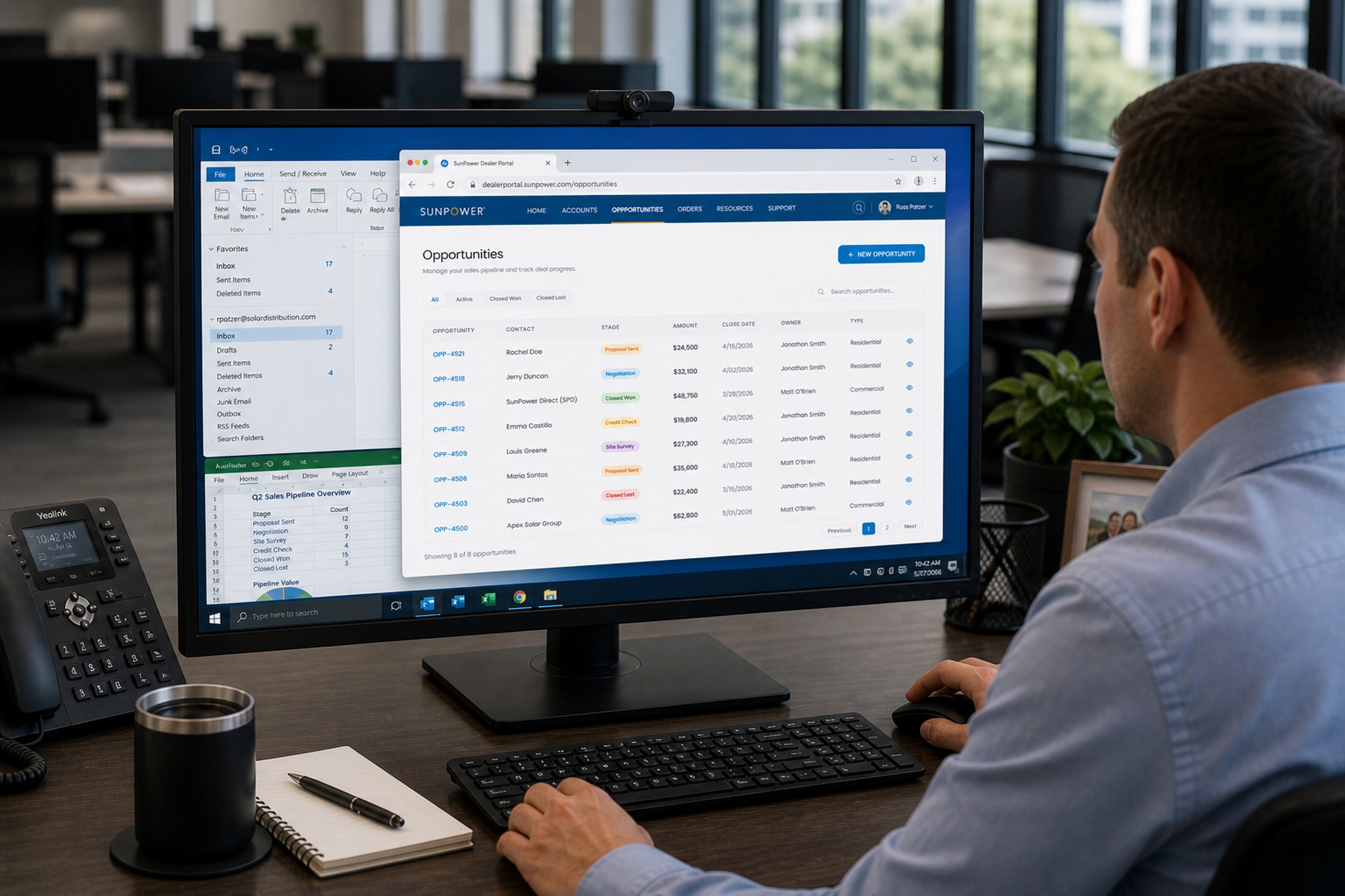
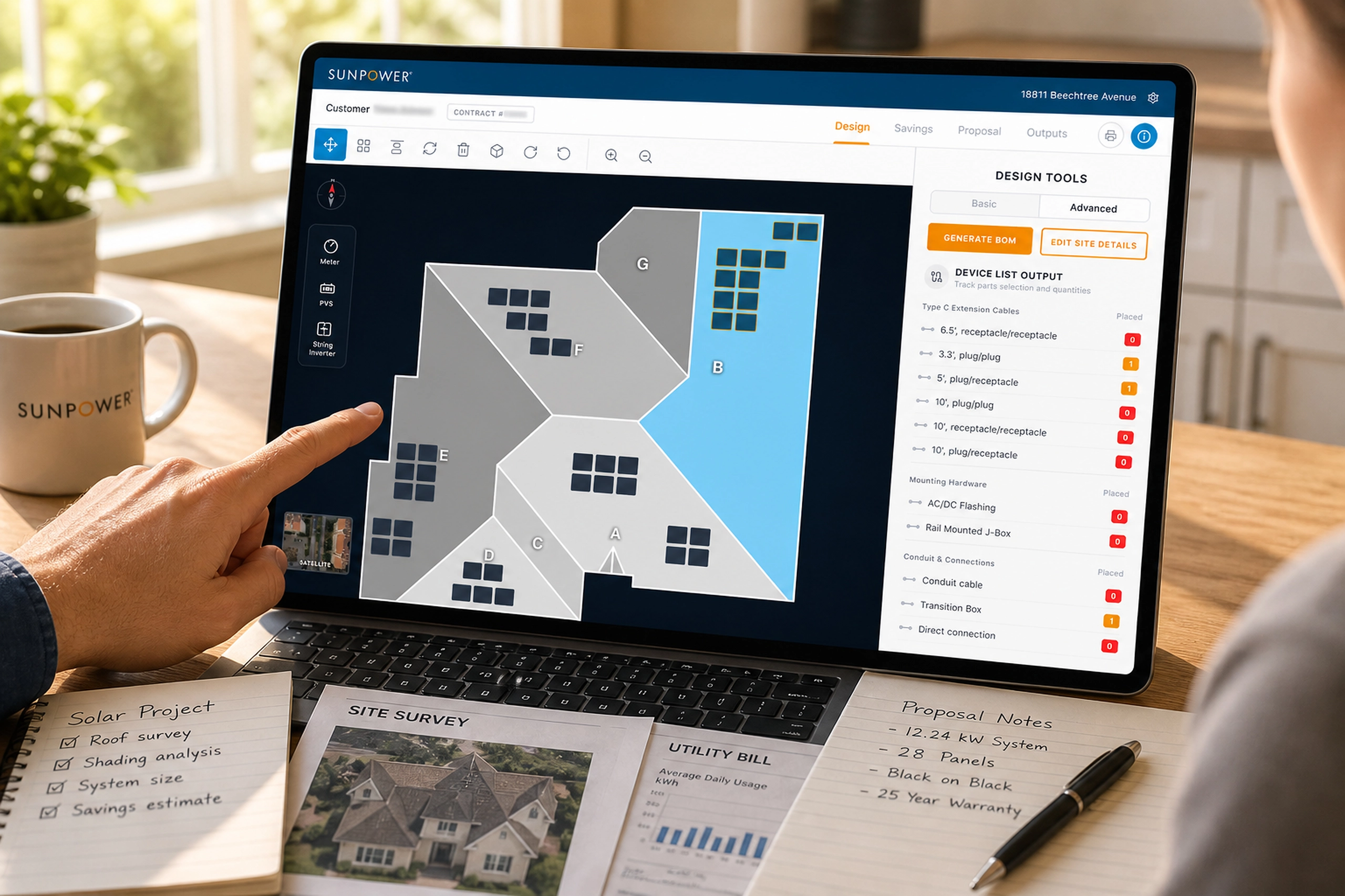
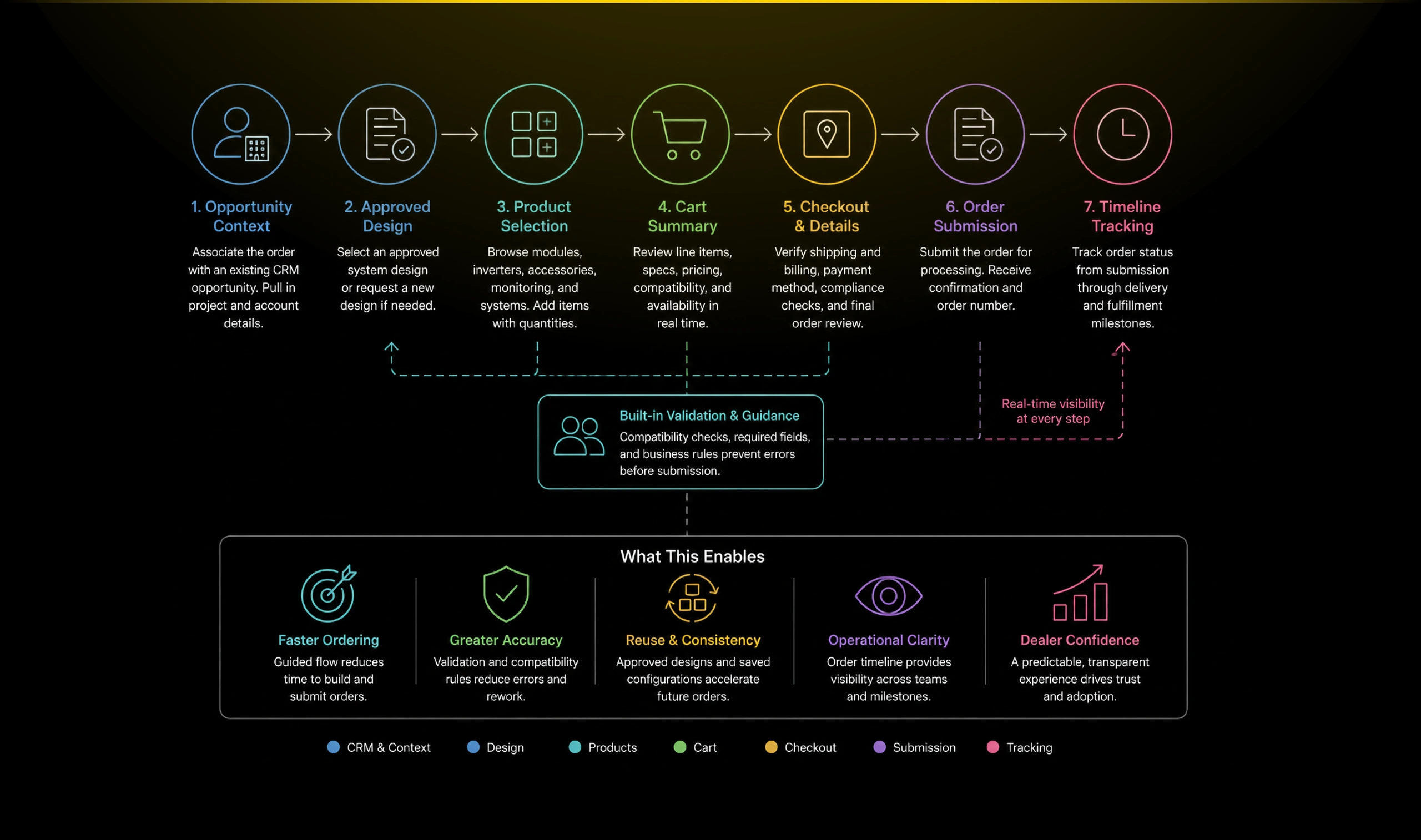
A dealer could associate an order with an existing sales opportunity, pick an approved system design, verify addresses, and move through a structured order submission flow.
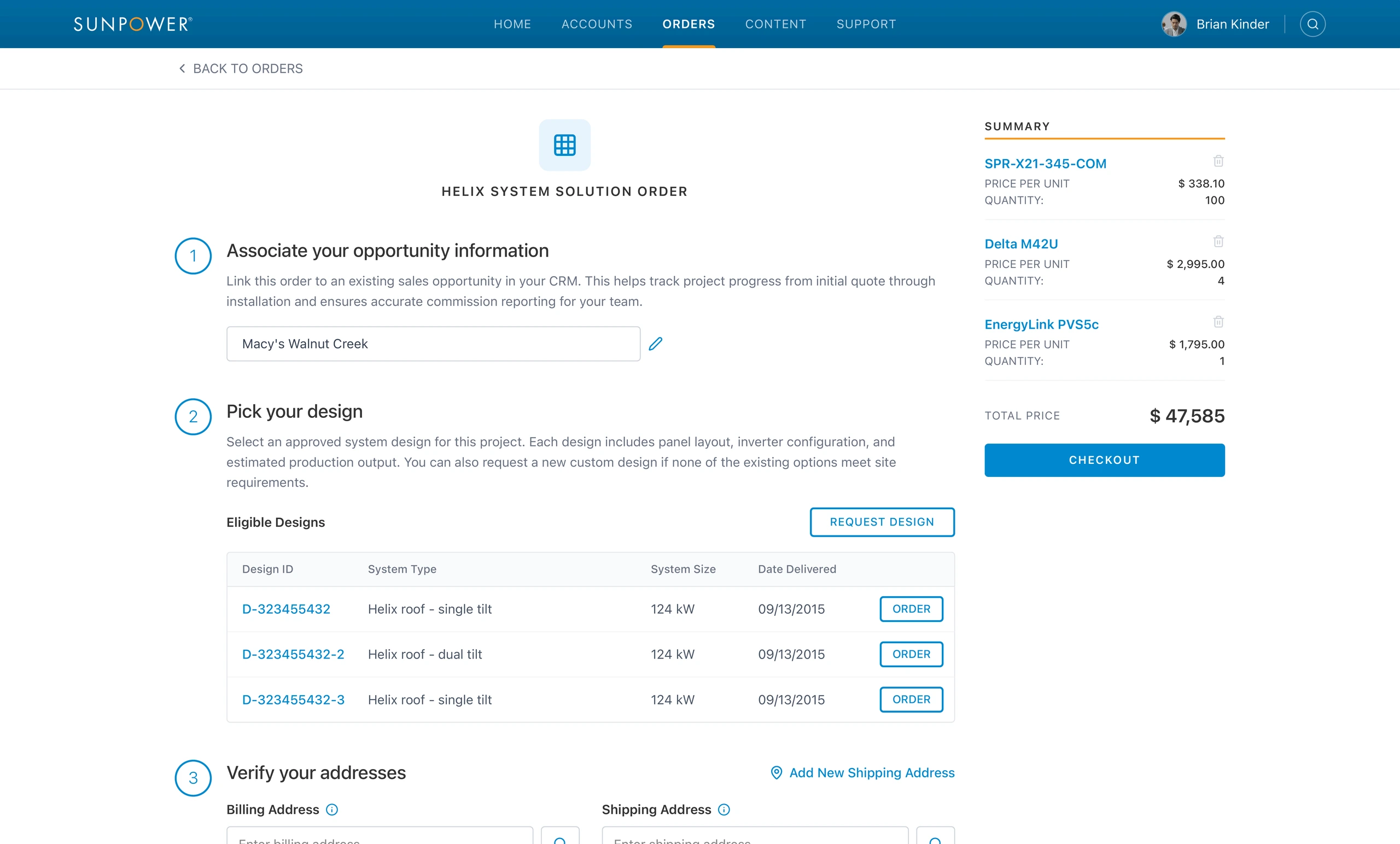
This mattered because commercial solar orders are not simple purchases. They depend on project context, system design, shipping details, billing information, and downstream fulfillment coordination.
The new flow made those dependencies visible. It helped dealers understand what needed to happen before checkout, what information was missing, and how the order connected to a real commercial project.
Making order status visible after submission
The system also needed to support what happened after checkout.
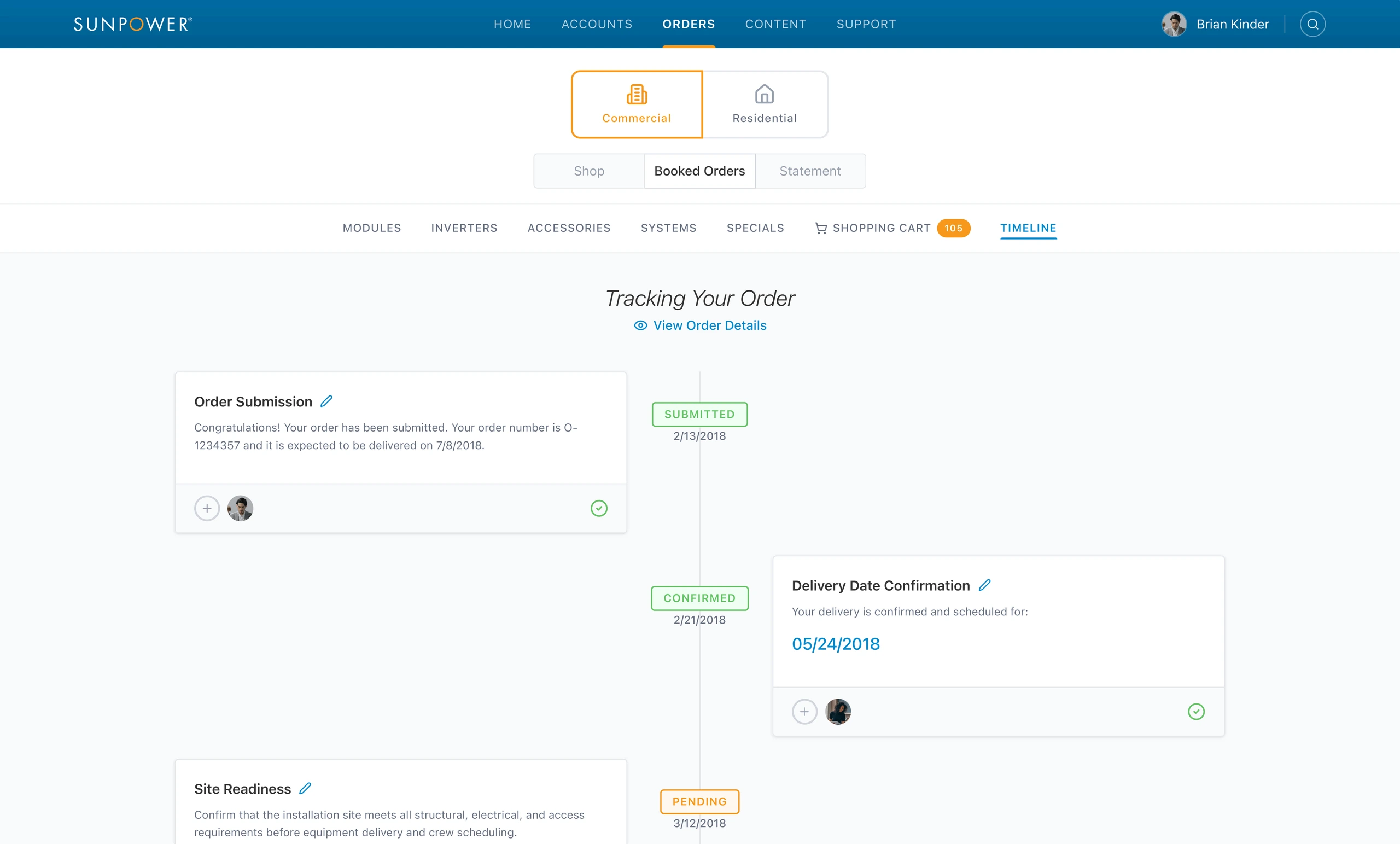
Dealers and internal teams needed visibility into submitted orders, delivery confirmation, site readiness, pending steps, and order history. The timeline view transformed ordering from a single transaction into an operational tracking experience.
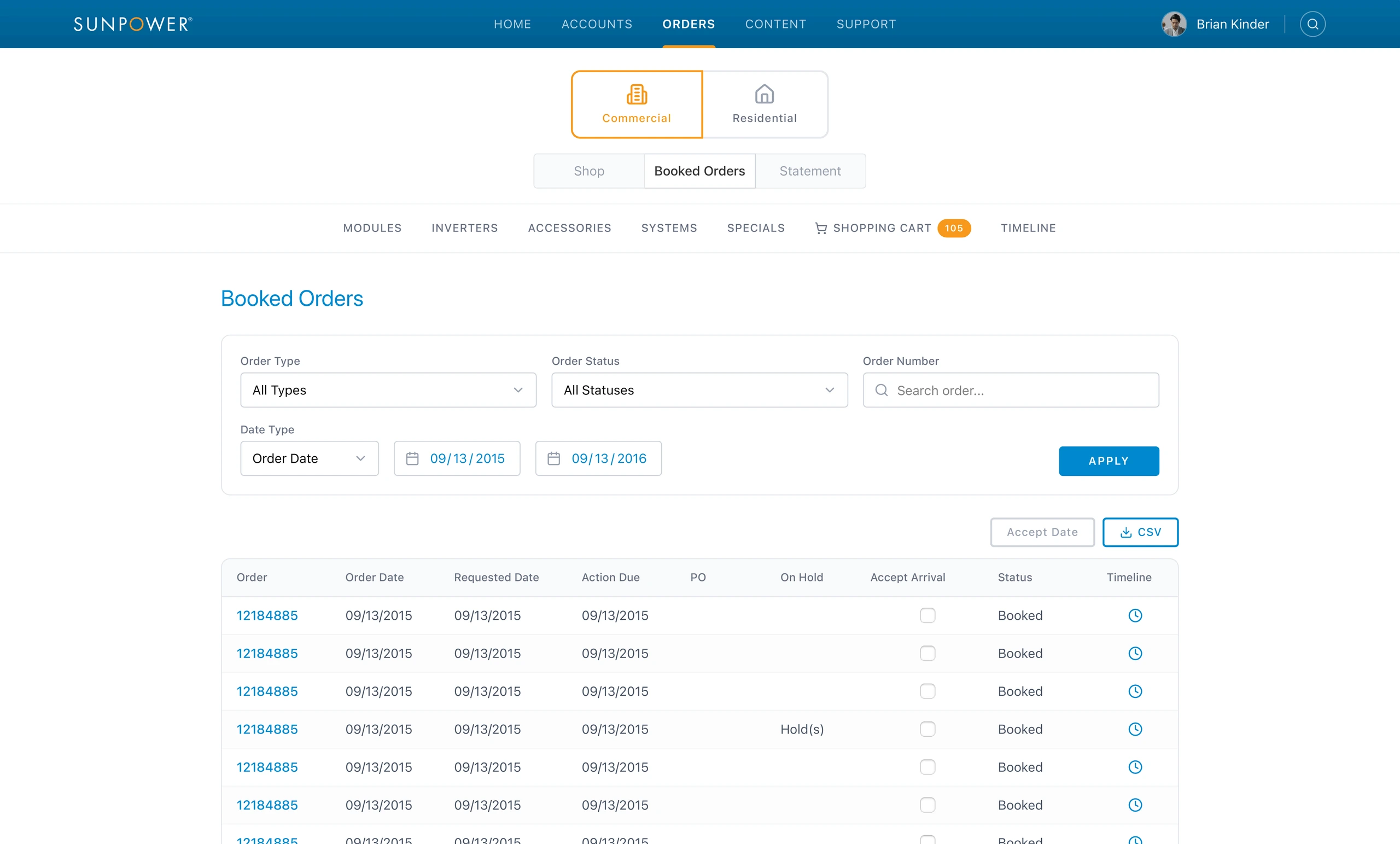
The booked orders view gave teams a searchable, filterable way to manage order status, dates, holds, CSV export, and timeline access.
Related Projects
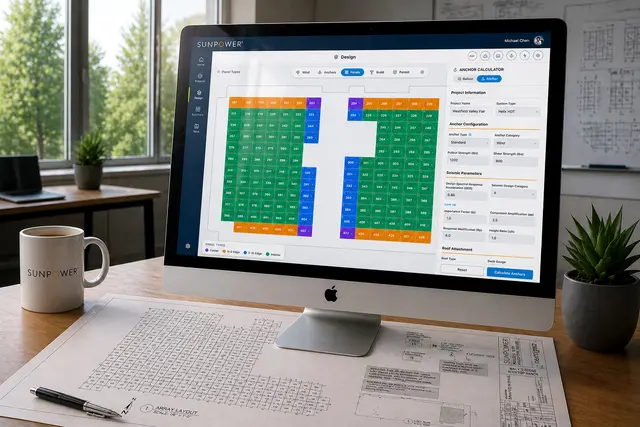
Helix Calculator
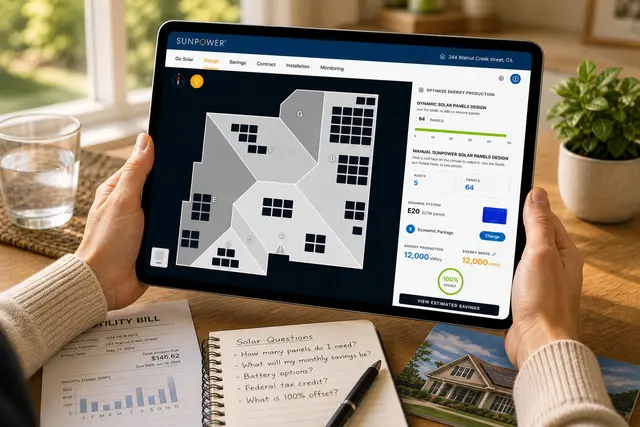
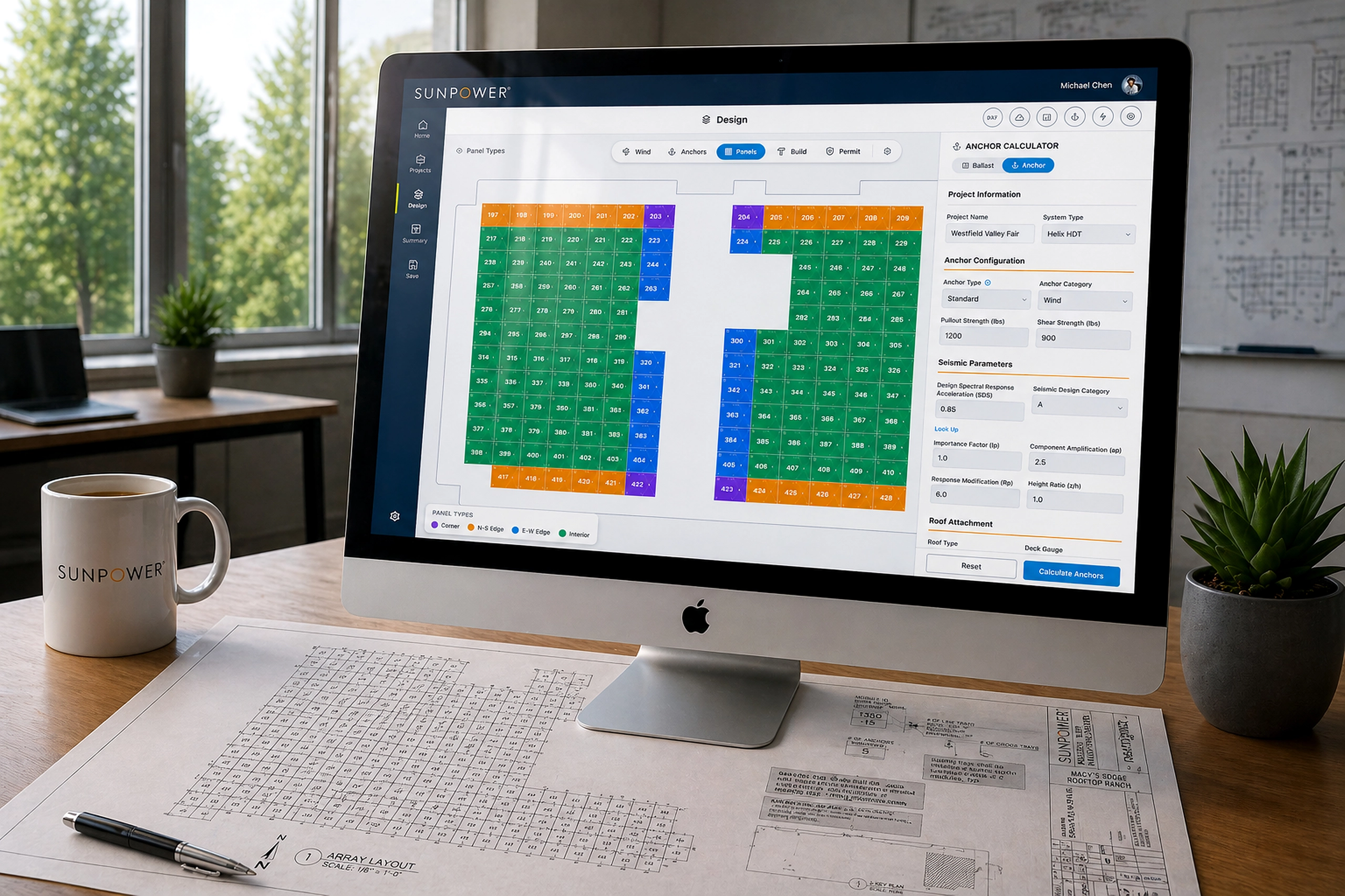
A CAD-like commercial solar design tool that helped dealers create accurate rooftop layouts in mi...
Energy & Climate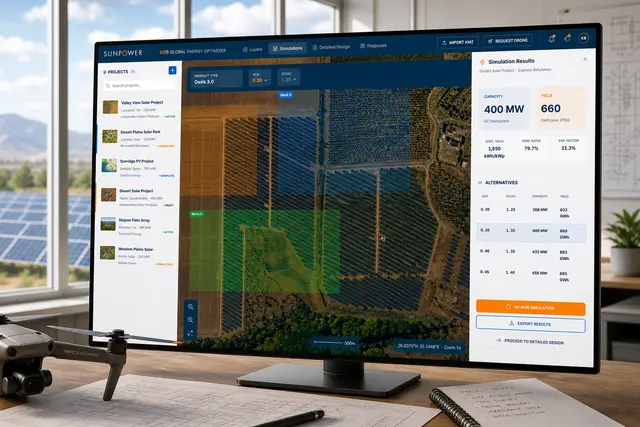
GEO – Global Energy Optimizer
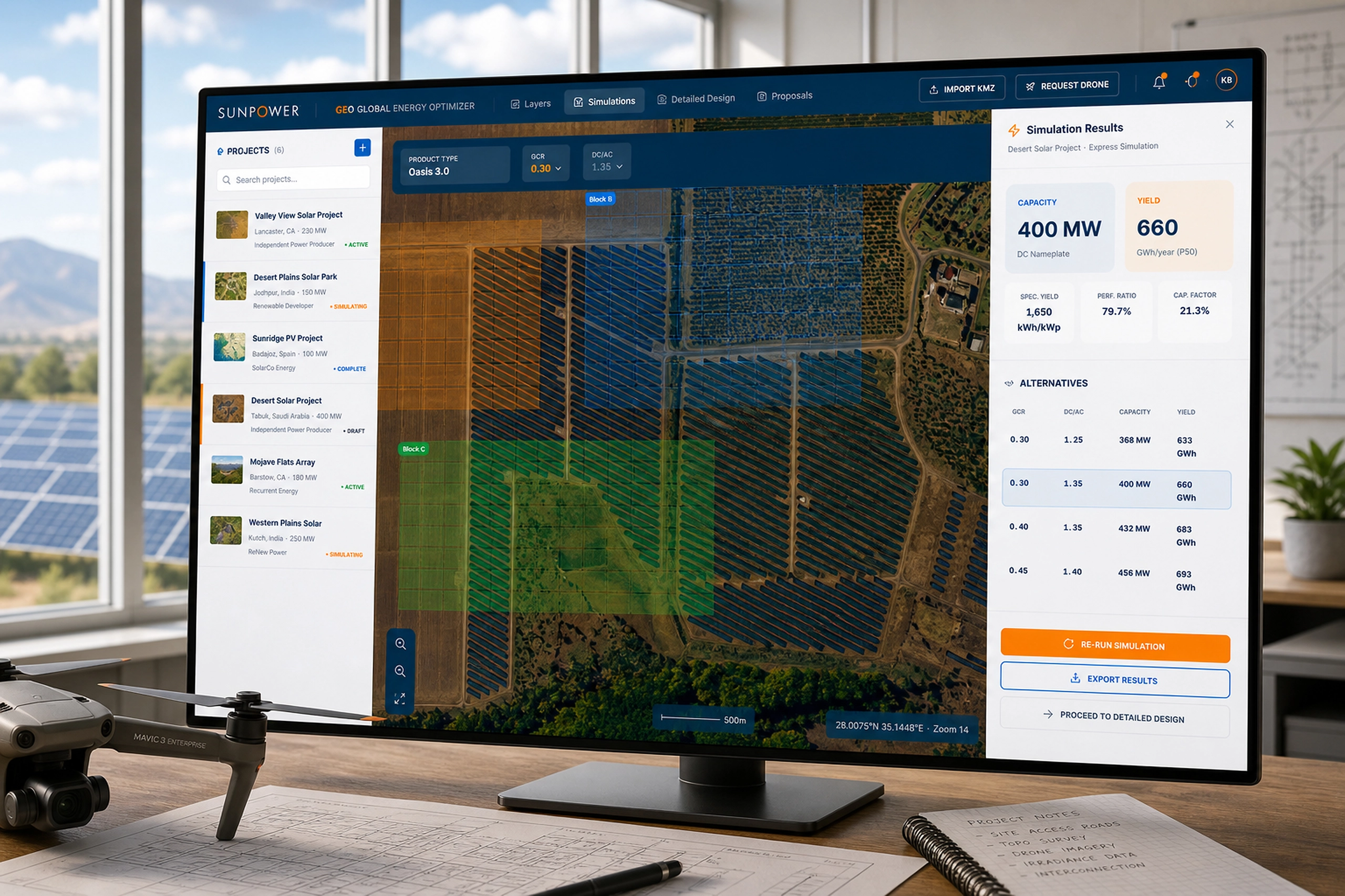
A geospatial solar planning platform for defining sites, simulating layouts, optimizing system pa...
Energy & Climate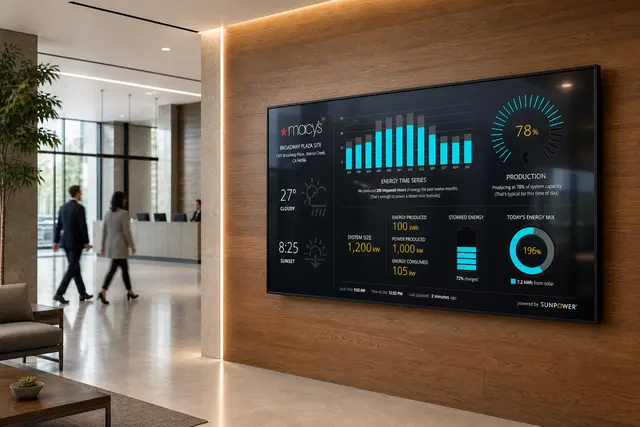
Energy Monitoring Kiosk
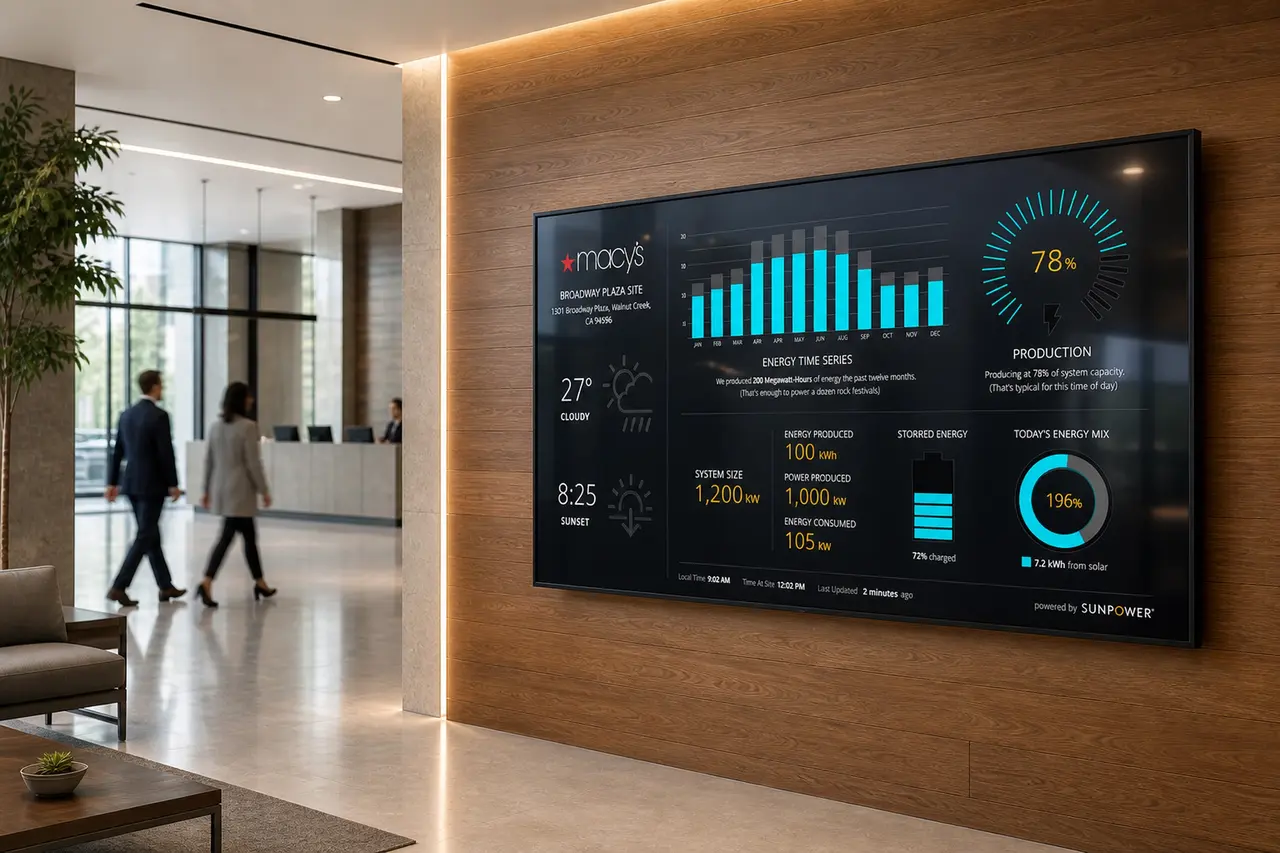
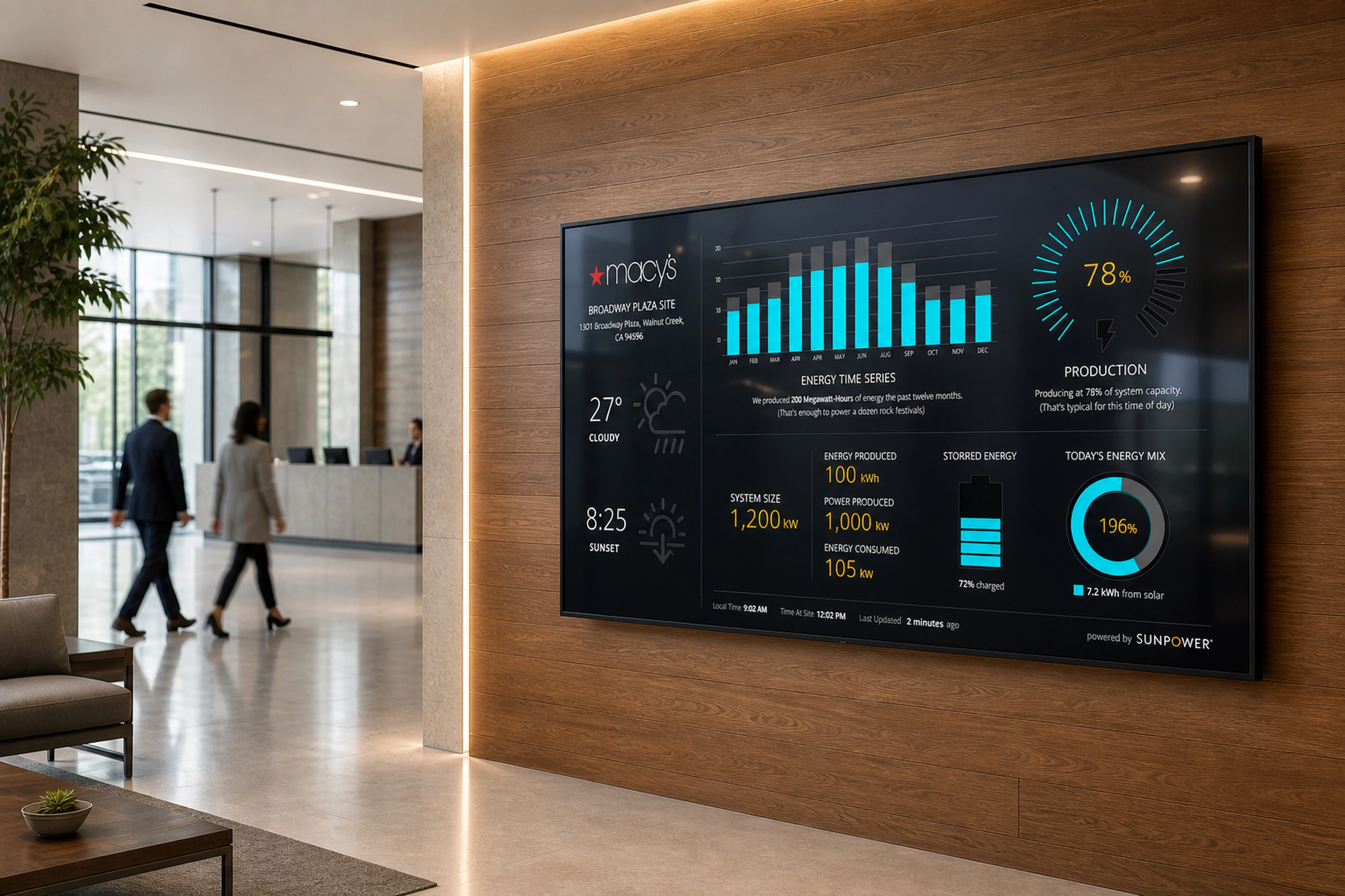
A lobby-scale energy dashboard that helped commercial clients visualize solar production, system ...
Energy & Climate