
Clients & Ventures

Product/systems design that turns AI tech into business results























































Contact Us
Contact form or information will go here.
Project Detail


Exchange Bidding System
Summary

An account management system that clarified user roles, carrier access, and permissions across an insurance bidding platform.
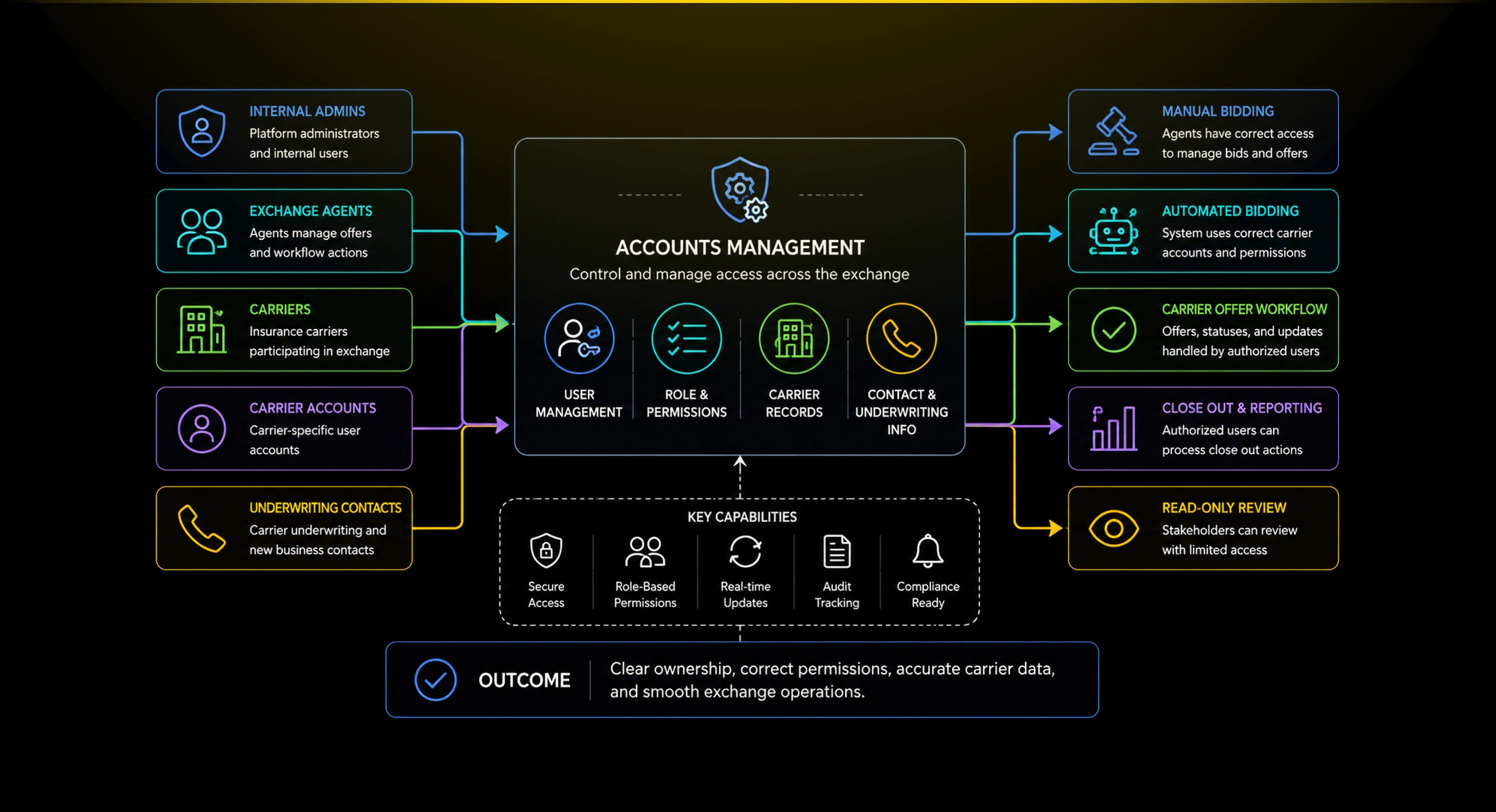
The Exchange Bidding System needed more than quote comparison. It also needed a reliable way to manage the people and organizations participating in the exchange: internal admins, exchange agents, carriers, and carrier-specific accounts.
I designed the Accounts Management tool as the administrative foundation for the exchange. It gave Fidelity Life teams a clear way to manage user permissions, carrier records, contact information, underwriting contacts, and role-specific access across manual and automated bidding workflows.
Outcome
Better operational control across the exchange ecosystem.
The Accounts Management tool created a clearer foundation for the Exchange Bidding System. It helped internal teams manage who could access the system, what agents could do, and how carrier information was maintained.
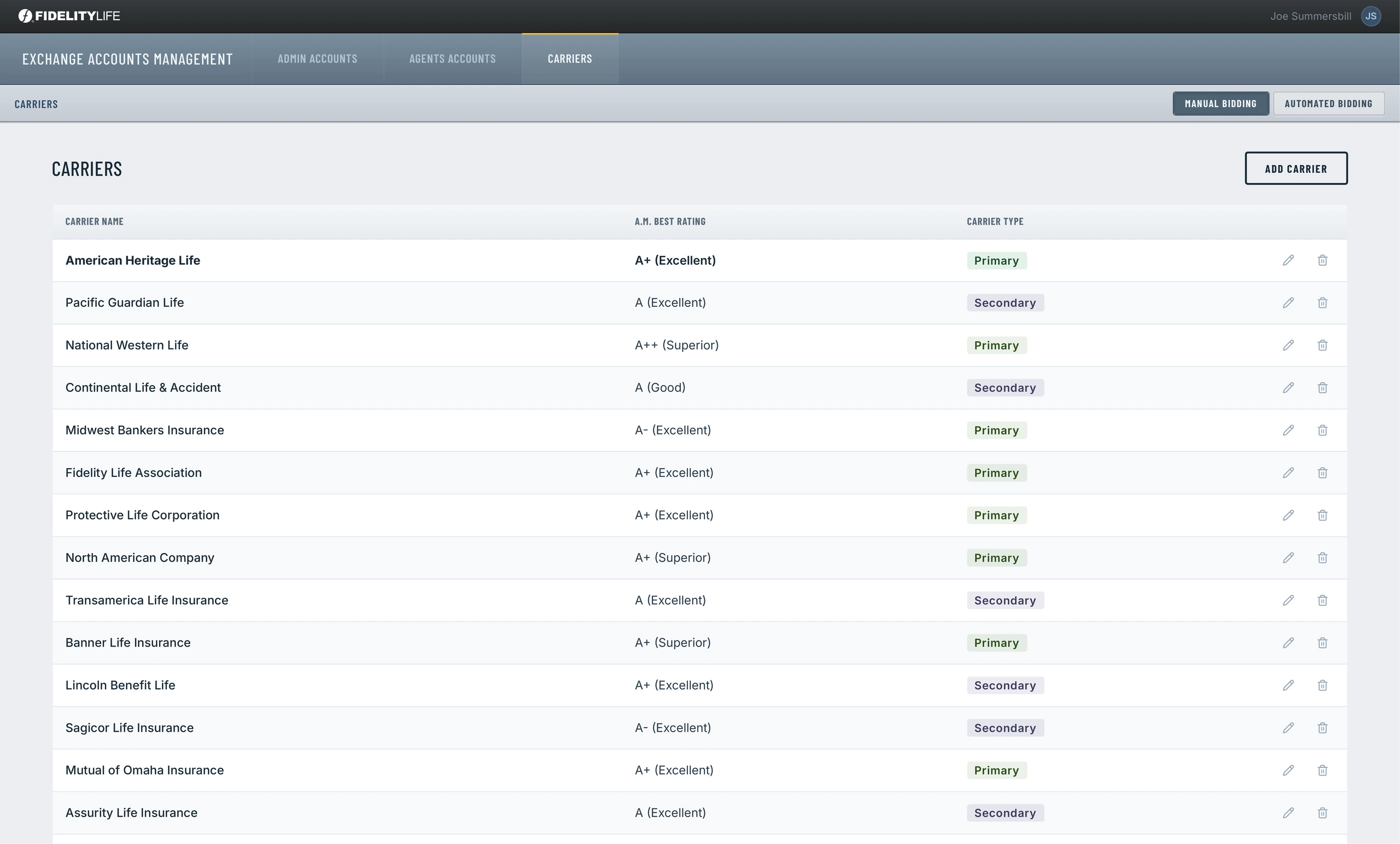
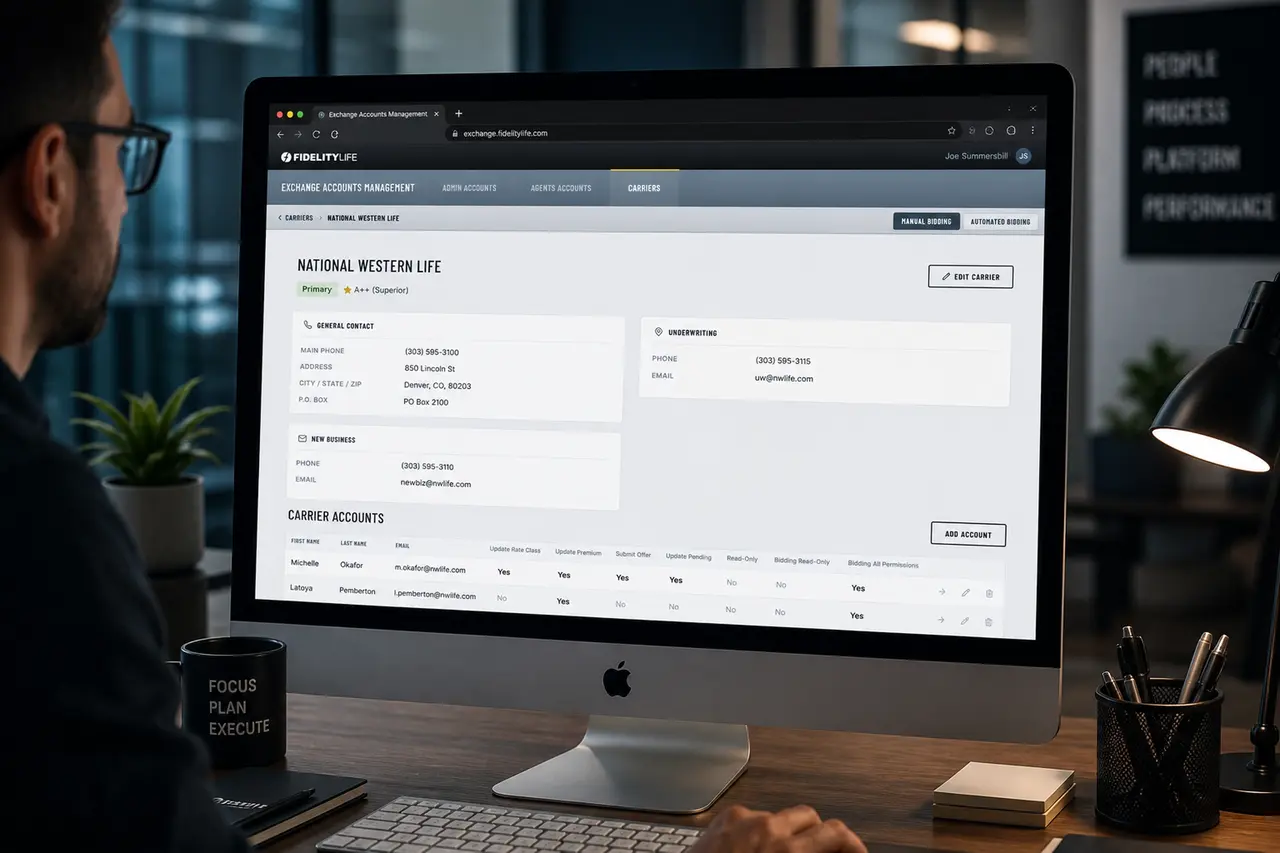
Carrier management was especially important because the exchange depended on accurate carrier data. The table made it easy to scan carrier names, A.M. Best ratings, and whether a carrier was primary or secondary.
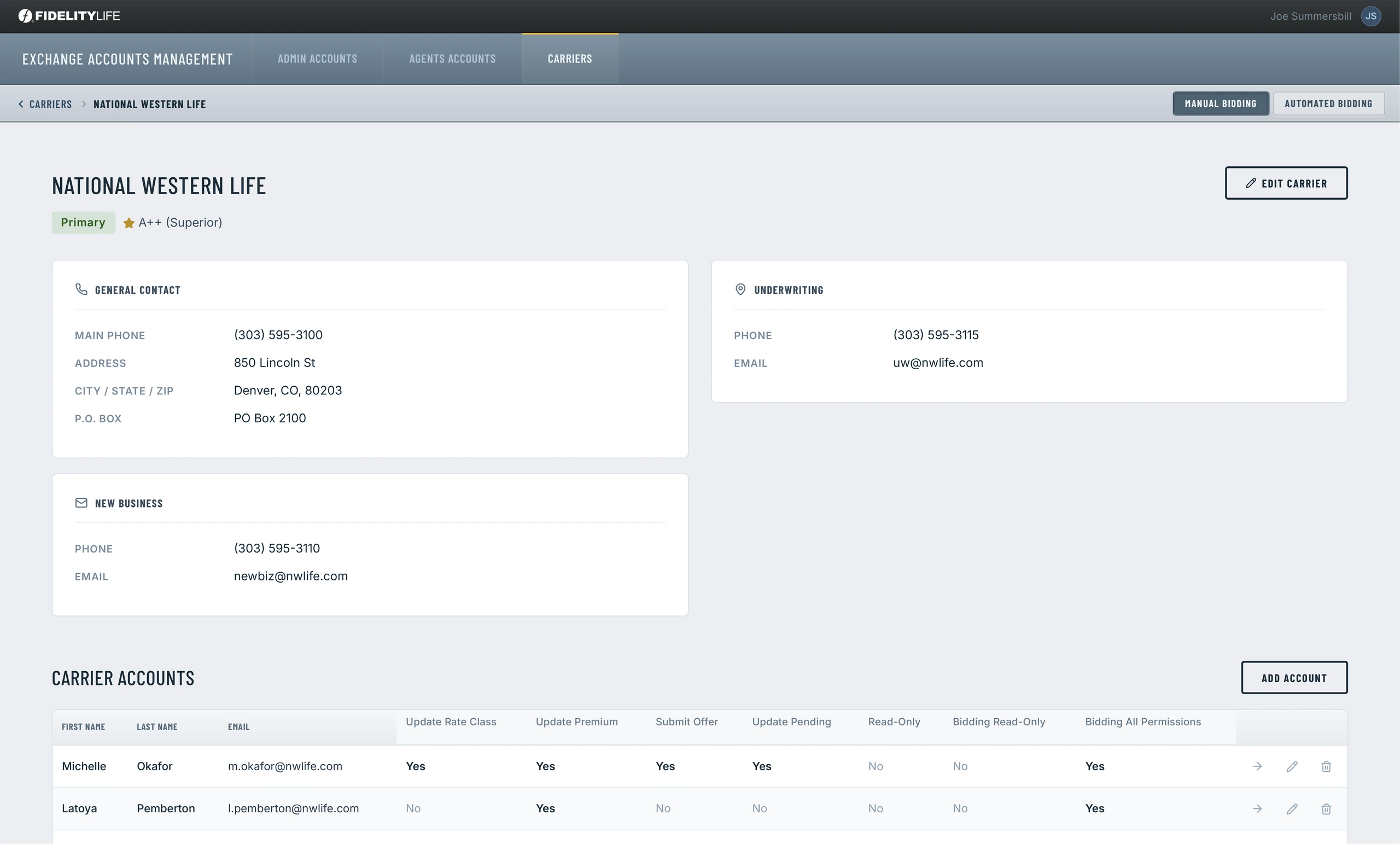
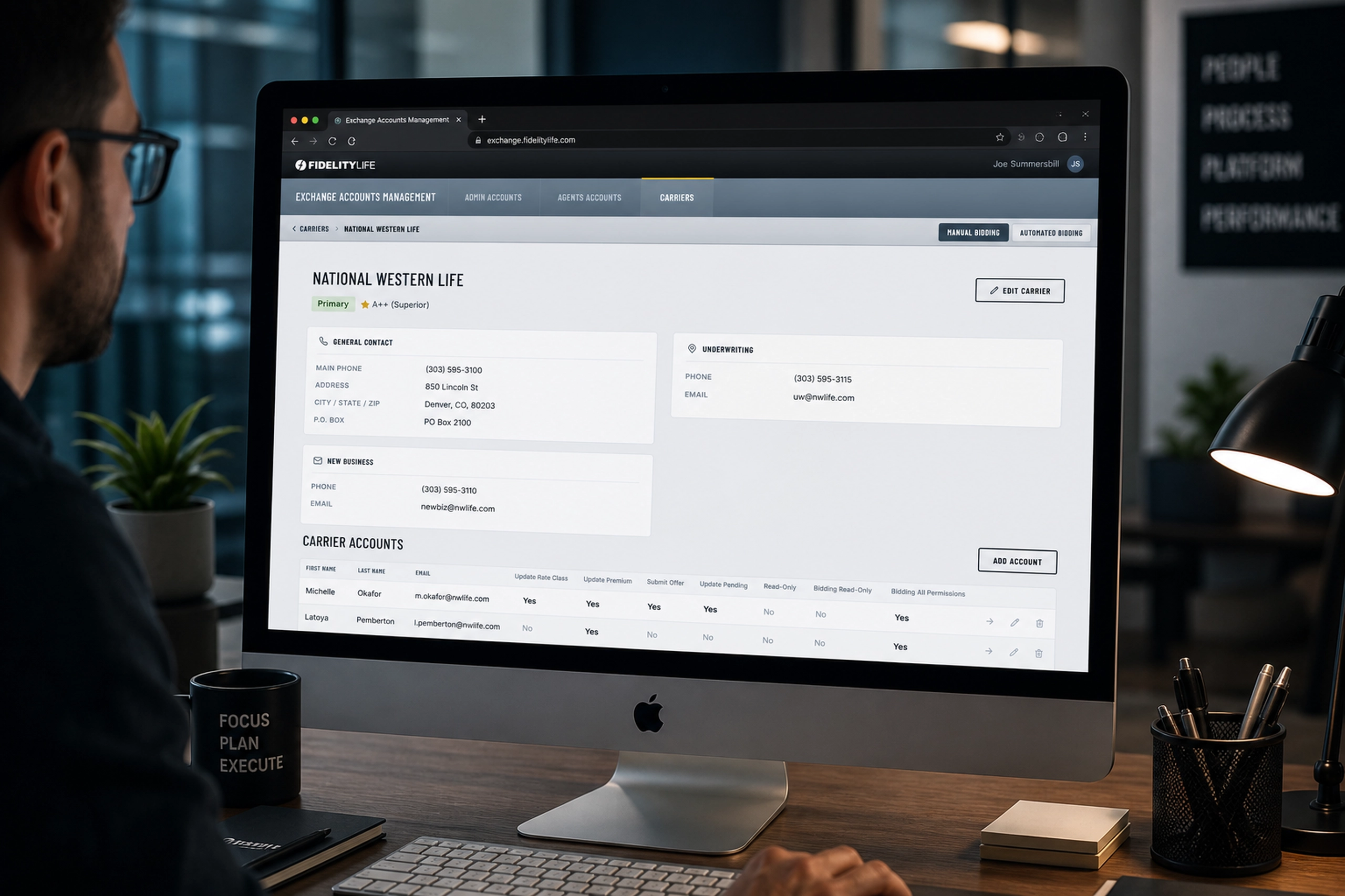
The carrier detail view turned each carrier into a structured operational record. Teams could manage general contact information, new business contacts, underwriting contacts, and assigned carrier accounts from one place.
Impact
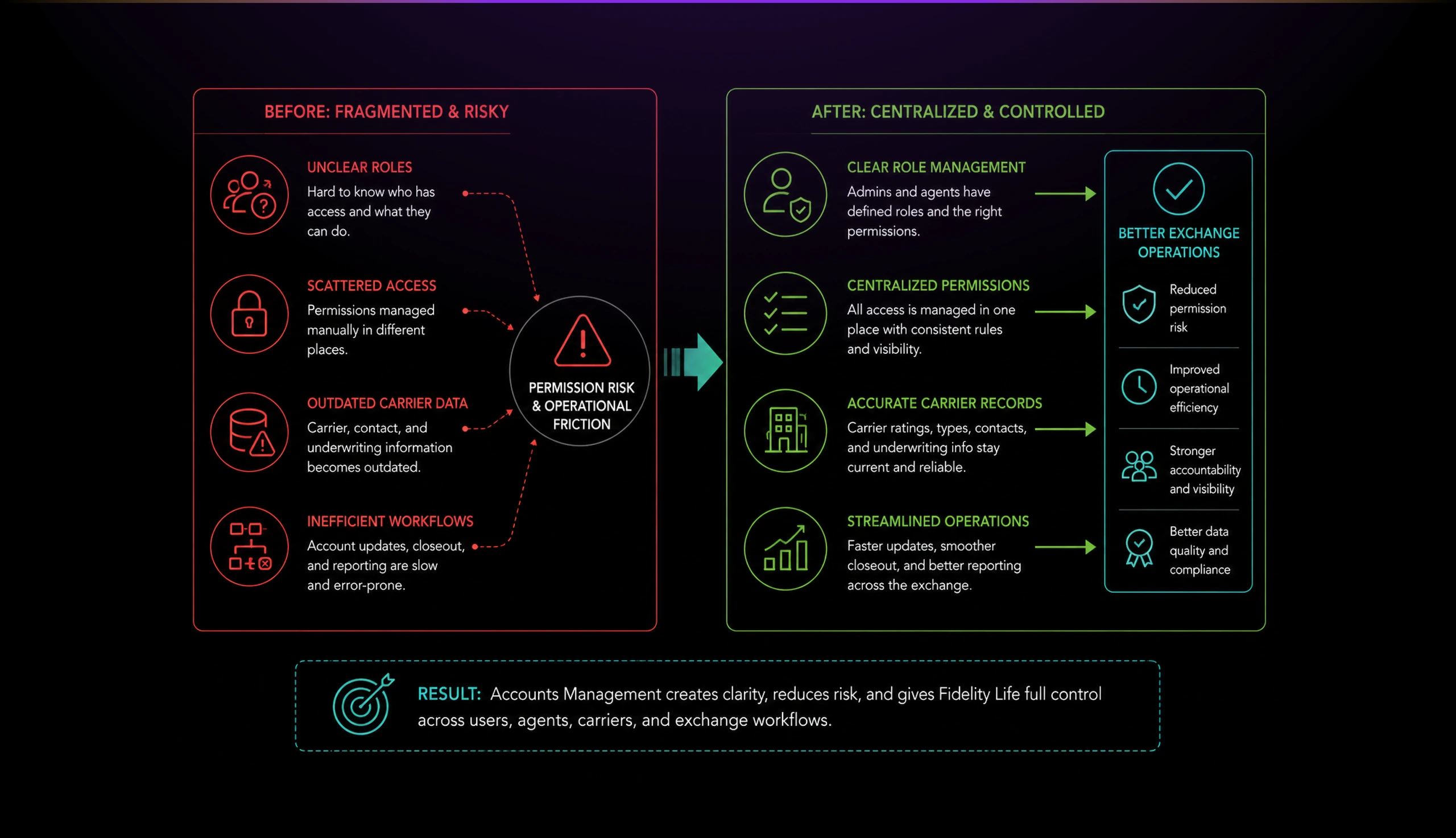
- Clarified permissions for internal admins and exchange agents.
- Reduced ambiguity around who could perform bidding-related actions.
- Centralized carrier records, ratings, types, and contact information.
- Connected carrier management to underwriting and account workflows.
- Supported both manual and automated bidding modes.
- Created a reusable admin pattern for regulated insurance operations.
The Problem
Multi-carrier workflows break down when permissions are unclear.
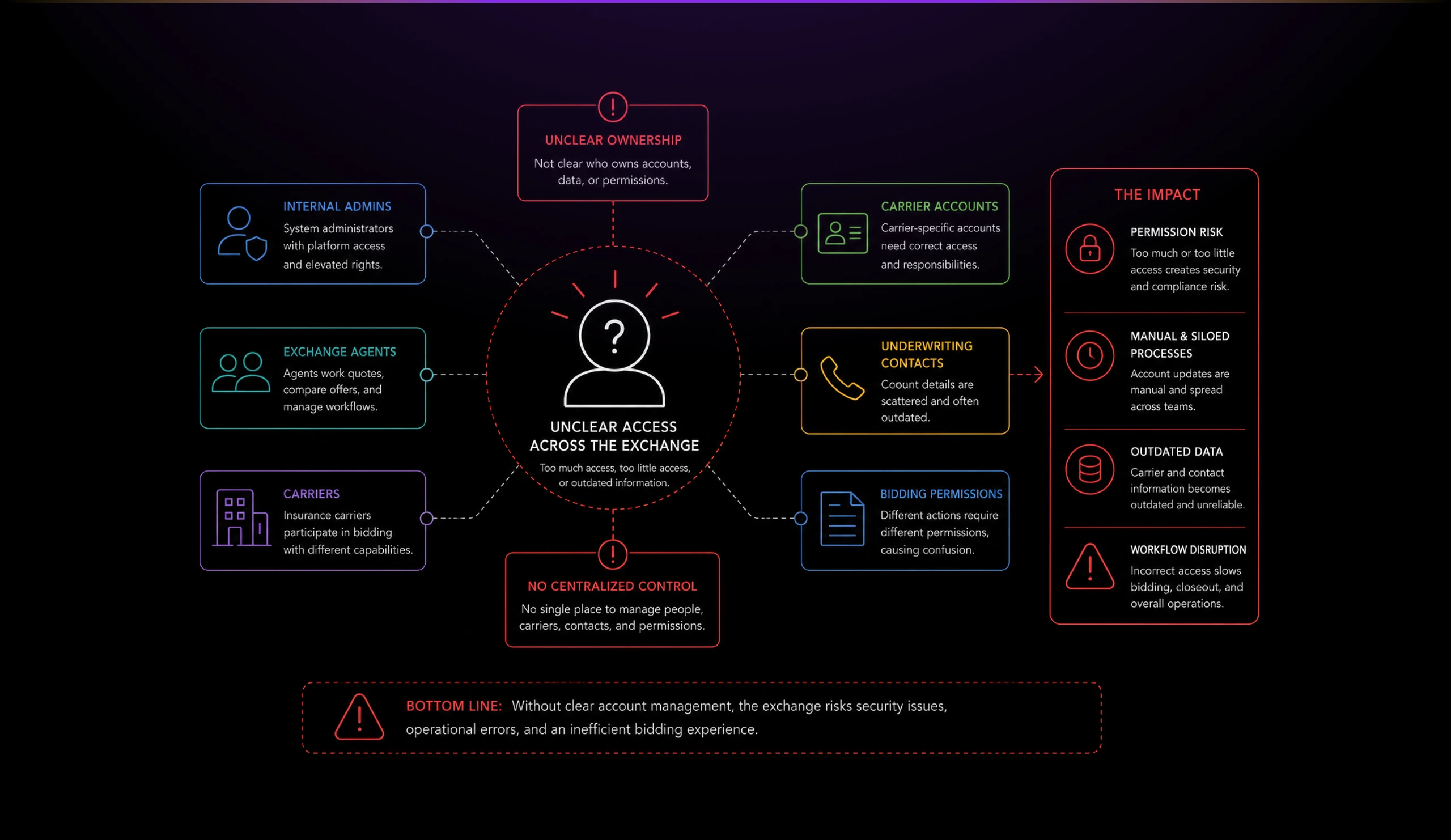
The Exchange Bidding System depended on multiple roles working together. Internal admins needed platform access. Exchange agents needed permissions to select offers, update carrier status, process closeout, or work in read-only mode. Carriers needed structured records, contact details, underwriting information, and assigned accounts.
Without a clear management layer, the exchange risked becoming fragile. A user could have too much access, too little access, outdated carrier information, or unclear responsibility for a specific workflow step.
The problem was not just account creation. It was operational control.
Solution
A structured admin layer for people, carriers, and access rights.
I designed the tool around three administrative views: Admin Accounts, Agent Accounts, and Carriers. Each view used a clear table layout so teams could scan records quickly and understand who had access to what.
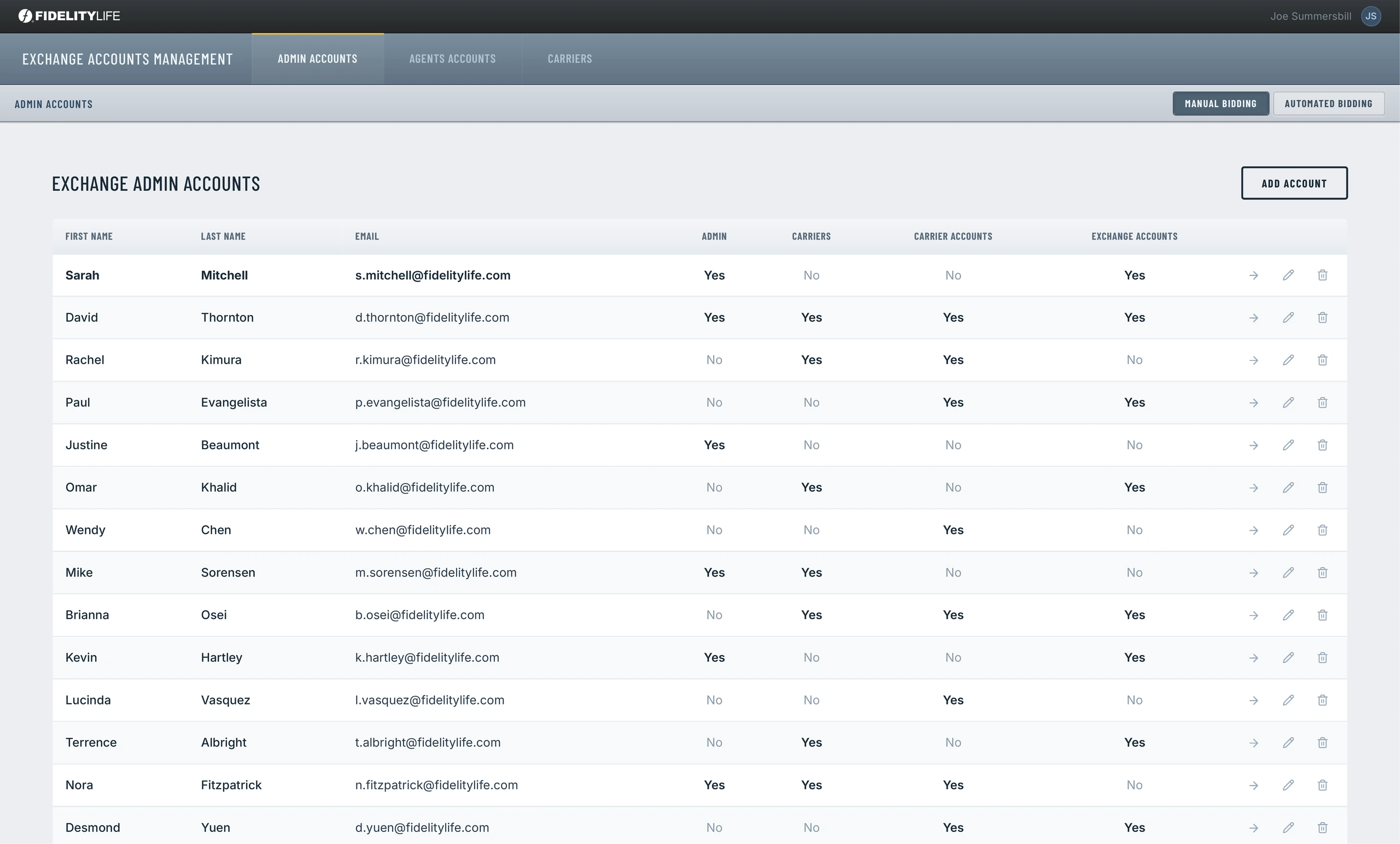
The Admin Accounts view gave Fidelity Life a simple permission matrix. Teams could see whether a user had access to Admin, Carriers, Carrier Accounts, or Exchange Accounts. This made access review easier because permissions were visible directly in the table.
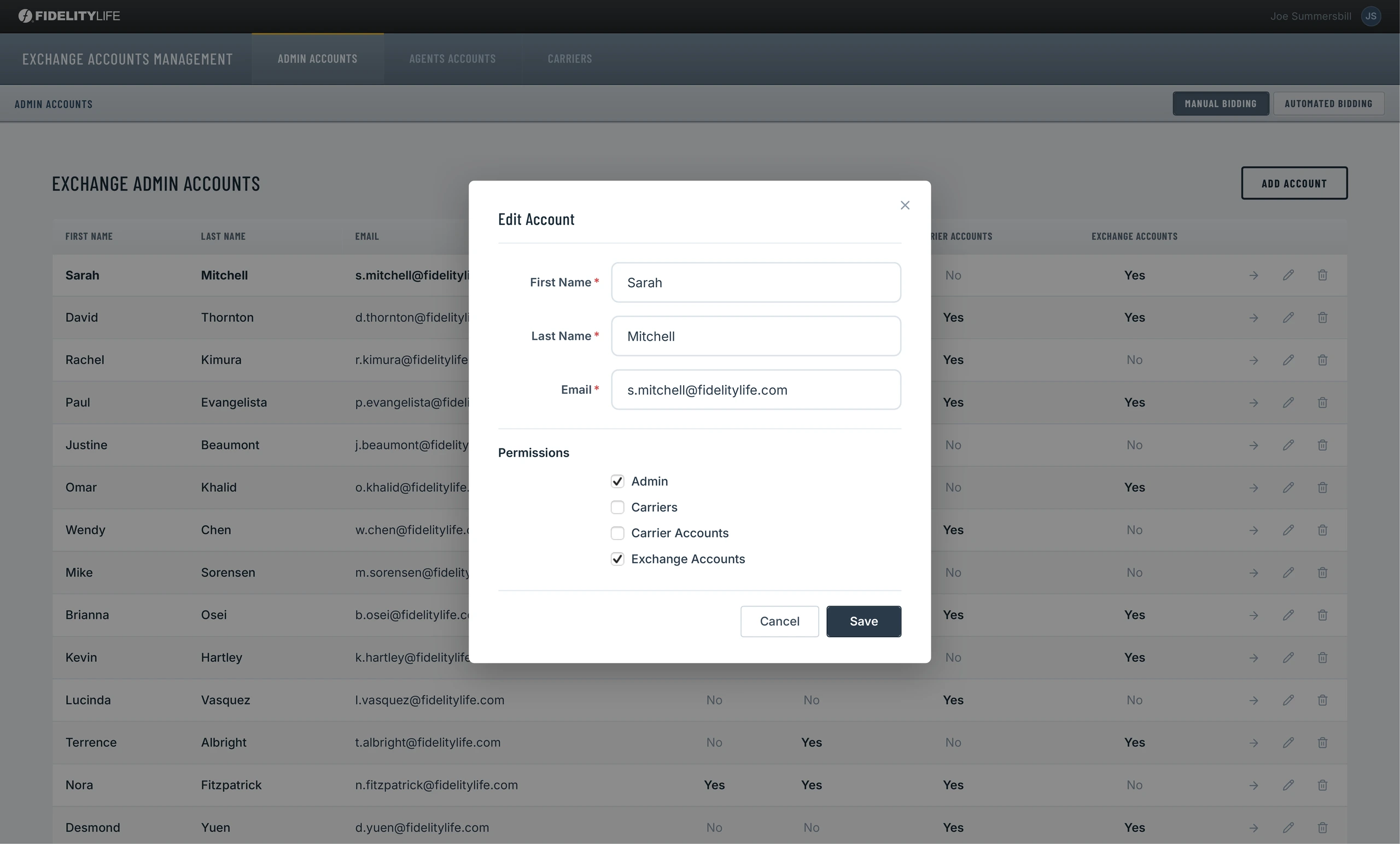
Instead of burying permissions in a complex settings page, account editing happened in a focused modal. This kept the workflow fast while reducing the chance of changing unrelated account details.
The Agent Accounts view focused on what exchange agents could do inside the bidding workflow.
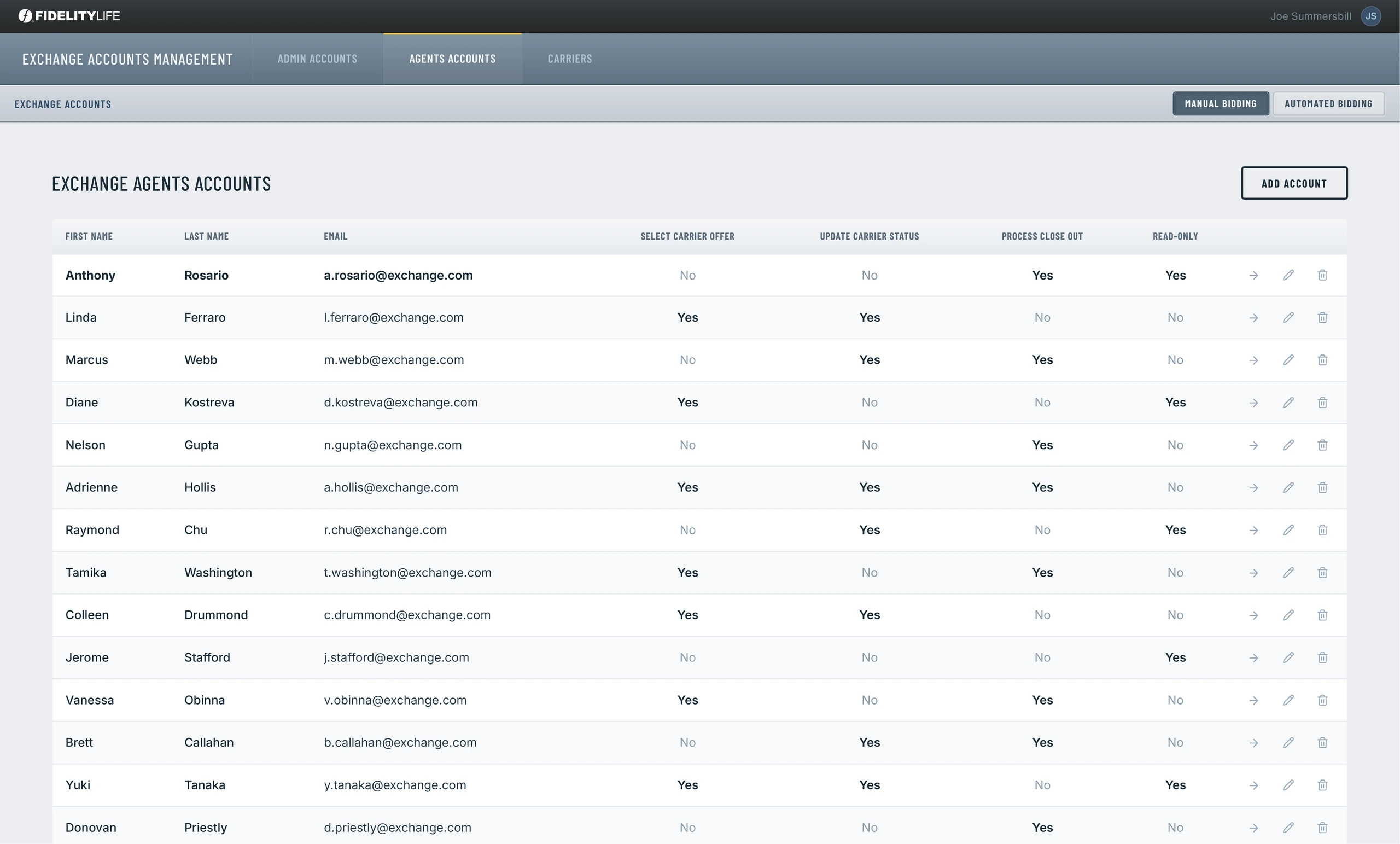
Permissions were tied to operational actions, not generic roles. Agents could be allowed to select carrier offers, update carrier status, process closeout, or work in read-only mode.
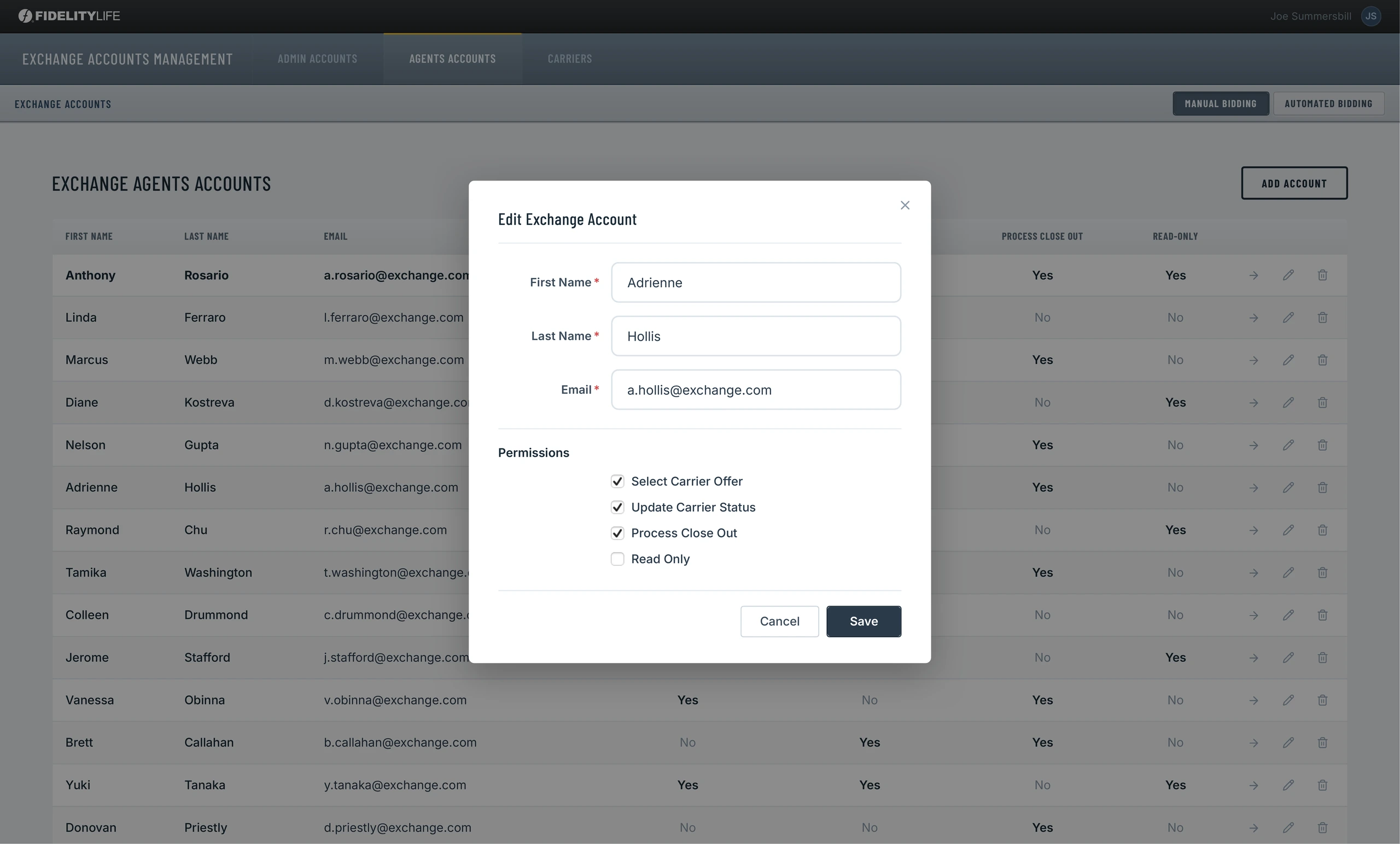
This pattern helped make permissions easier to reason about. Instead of asking whether someone was “an agent,” the system asked what that person was allowed to do in the exchange.
Related Projects

Product-Config - Insurance Builder
A product configuration tool that helped teams build insurance applications without redesigning e...
FinTech
Rapid-App - Insurance Platform
A guided agent platform that made life insurance applications and underwriting faster, clearer, a...
FinTech
Consumer-Direct - Life Insurance
A direct-to-consumer life insurance experience that helped customers quote, qualify, sign, and su...
FinTech