
Clients & Ventures

Product/systems design that turns AI tech into business results













Contact Us
Contact form or information will go here.
Project Detail


Commercial Instant Design
Summary

A commercial instant design workflow that helped dealers adjust layouts, validate output, and generate proposal-ready artifacts faster.
Dealer-led solar proposals were slowed by fragmented design edits, unclear production impact, and handoffs between layout decisions, savings estimates, BOMs, and proposal artifacts.
I designed a guided instant design workflow where dealers could edit roof layouts, see energy impact, manage change-order risk, generate BOMs, and move toward customer-ready proposals.
Outcome
Commercial Instant Design made dealer-led solar proposals faster and more connected.
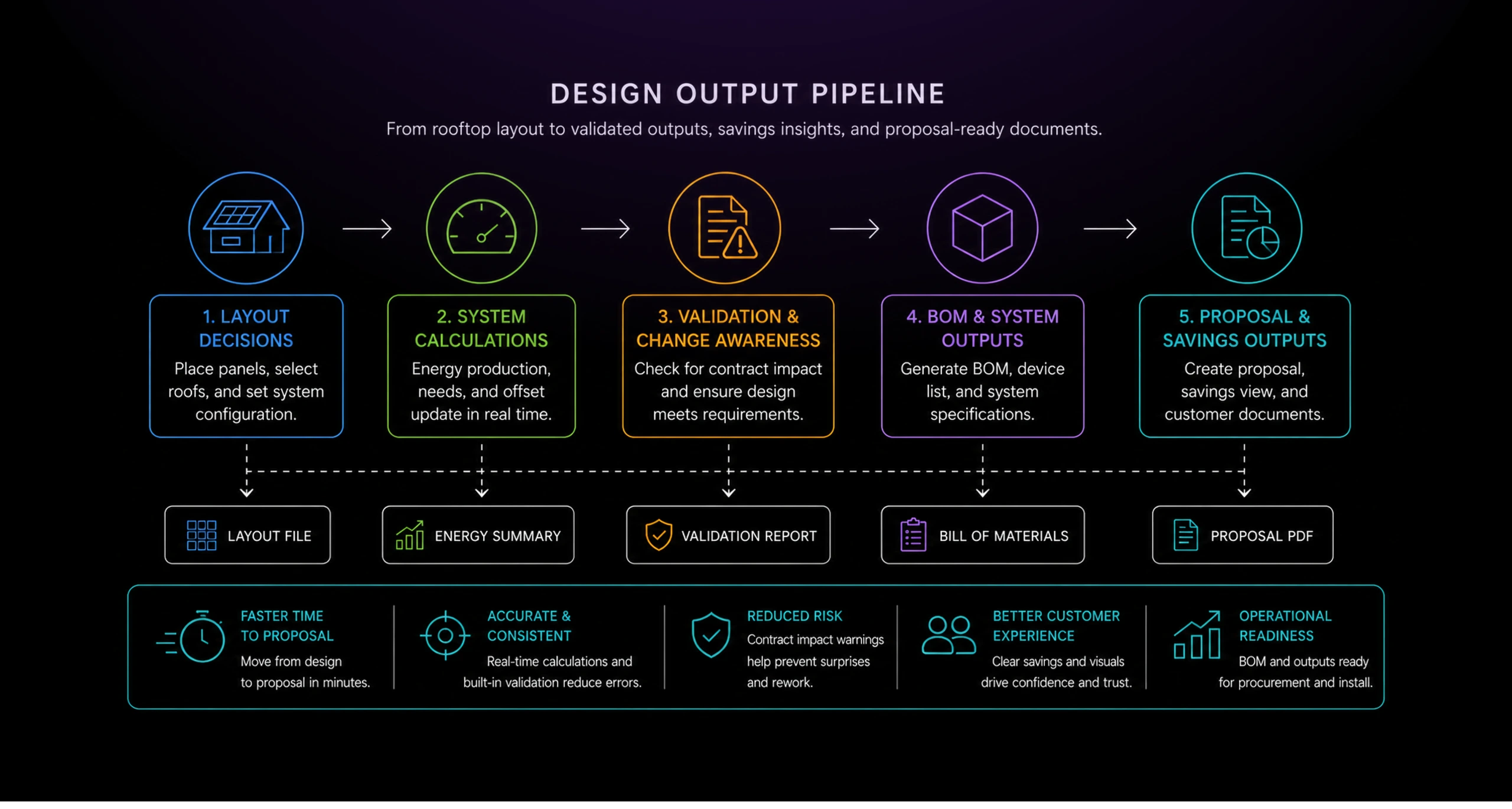
The redesigned workflow helped dealers iterate layouts faster, understand energy impact instantly, manage contract risk, and turn design decisions into proposal-ready outputs.
Estimated impact based on project context:
- Faster solar layout iteration
- Clearer energy-offset feedback during design
- Reduced dependency on separate calculations
- Safer handling of contract-impacting changes
- Better connection between layout, savings, proposal, and BOM
- More confident dealer-led sales conversations
The project showed how a solar design tool could become more than a canvas. By connecting design, savings, proposal, and outputs, it became a complete workflow for moving from roof layout to customer-ready decision support.
The Problem
Dealer design work was trapped between layout, sales, and operations.
Dealers needed to adjust solar layouts quickly during the sales process, but every design decision had downstream consequences.
Changing panel count, roof placement, production estimates, contract assumptions, savings projections, or BOM details could affect the proposal and trigger internal review.
The problem was not simply drawing panels. It was connecting design iteration to customer value, contract status, and fulfillment-ready outputs.
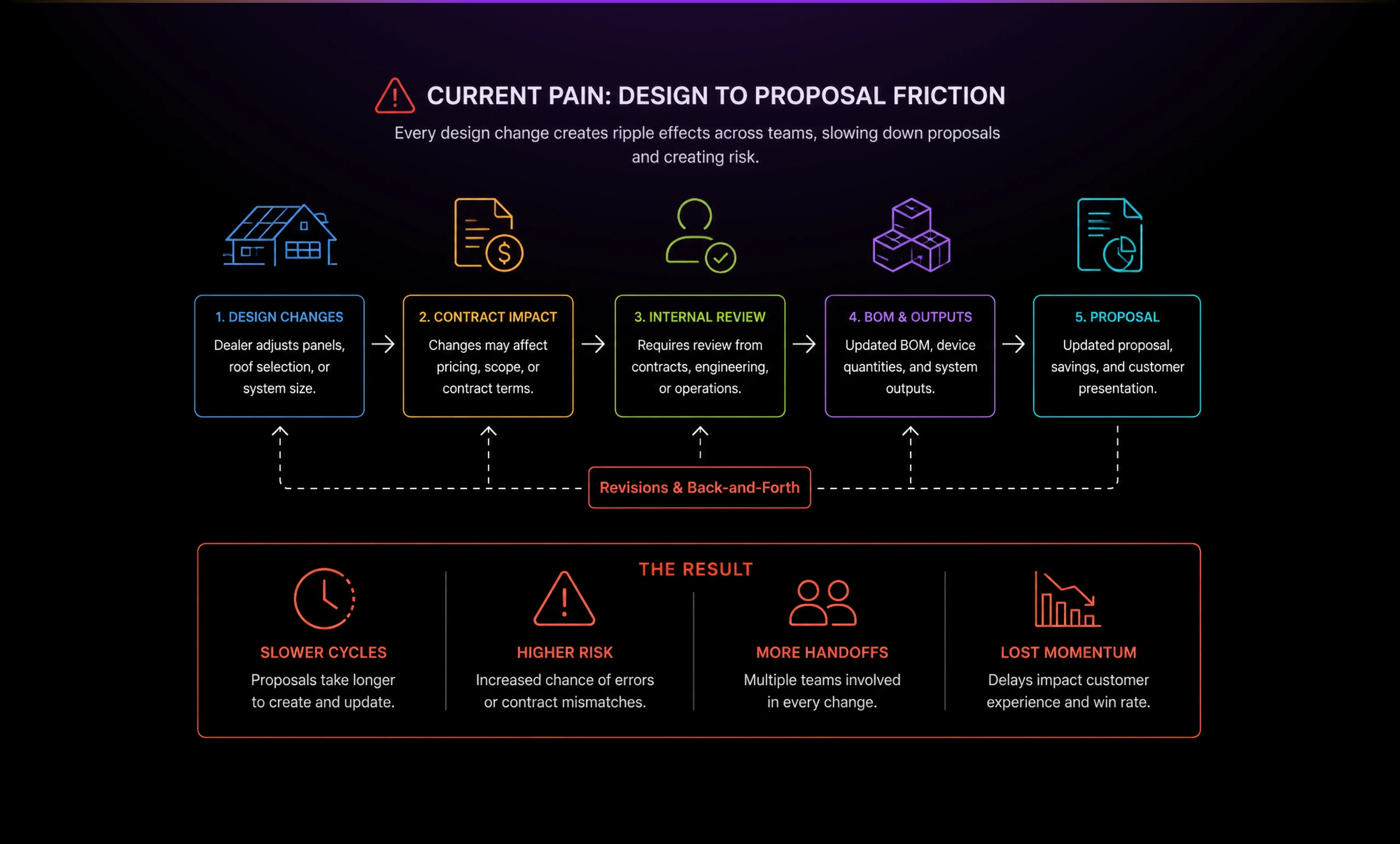
Without a tighter workflow, dealers risked moving too slowly, overpromising system performance, or sending proposals that required backtracking later.
Solution
Creating a design workspace for fast dealer iteration.
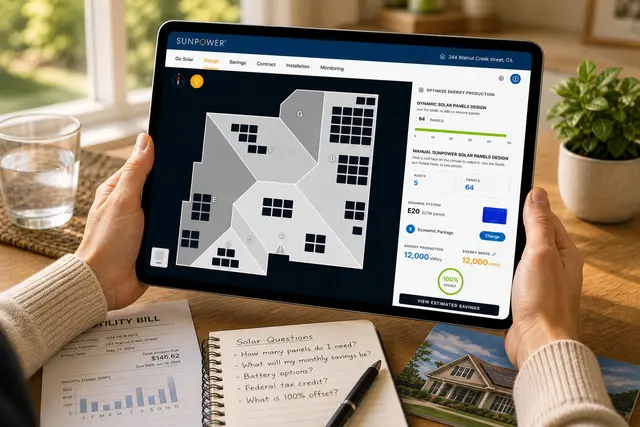
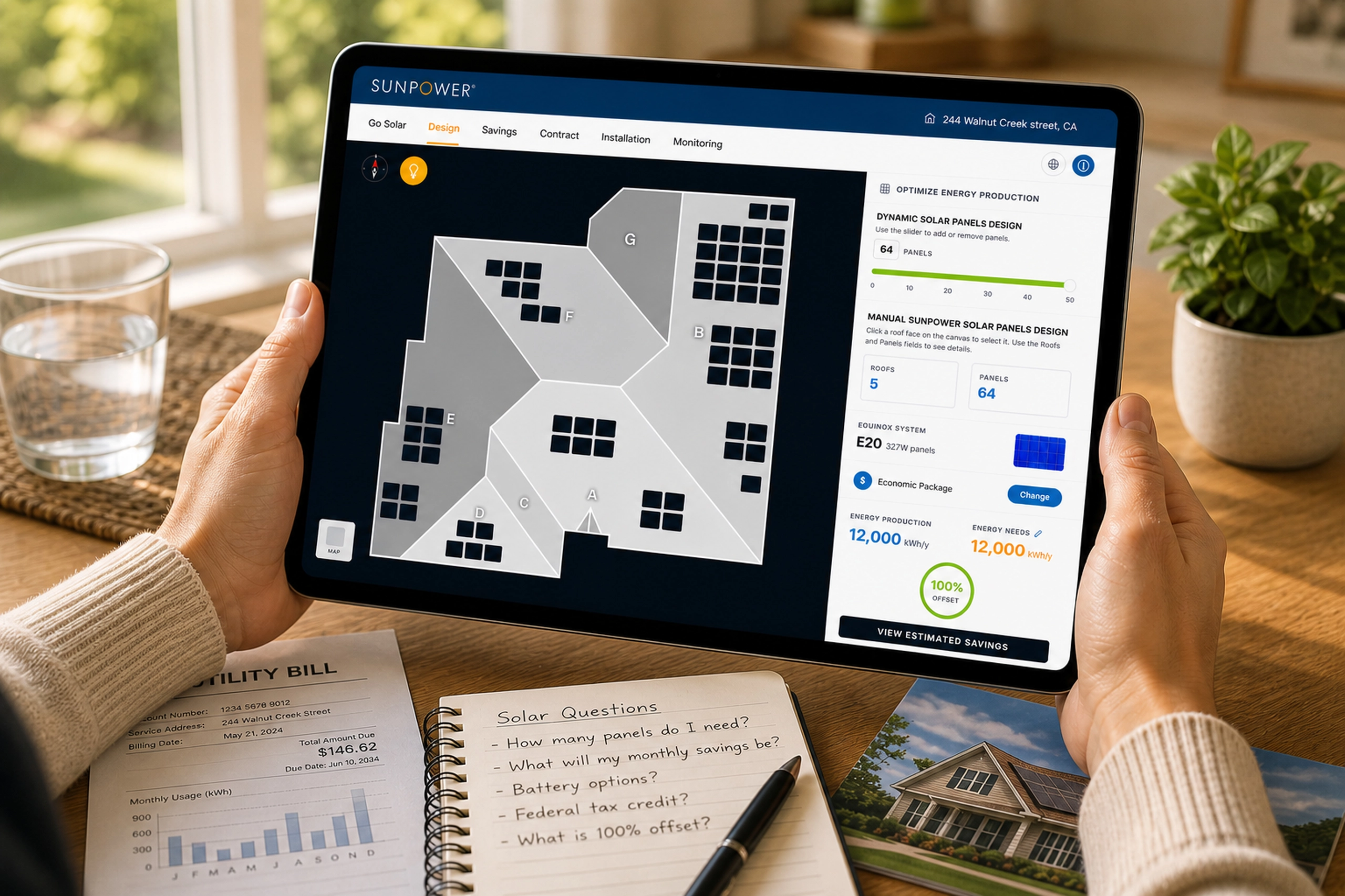
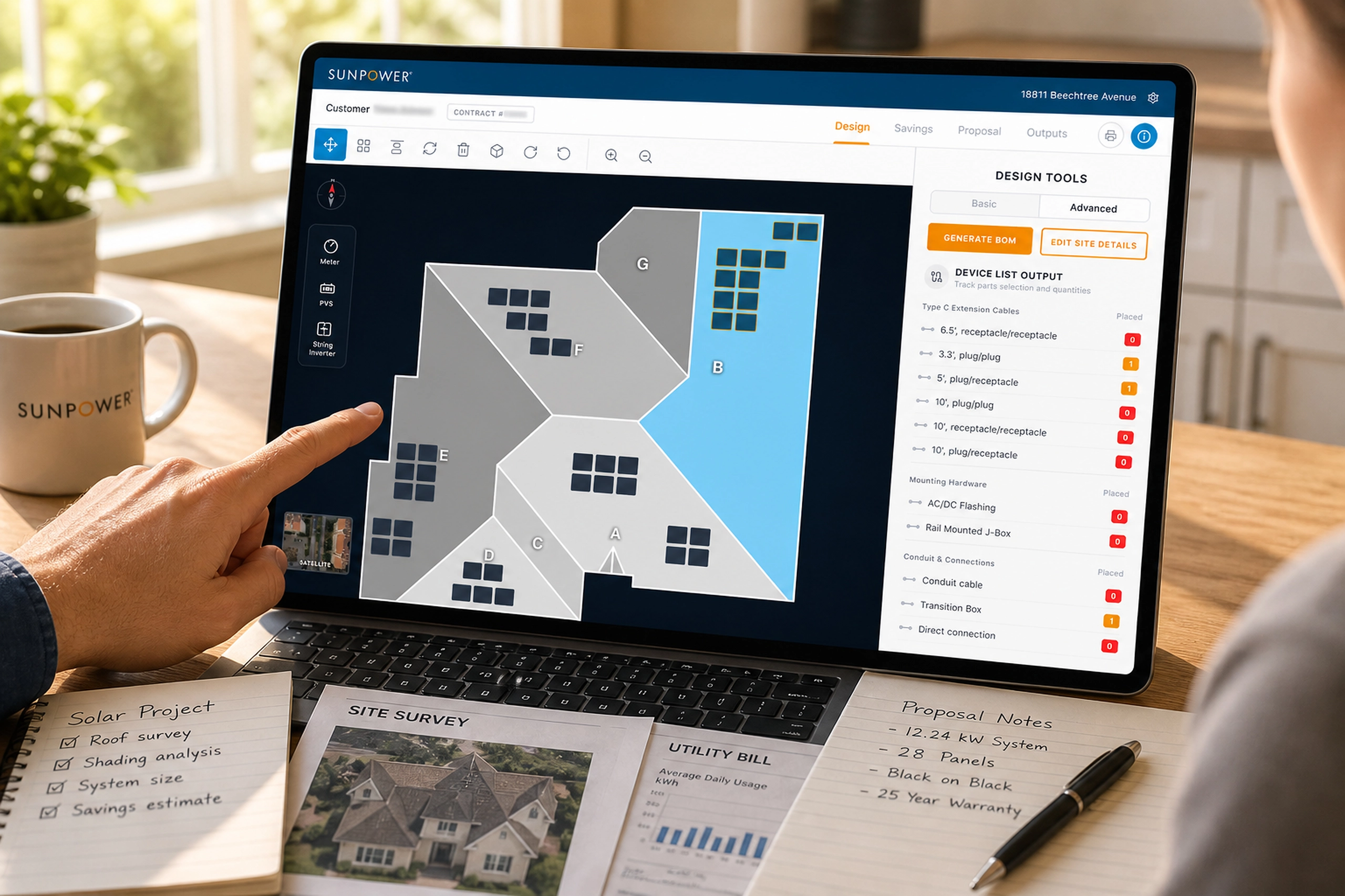
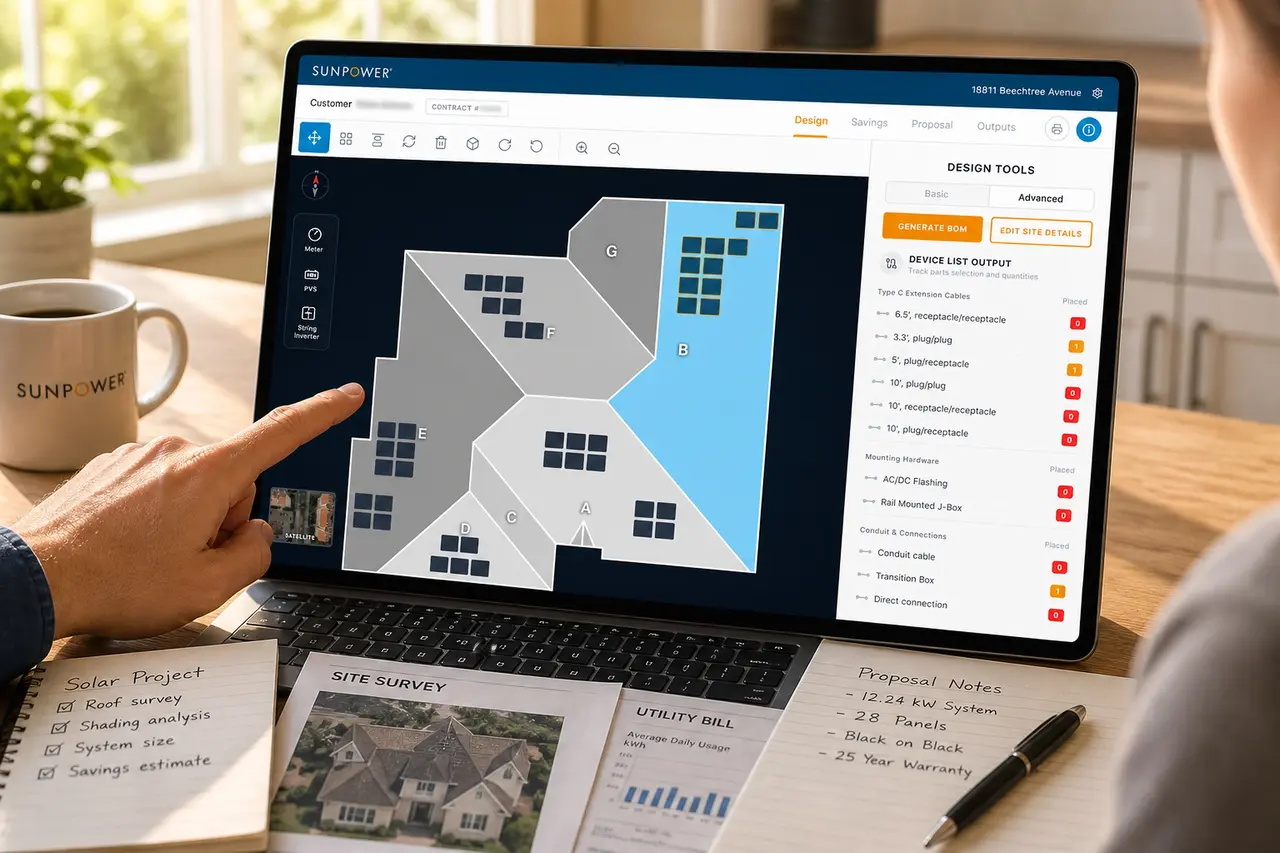
I designed the experience around a central rooftop canvas where dealers could edit layouts visually and understand system impact immediately.
The canvas made the design feel tangible. Dealers could see roof planes, panel placement, current panel count, energy production, energy need, and offset percentage in one place.
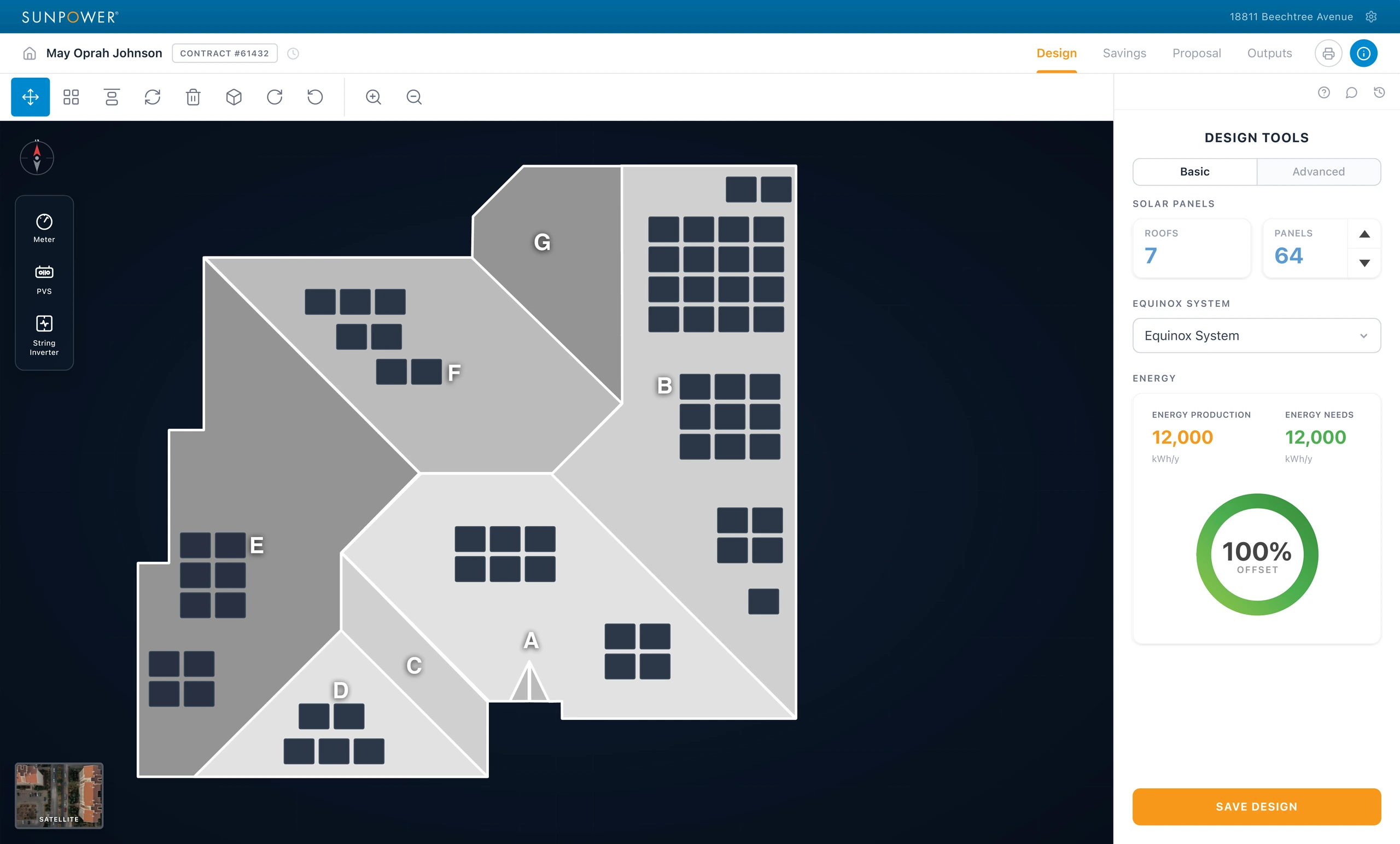
This helped reduce the gap between technical layout work and sales conversation. A dealer could adjust the design while still understanding whether the system met the customer’s energy goals.
Making design changes safer
One of the most important design decisions was surfacing contract impact directly inside the workflow.
When a design change affected the current contract, the interface made that risk visible and prompted the dealer to initiate a change order instead of burying that consequence later.
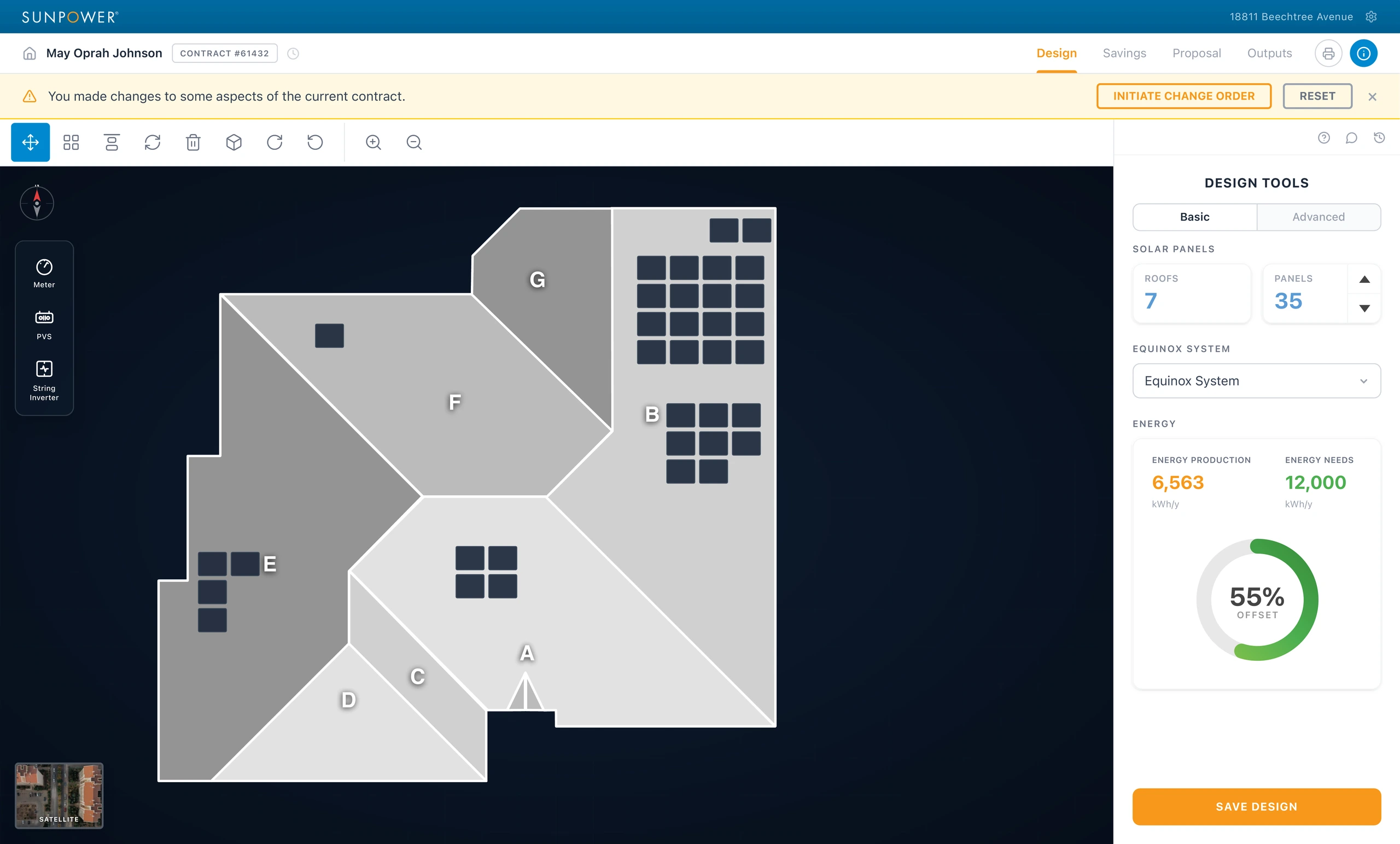
That warning transformed the tool from a drawing interface into a decision-support system. It helped dealers understand when a design edit was no longer just a layout change, but a business workflow change.
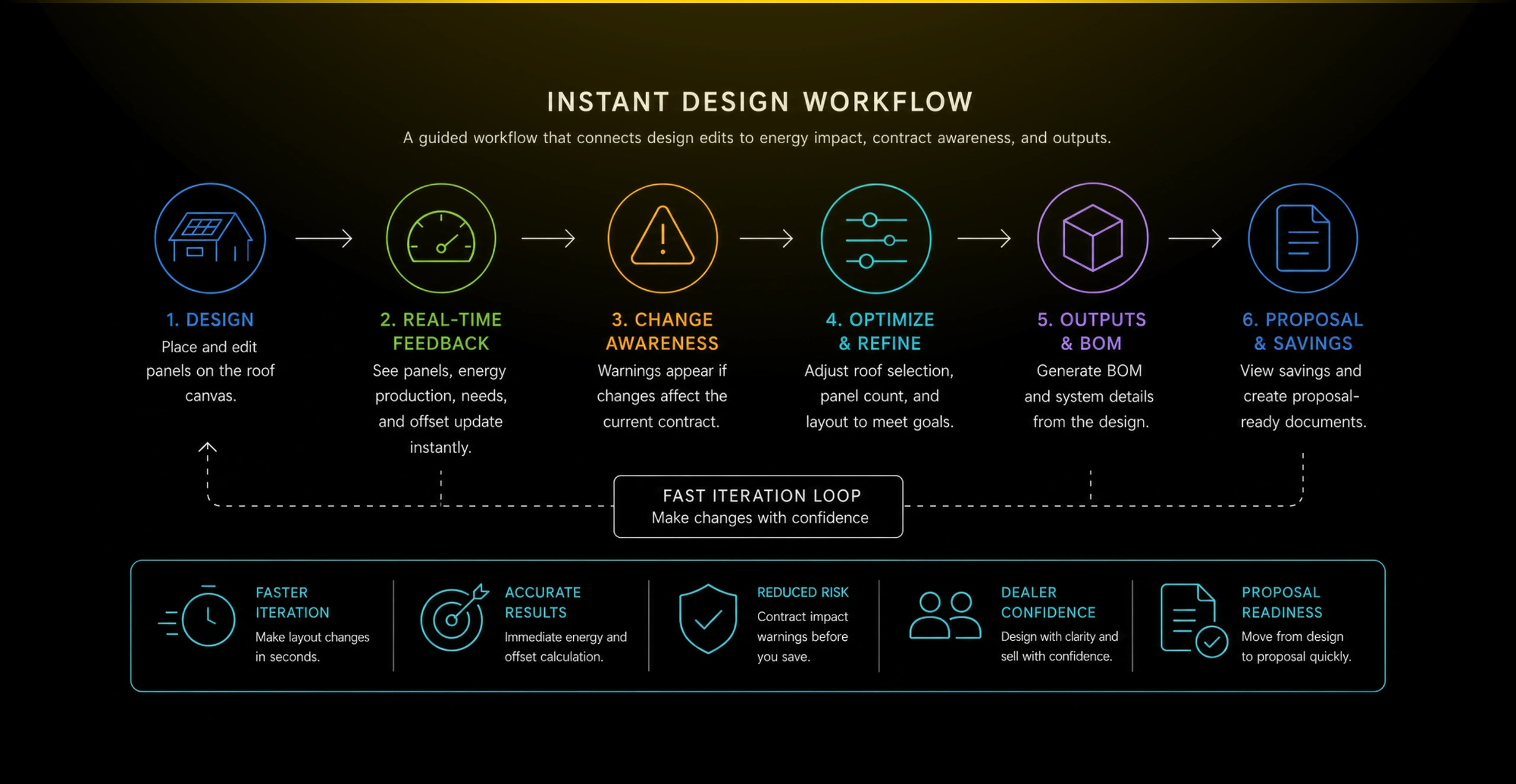
Supporting roof-level editing and real-time feedback
The tool needed to support precise edits without overwhelming the user. Roof selection allowed dealers to isolate one roof plane, adjust panels, and see updated production values.
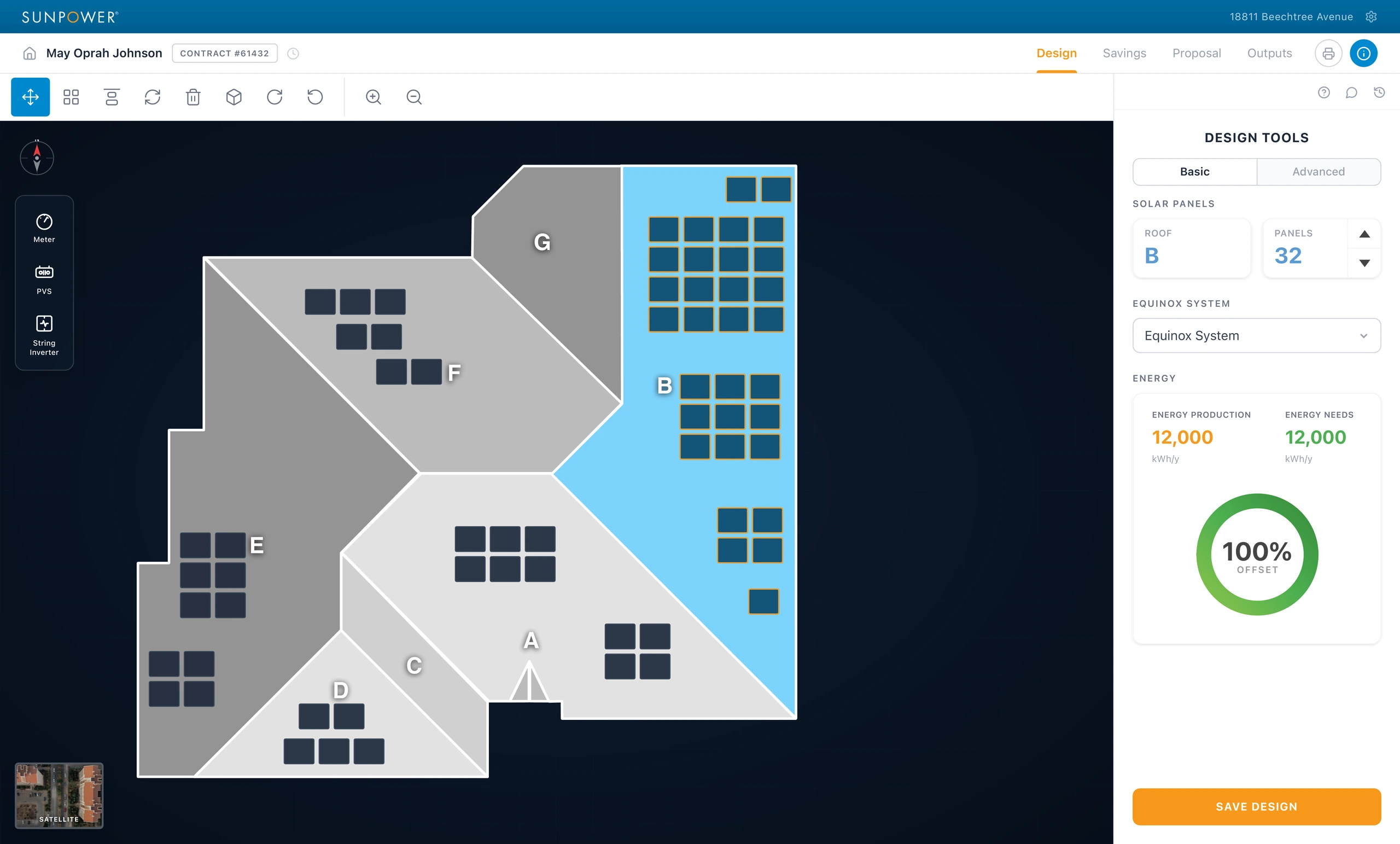
This mattered because solar layouts are spatial and conditional. A design can look simple at the whole-roof level, but every roof plane can carry different capacity, orientation, production, and usability implications.
After adjusting a roof plane, the tool updated panel count, energy production, and energy offset in real time.
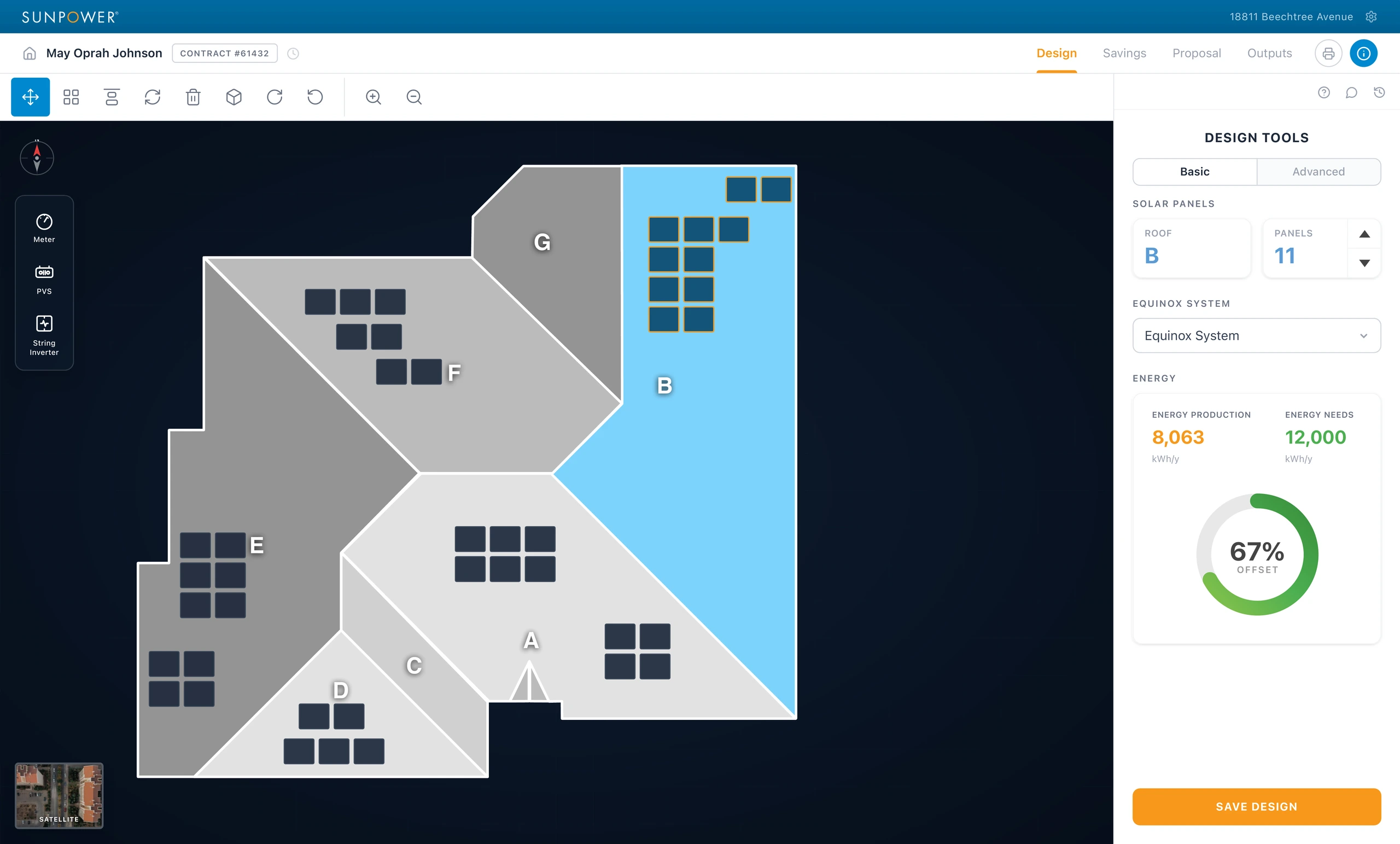
The immediate feedback loop made iteration feel safe and understandable. Dealers could explore tradeoffs without waiting for separate calculations or external support.
Turning a layout into BOM-ready system data
Once a design became viable, the next challenge was making it operationally useful.
I designed advanced output tools that connected panel selection and layout decisions to the bill of materials. This helped move the experience beyond visual design and into implementation readiness.
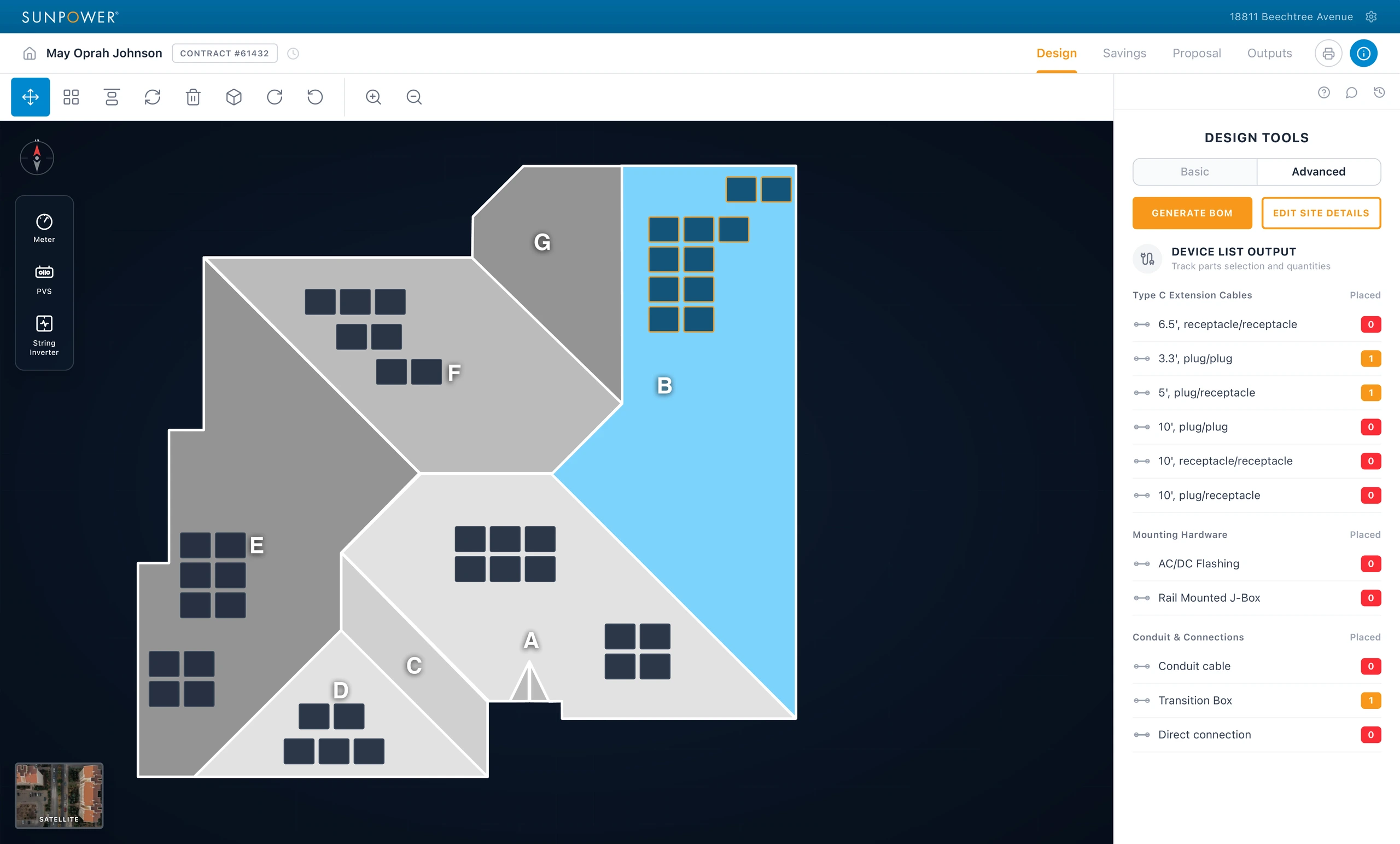
This was important because a proposal is only valuable if it can eventually become a real system. The interface had to support both persuasion and execution.
Connecting design decisions to the customer value story
The Savings tab helped translate technical design into a customer-facing explanation of value.
Instead of only showing panels and offsets, the experience showed projected energy savings and system performance in a format that could support a sales conversation.
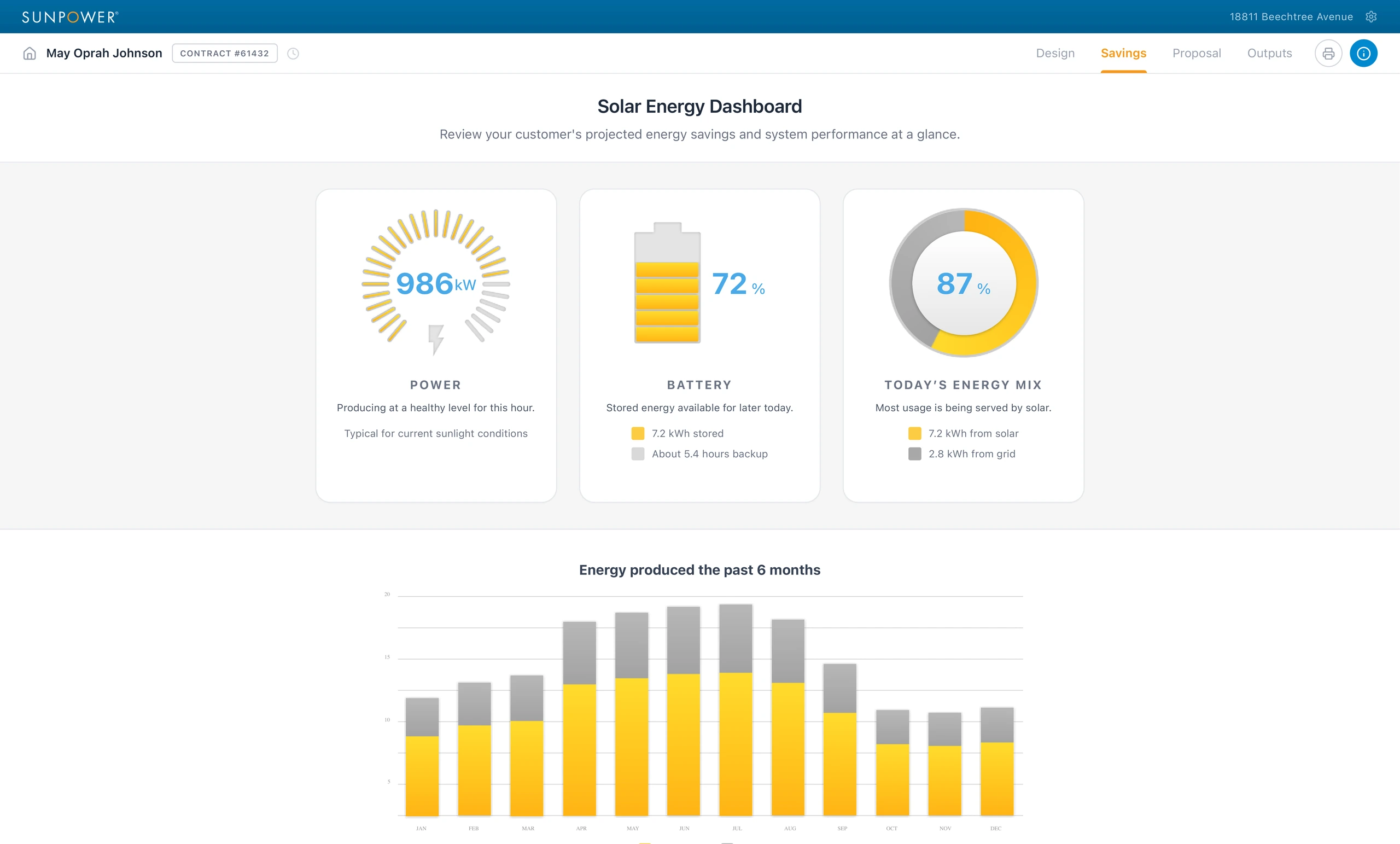
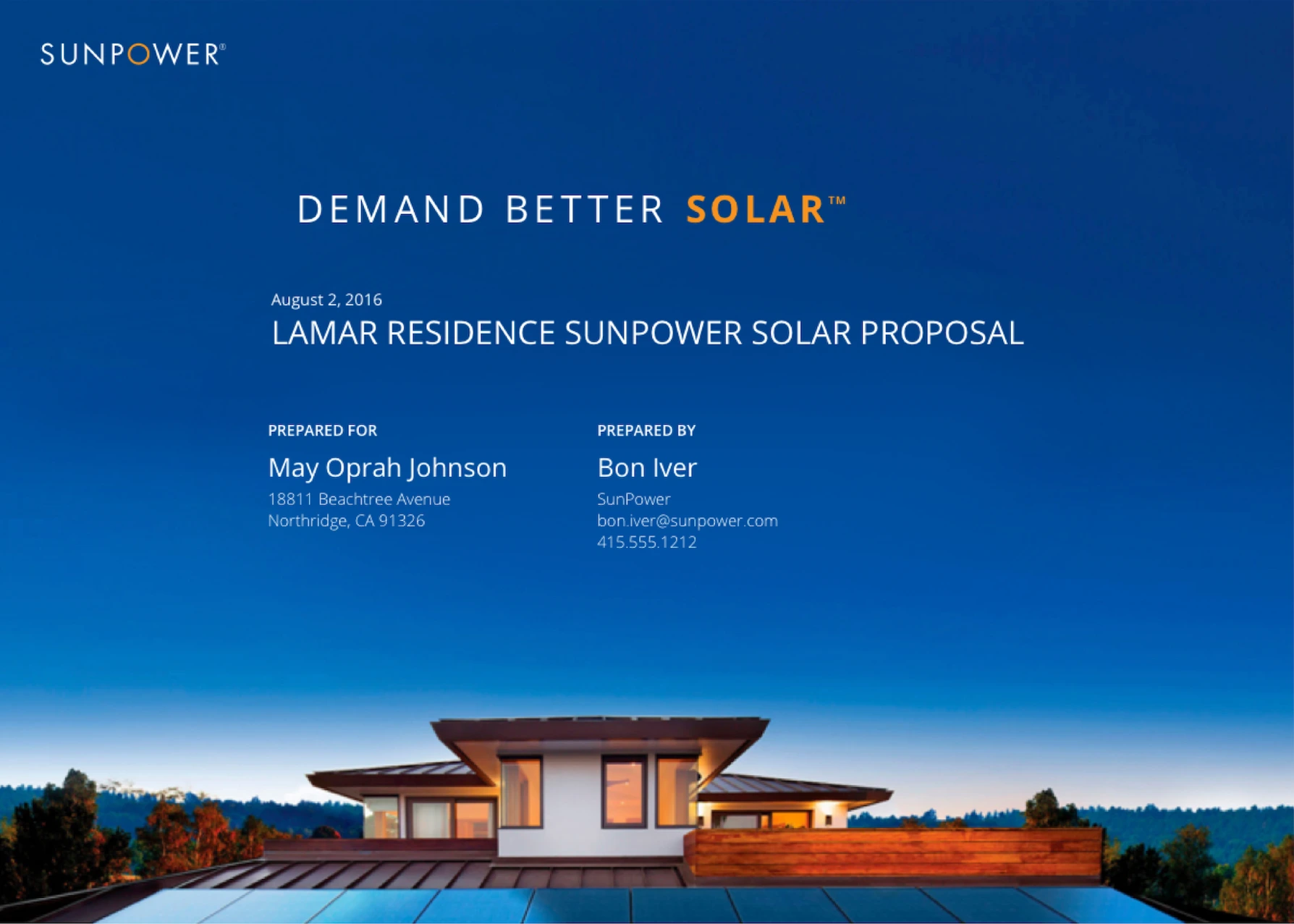
The proposal output extended that value story into a polished artifact. It helped dealers move from design exploration to a professional customer deliverable.
Giving teams usable outputs after the design session
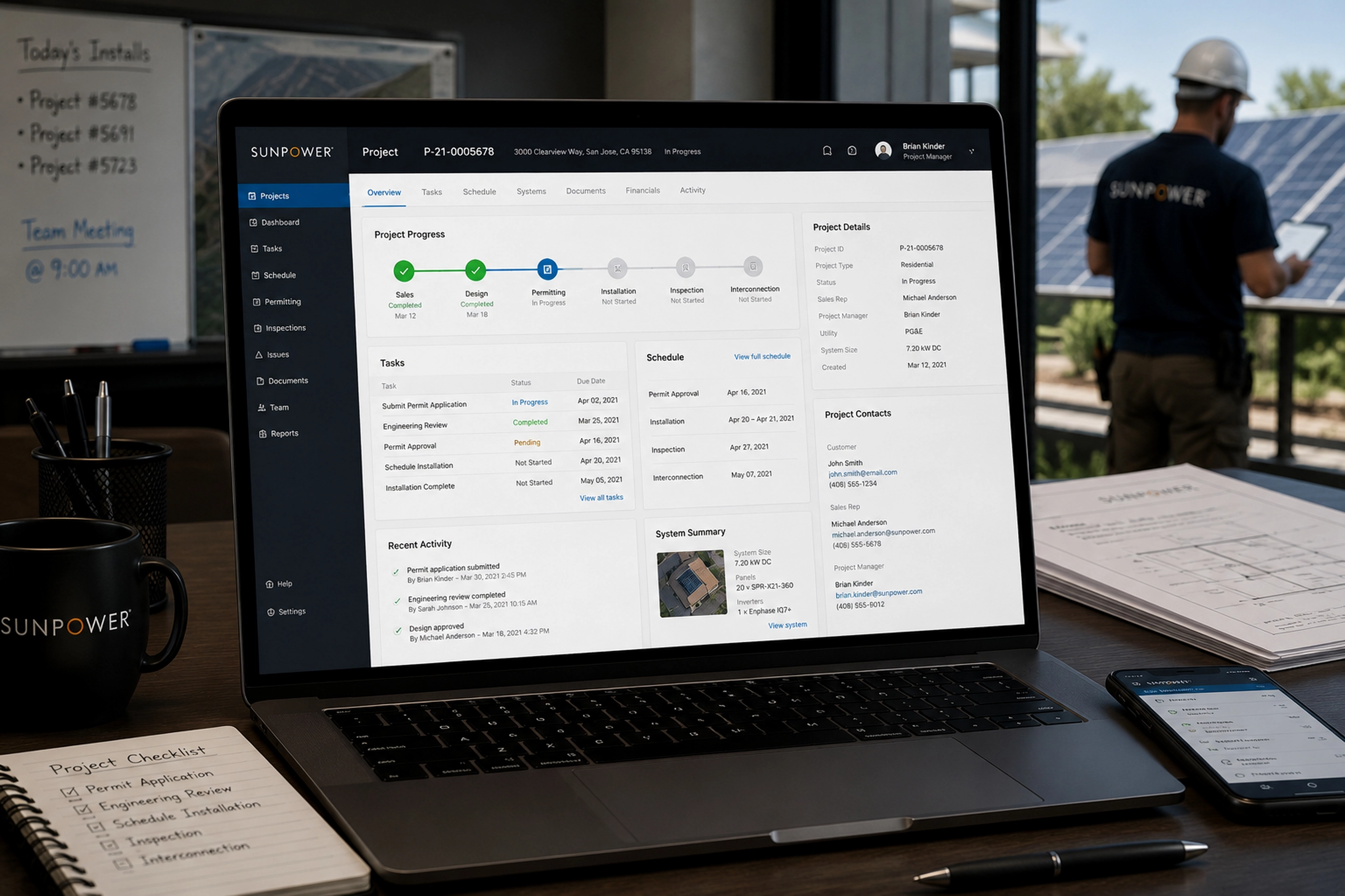
The final outputs screen organized the design into structured system data: BOM, system details, user inputs, and design output summary.
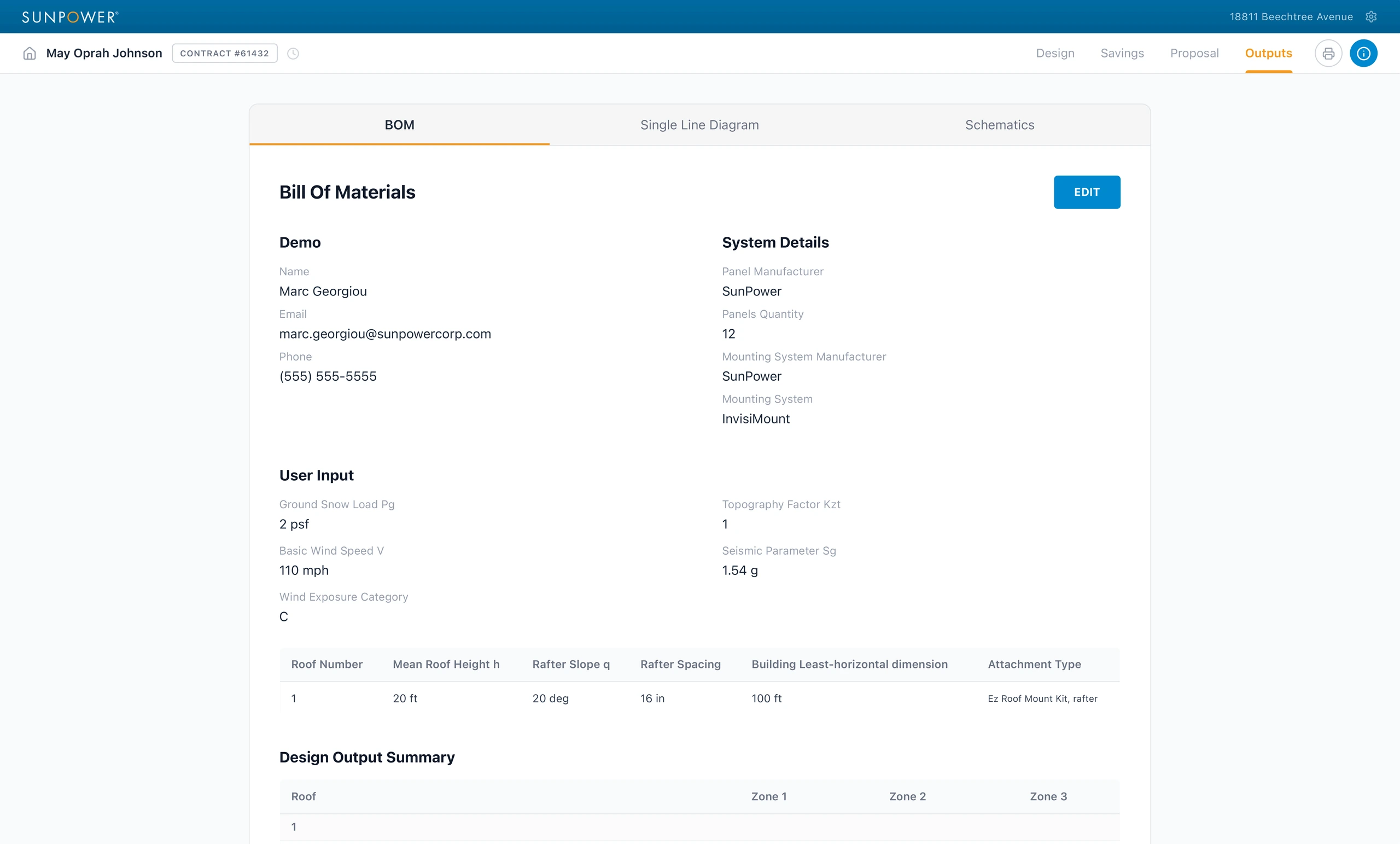
This gave dealers and internal teams a shared reference point. The design was no longer just something visible on the canvas, it became a structured package of information that could support review, proposal, and fulfillment.
Related Projects
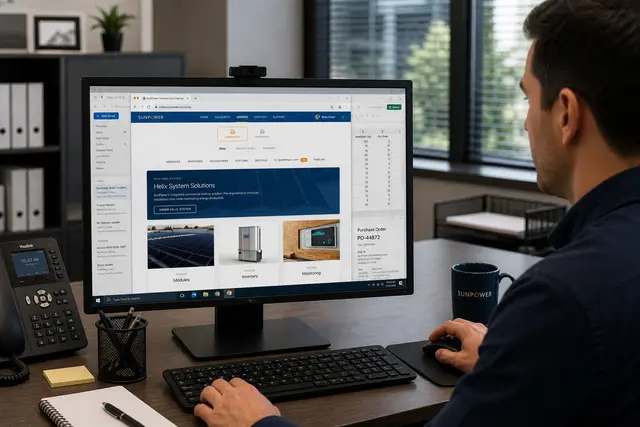
Commercial Ordering System
A redesigned commercial ordering workflow that turned complex solar BOMs into faster, reusable de...
Energy & Climate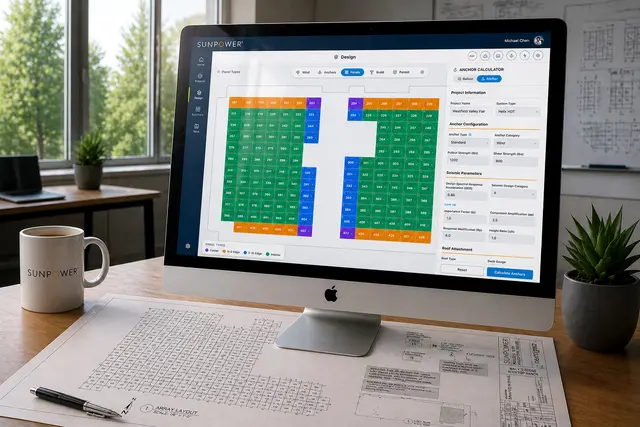
Helix Calculator
A CAD-like commercial solar design tool that helped dealers create accurate rooftop layouts in mi...
Energy & Climate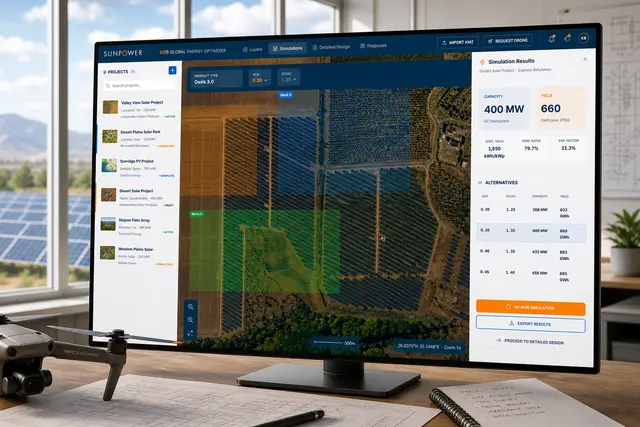
GEO – Global Energy Optimizer
A geospatial solar planning platform for defining sites, simulating layouts, optimizing system pa...
Energy & Climate