
Clients & Ventures

Product/systems design that turns AI tech into business results





















Contact Us
Contact form or information will go here.
Project Detail


EDDiE - Solar Design Tool
Summary

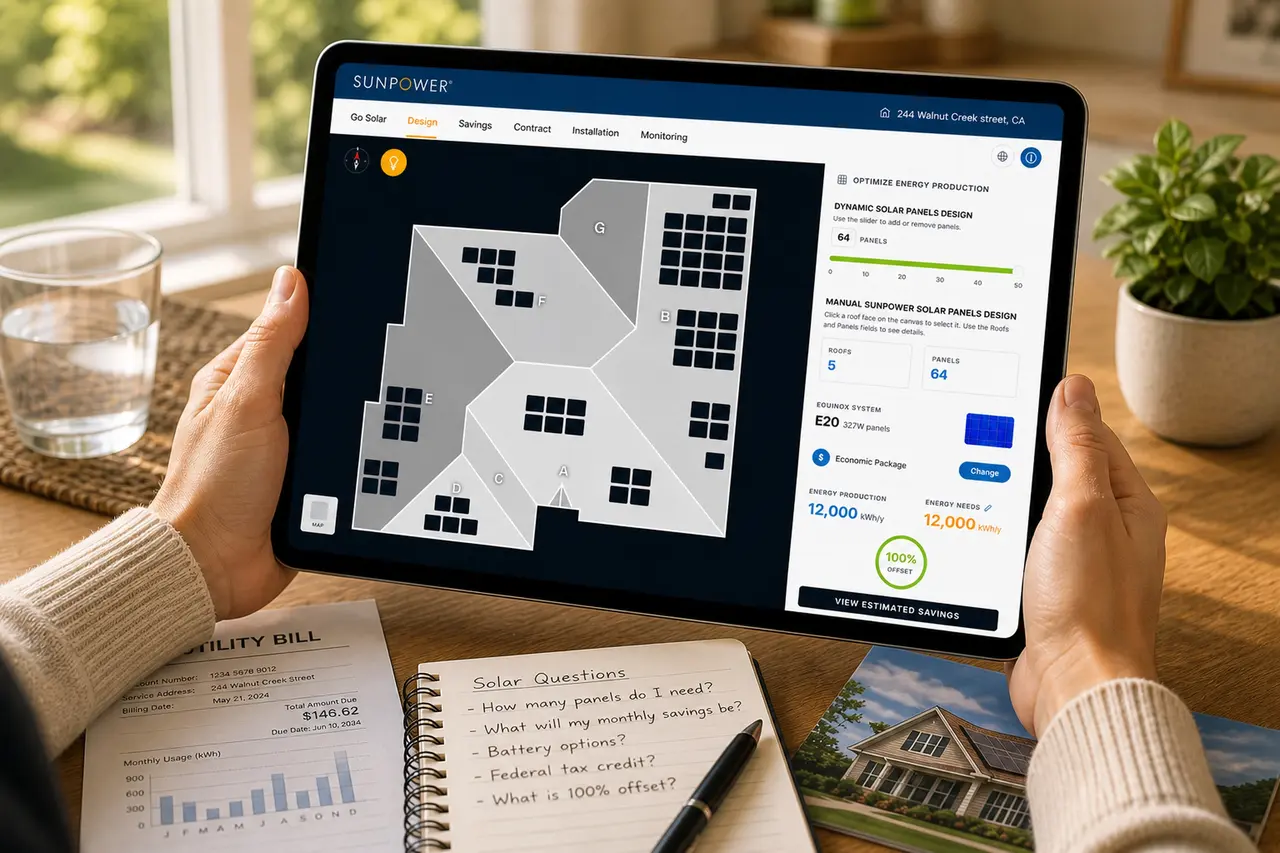
A homeowner-facing solar app that helped customers learn, design, compare savings, sign, track installation, and monitor performance.
Residential solar was hard for homeowners to understand because education, design, savings, contracts, installation, and monitoring lived across disconnected conversations and tools.
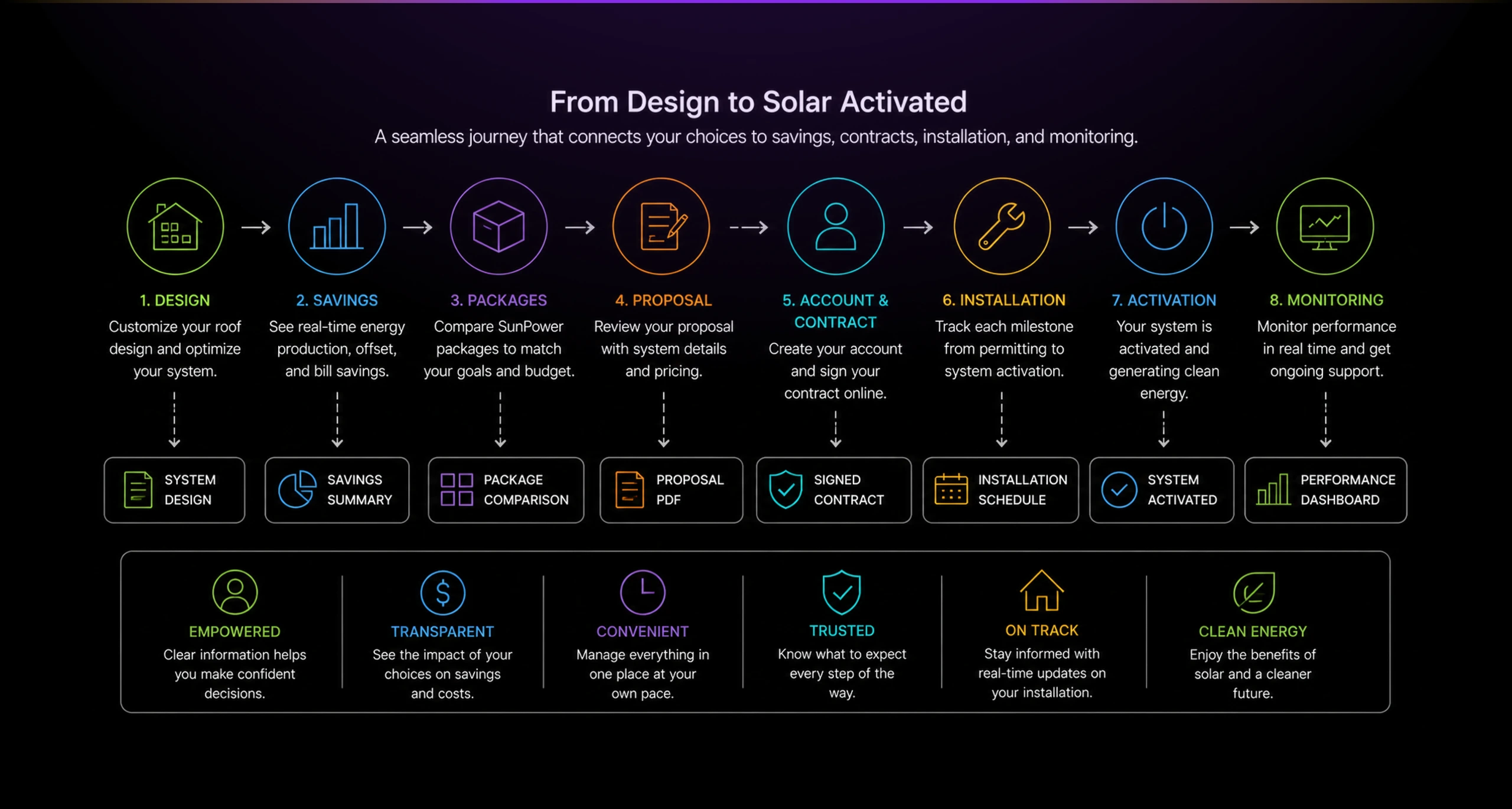
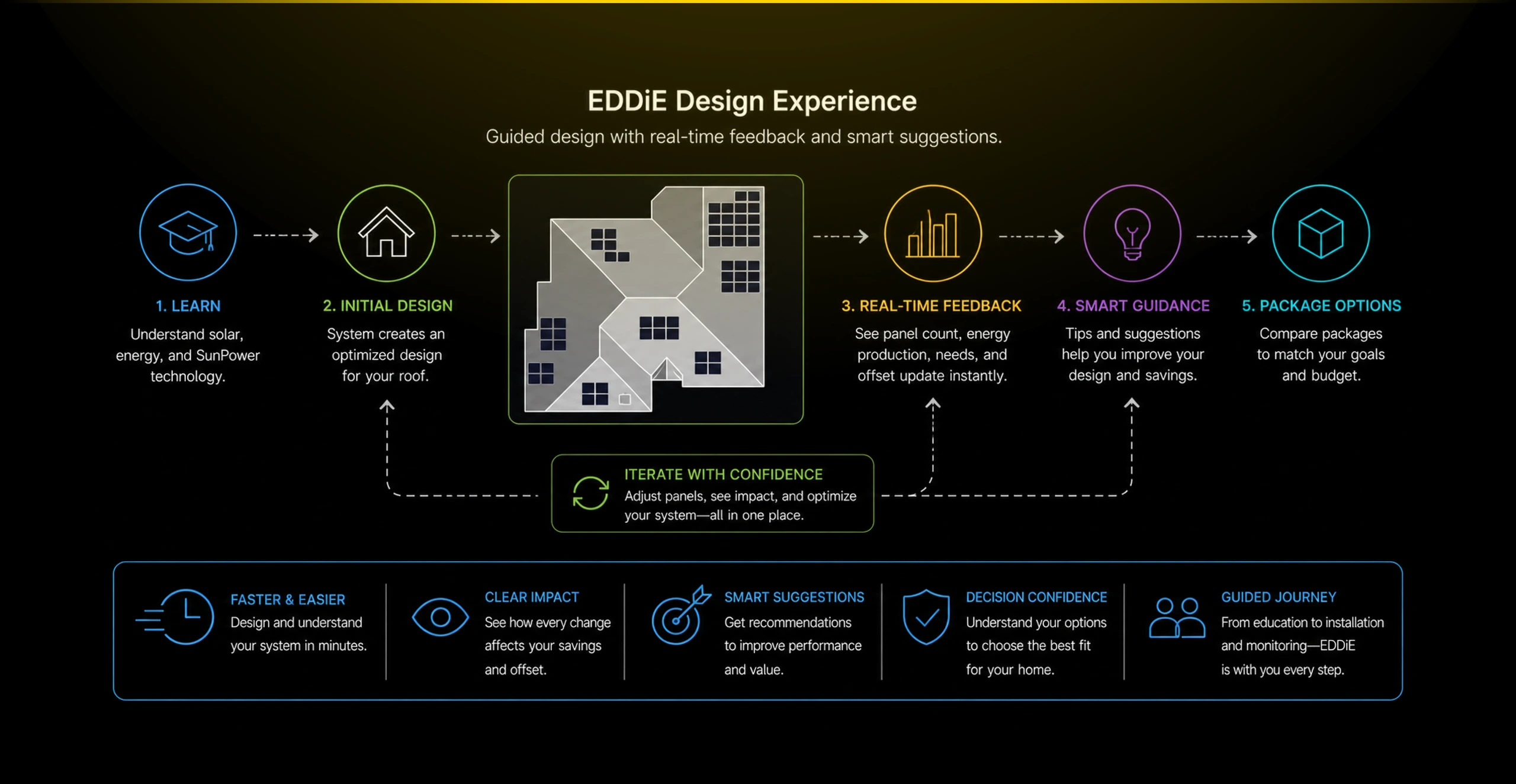
I designed a guided homeowner experience that connected solar education, roof design, savings comparison, contract flow, installation tracking, and energy monitoring into one clear journey.
Outcome
EDDiE made solar feel understandable, interactive, and continuous.
EDDiE helped turn residential solar from a rep-led explanation process into a guided homeowner experience. It gave customers a clearer way to understand solar, explore their roof, compare savings, and move confidently into installation.
Estimated impact based on project context:
- Faster homeowner education
- Higher confidence during design exploration
- Reduced dependency on sales explanations
- Clearer connection between roof layout and savings
- Better continuity from proposal to contract
- Improved homeowner visibility during installation
- Stronger post-install engagement through monitoring
The project showed that solar design was not just a technical configuration problem. It was a trust-building journey. By connecting education, design, savings, contract, installation, and monitoring, EDDiE helped make solar feel more understandable and achievable.
The Problem
Homeowners needed confidence before they could commit.
Residential solar was a complex buying decision. Homeowners had to understand energy production, utility costs, panel technology, financing, installation steps, and long-term system value before they could feel confident.
The traditional process relied heavily on dealer conversations, static proposals, follow-up calls, and manual explanation. That made solar feel opaque, technical, and slow.
The challenge was not only helping homeowners design a system. It was helping them understand why the design mattered, how it affected savings, and what would happen after they said yes.
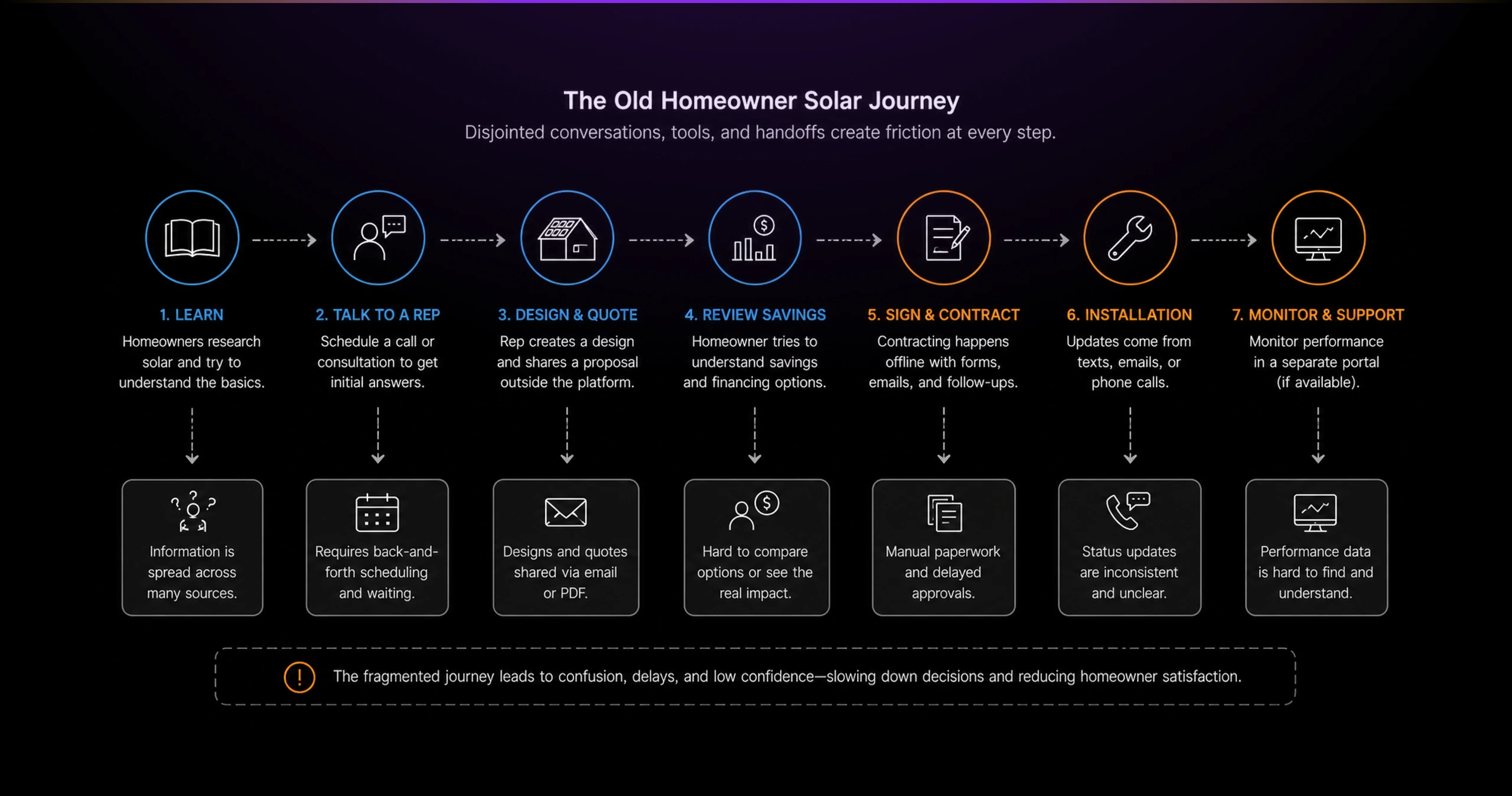
Without a clearer digital journey, homeowners risked delaying decisions, misunderstanding tradeoffs, or depending too heavily on a sales rep to explain every part of the process.
Solution
Starting with education, not just configuration.
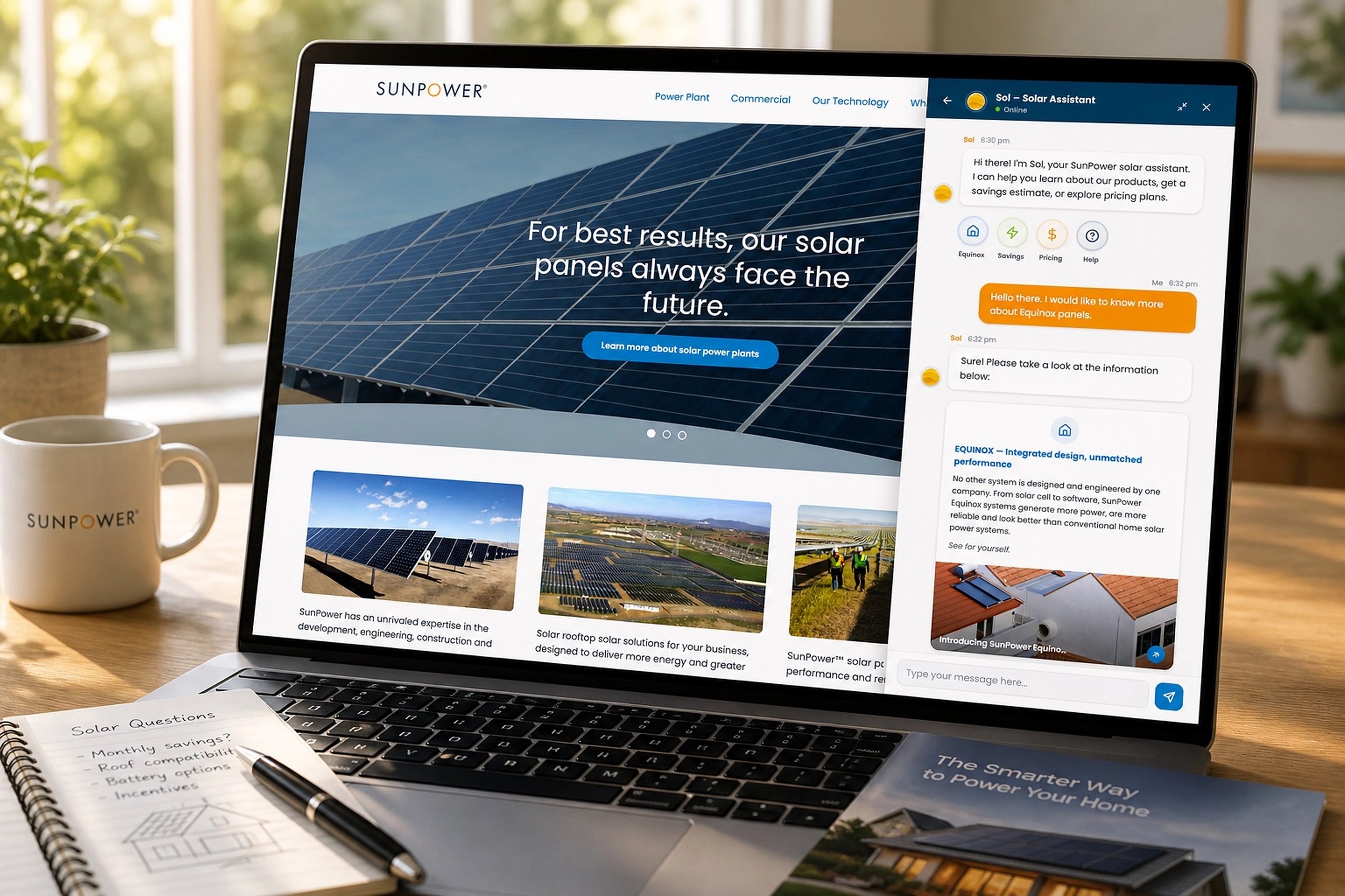
I designed EDDiE as a guided solar journey, not just a design tool. The experience started by helping homeowners understand solar in their neighborhood, their energy context, and the value of clean energy.
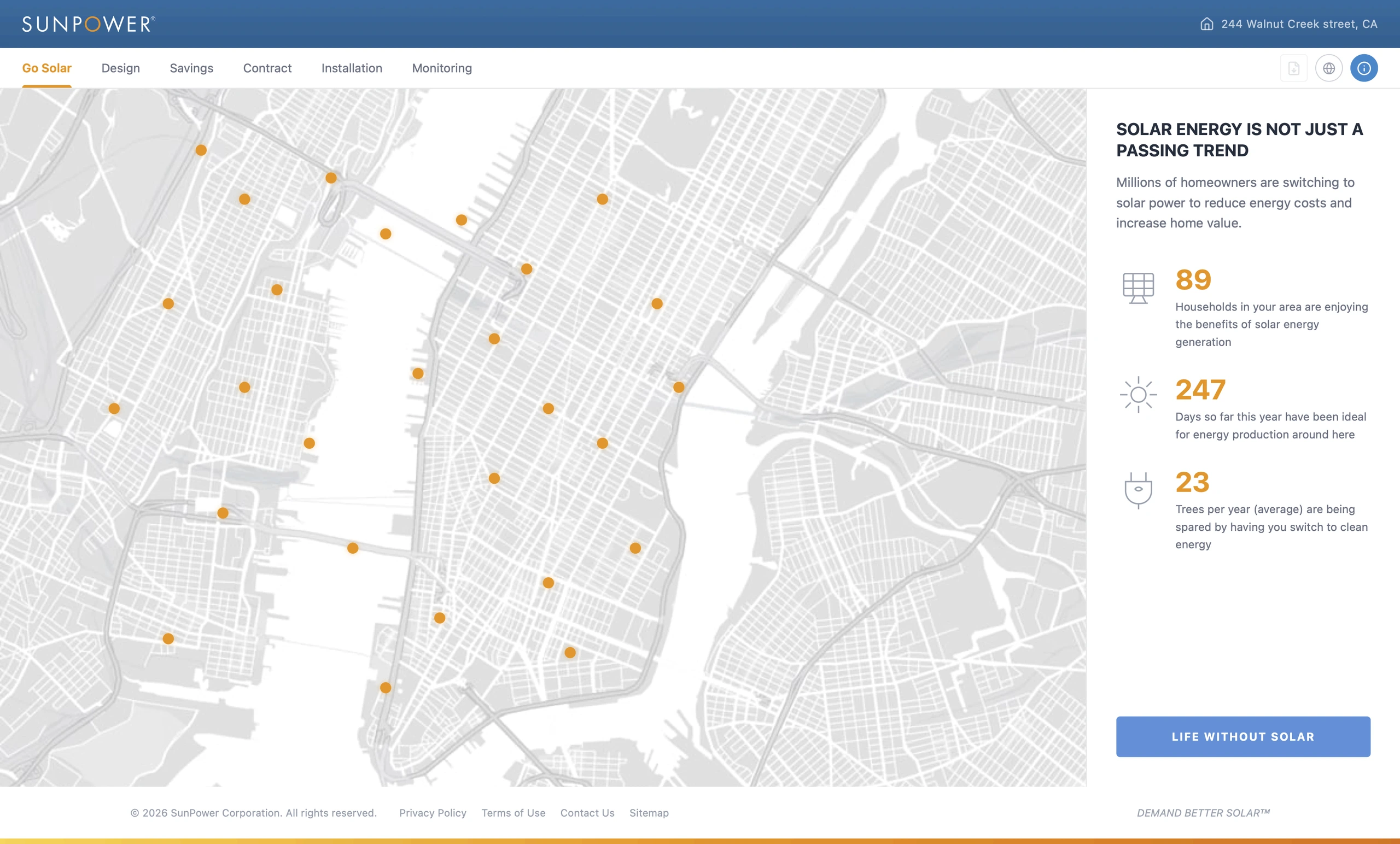
This opening gave homeowners social and environmental context before asking them to make technical decisions. It made solar feel less abstract and more connected to their area.
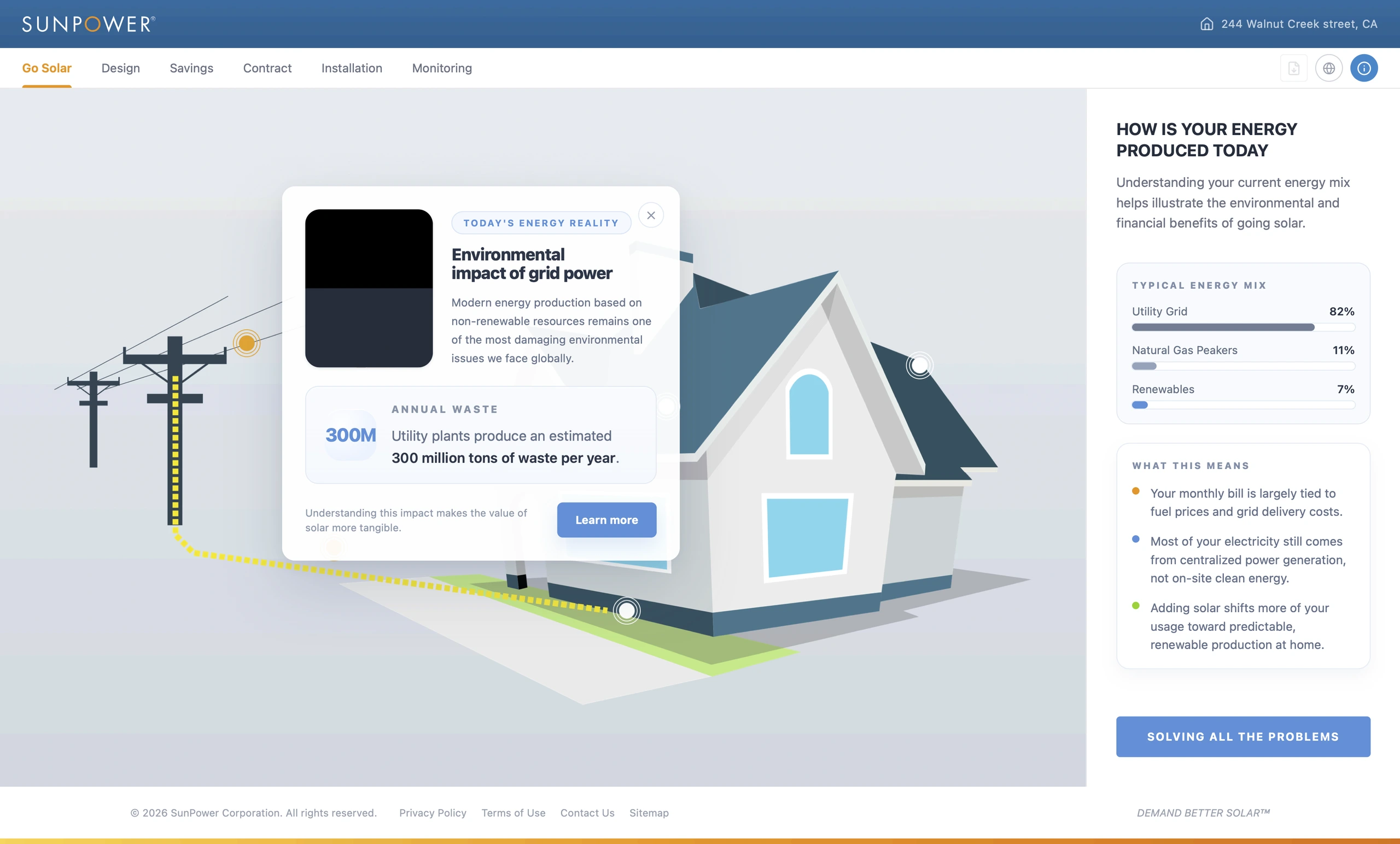
The educational panels explained grid power, utility mix, environmental impact, and the practical reason solar mattered. The goal was to reduce confusion before the homeowner reached the design step.
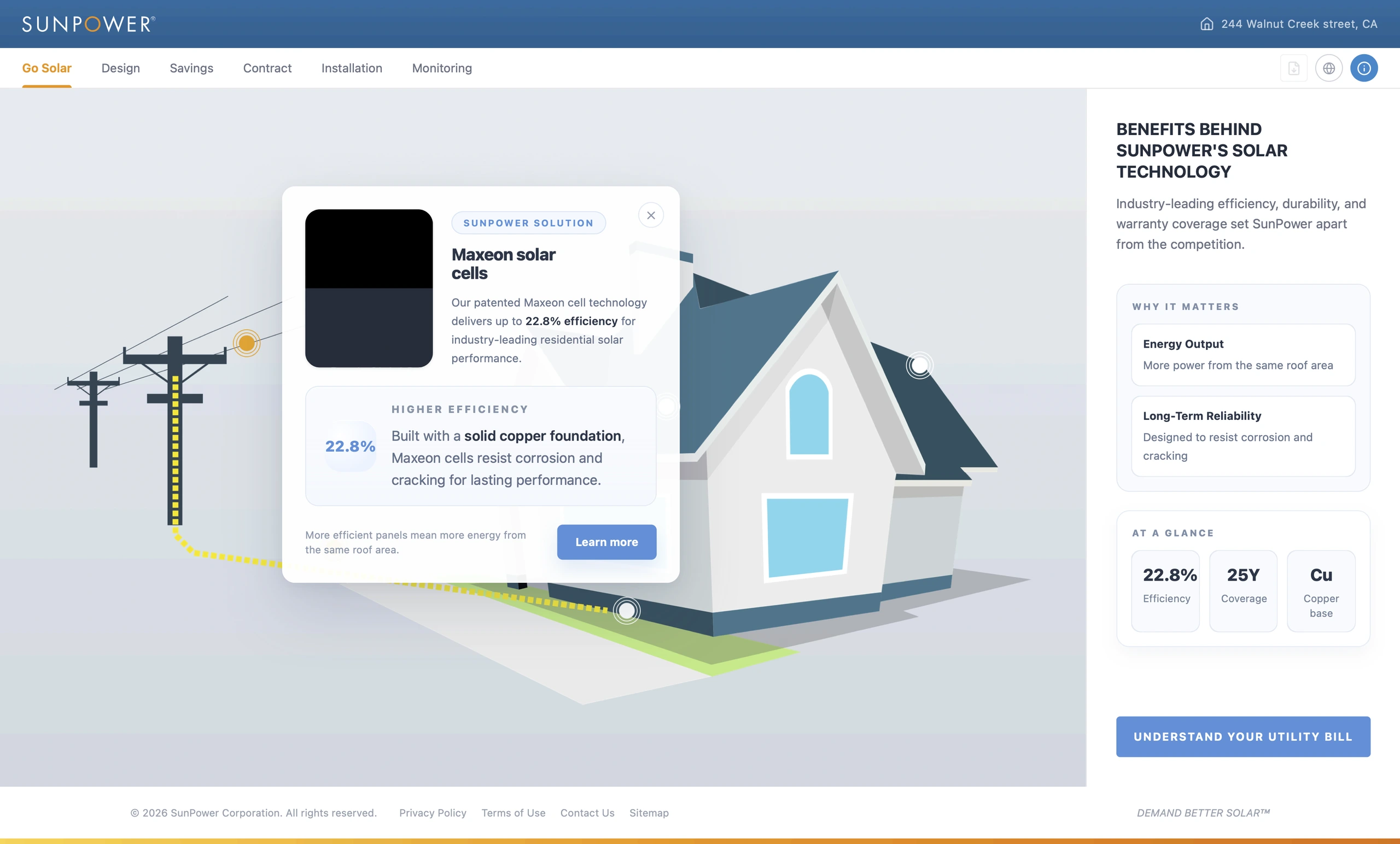
Technology education introduced SunPower’s panel value in plain language. Efficiency, durability, and warranty were framed as decision factors, not technical jargon.
Turning solar design into a guided visual workflow
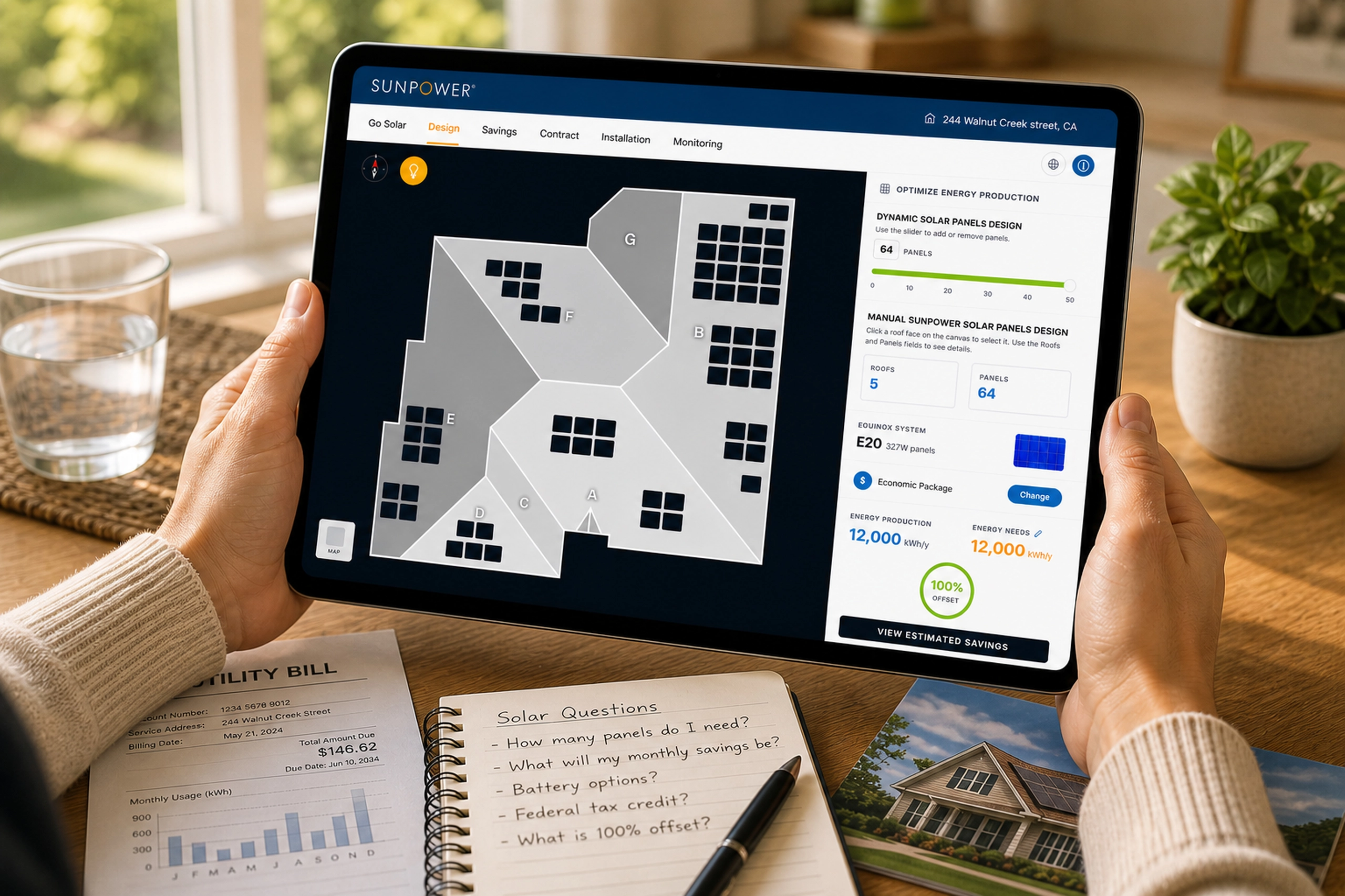
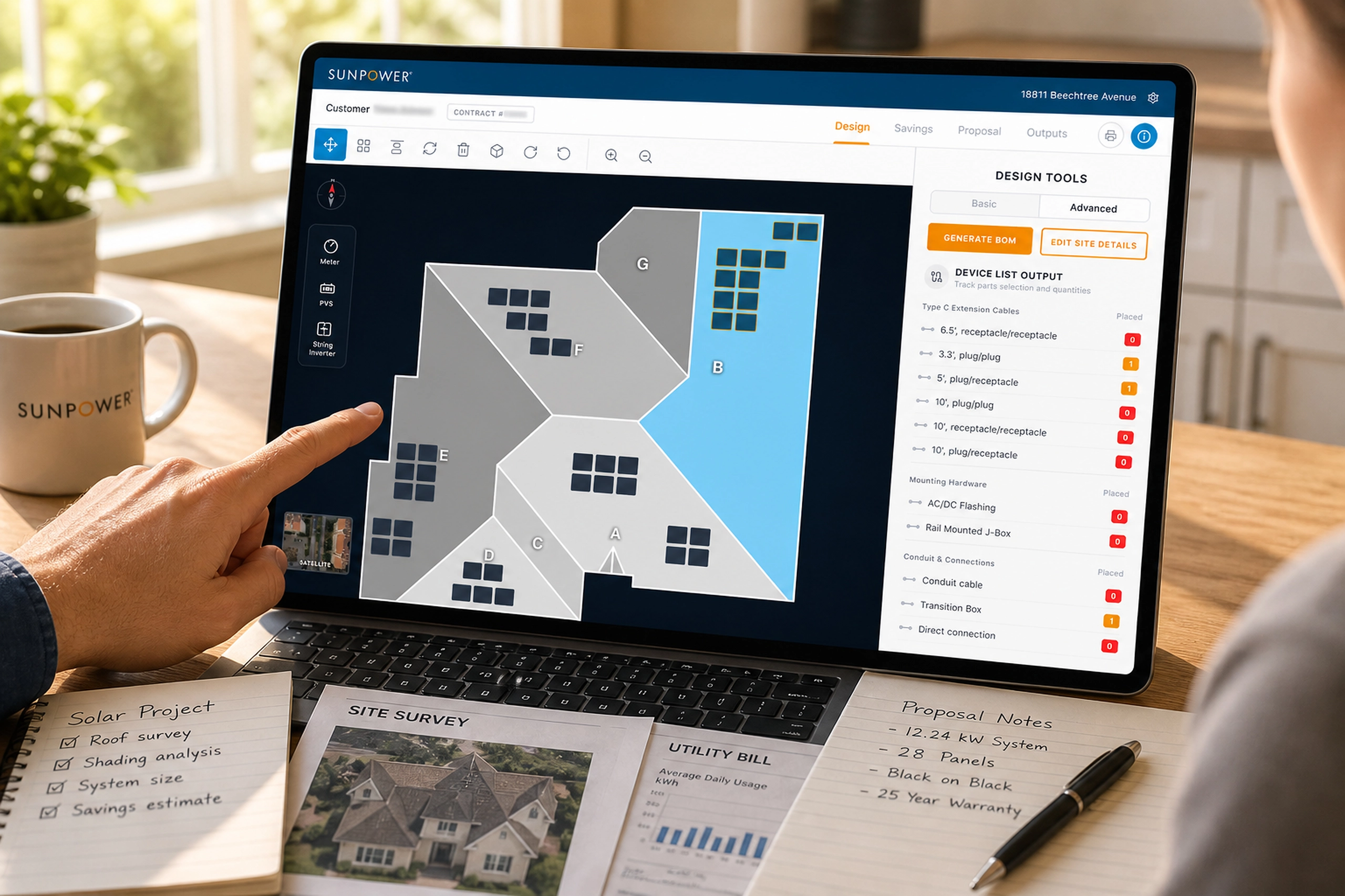
Once homeowners understood the value context, the experience moved into design. The system generated an optimized solar layout and gave users a simple way to adjust it.
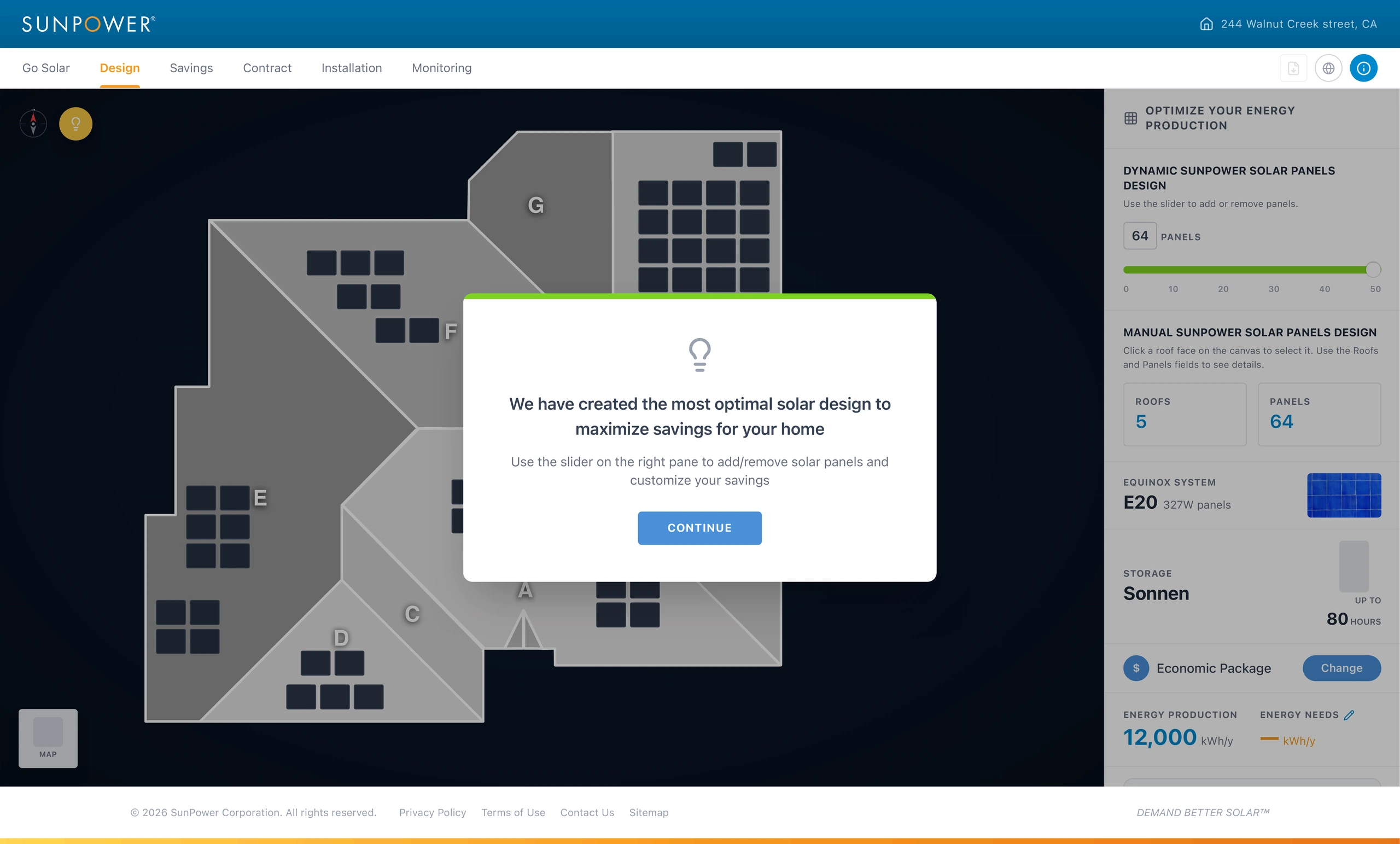
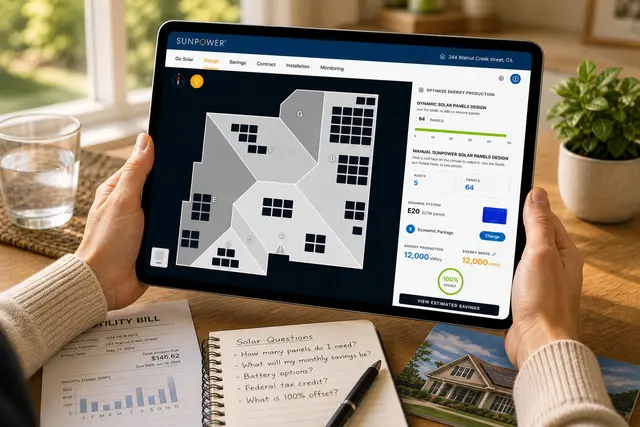
The design canvas made the system tangible. Instead of reading about a solar configuration, homeowners could see panels placed across their roof and understand the relationship between roof space, panel count, and energy production.
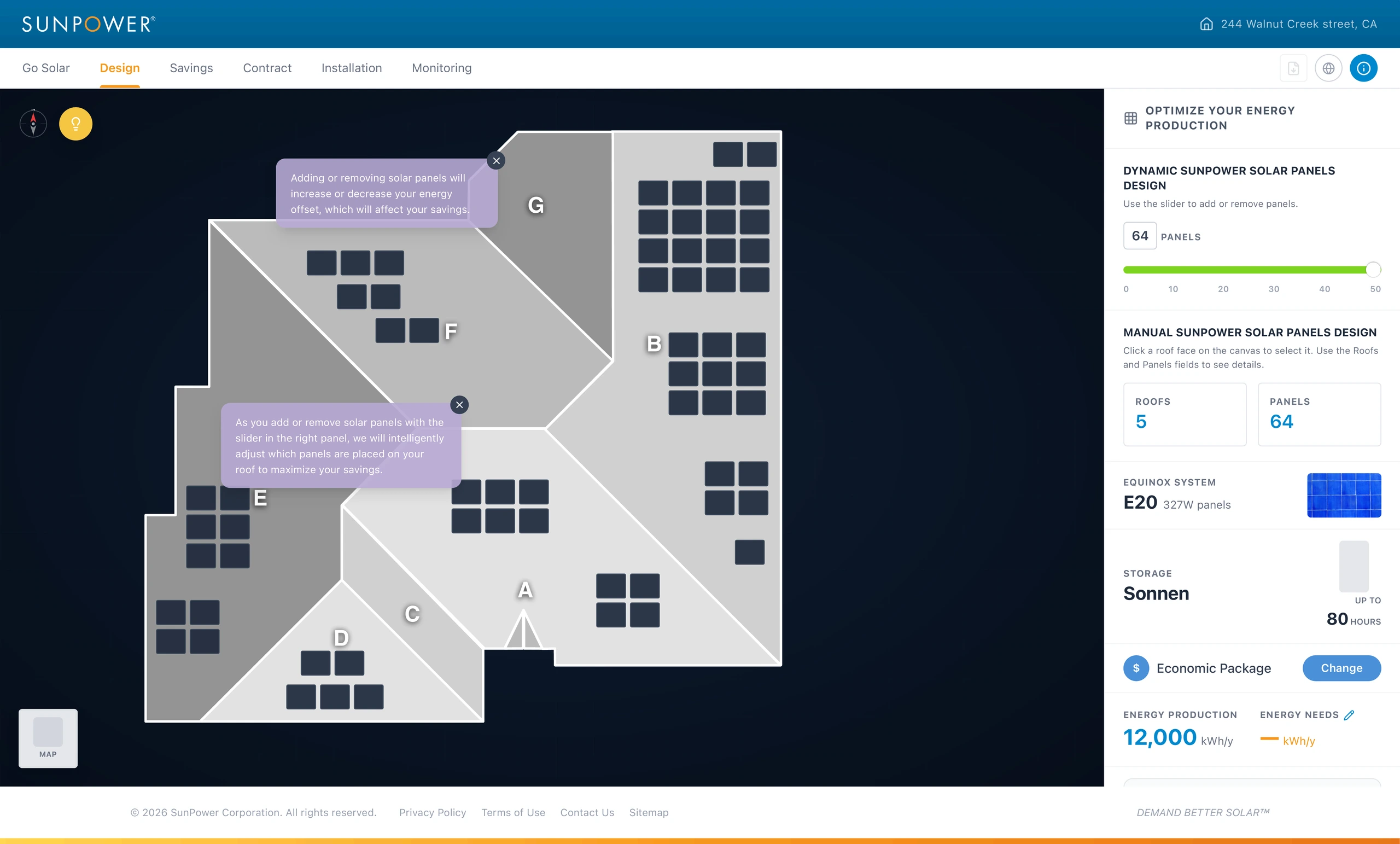
Inline guidance helped homeowners adjust the system without feeling lost. The interface explained how adding or removing panels changed offset and savings.
The system also provided suggestions, helping users improve the design without needing to understand every technical rule behind panel placement.
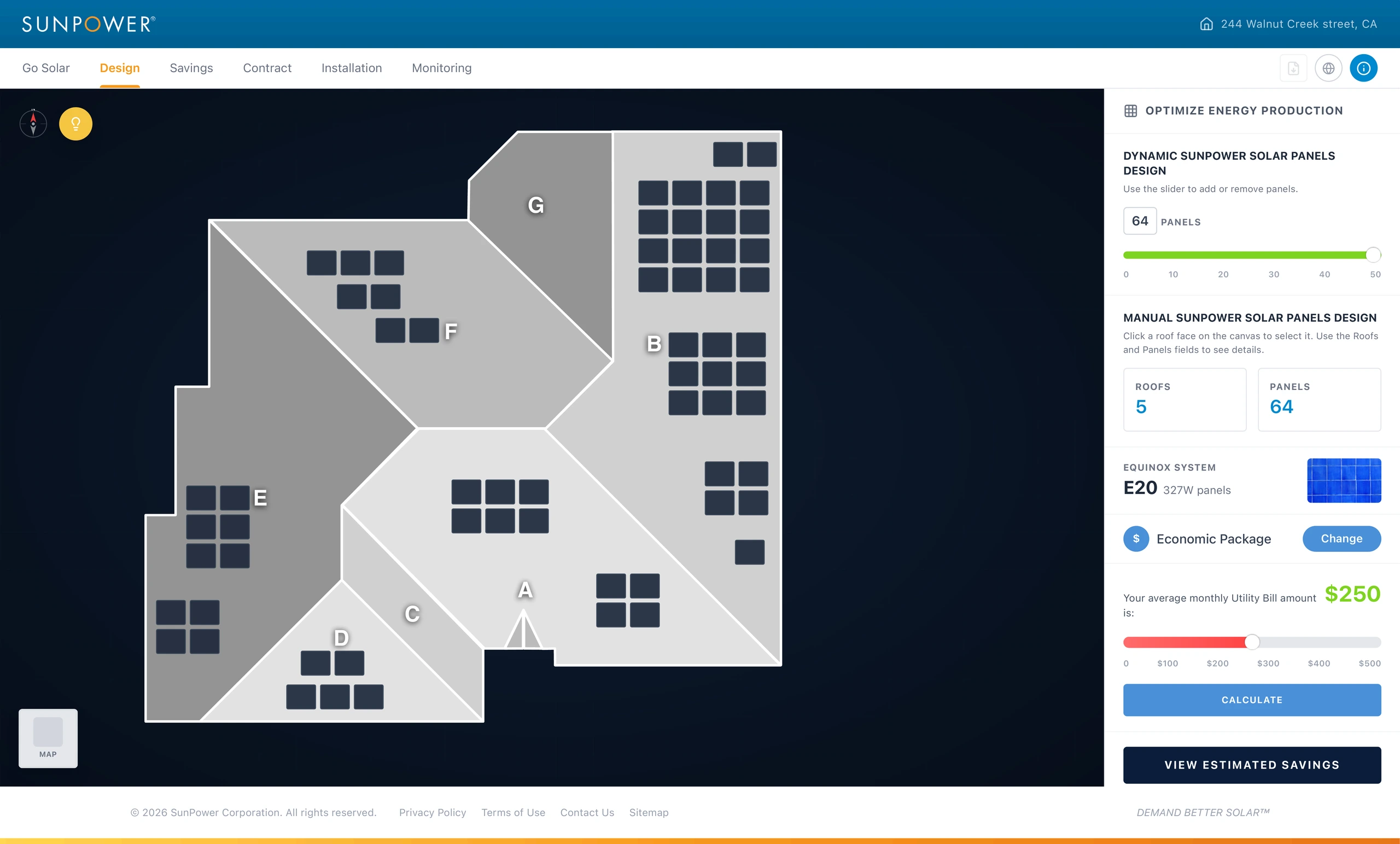
Making energy impact understandable in real time
A core interaction pattern was immediate feedback. As the design changed, production and energy offset updated in the sidebar.
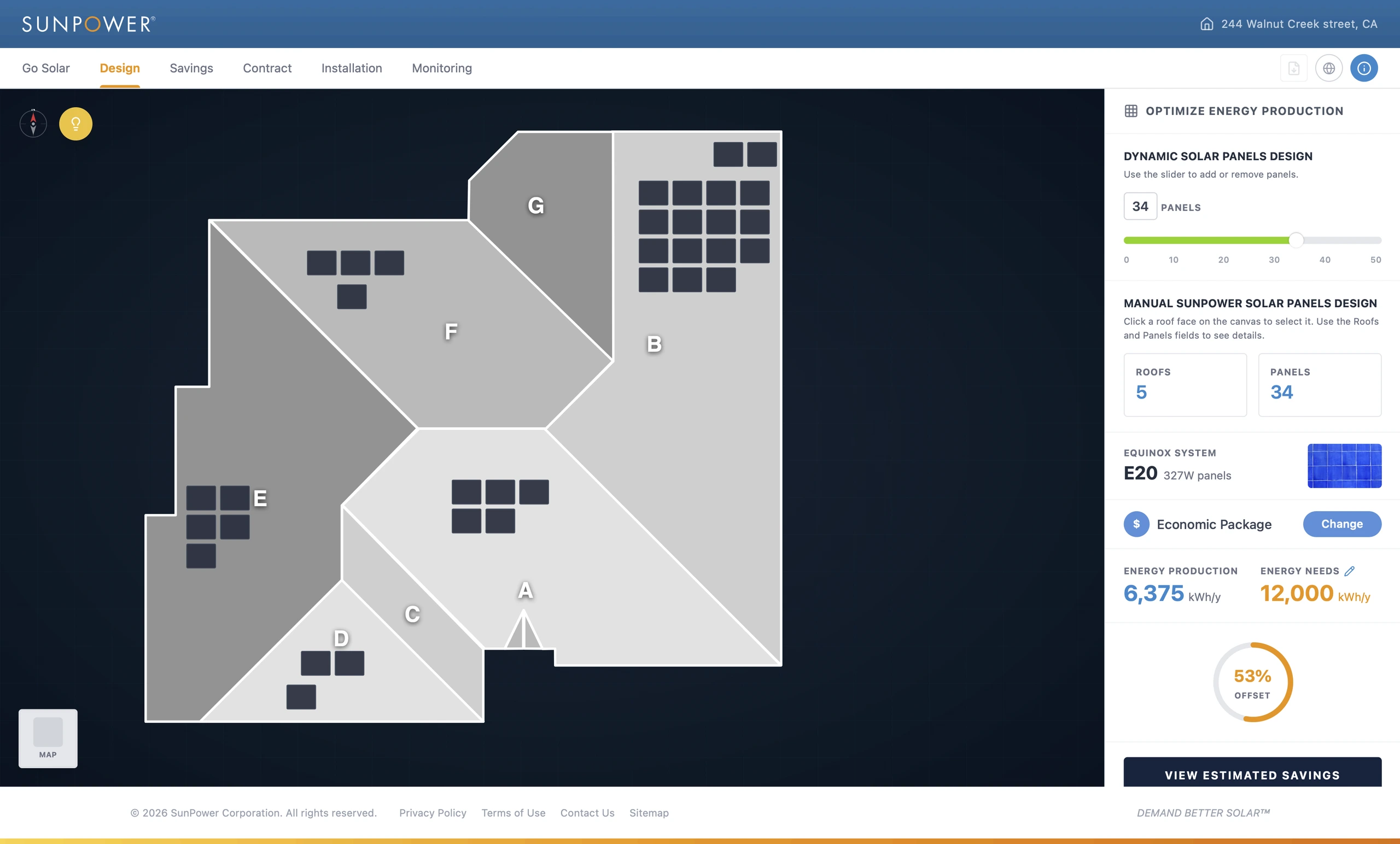
This was important because homeowners needed to see the tradeoff between fewer panels, lower energy production, monthly bill impact, and overall system value.
The experience then connected design choices to package selection, helping homeowners understand how product bundles mapped to goals and budget.
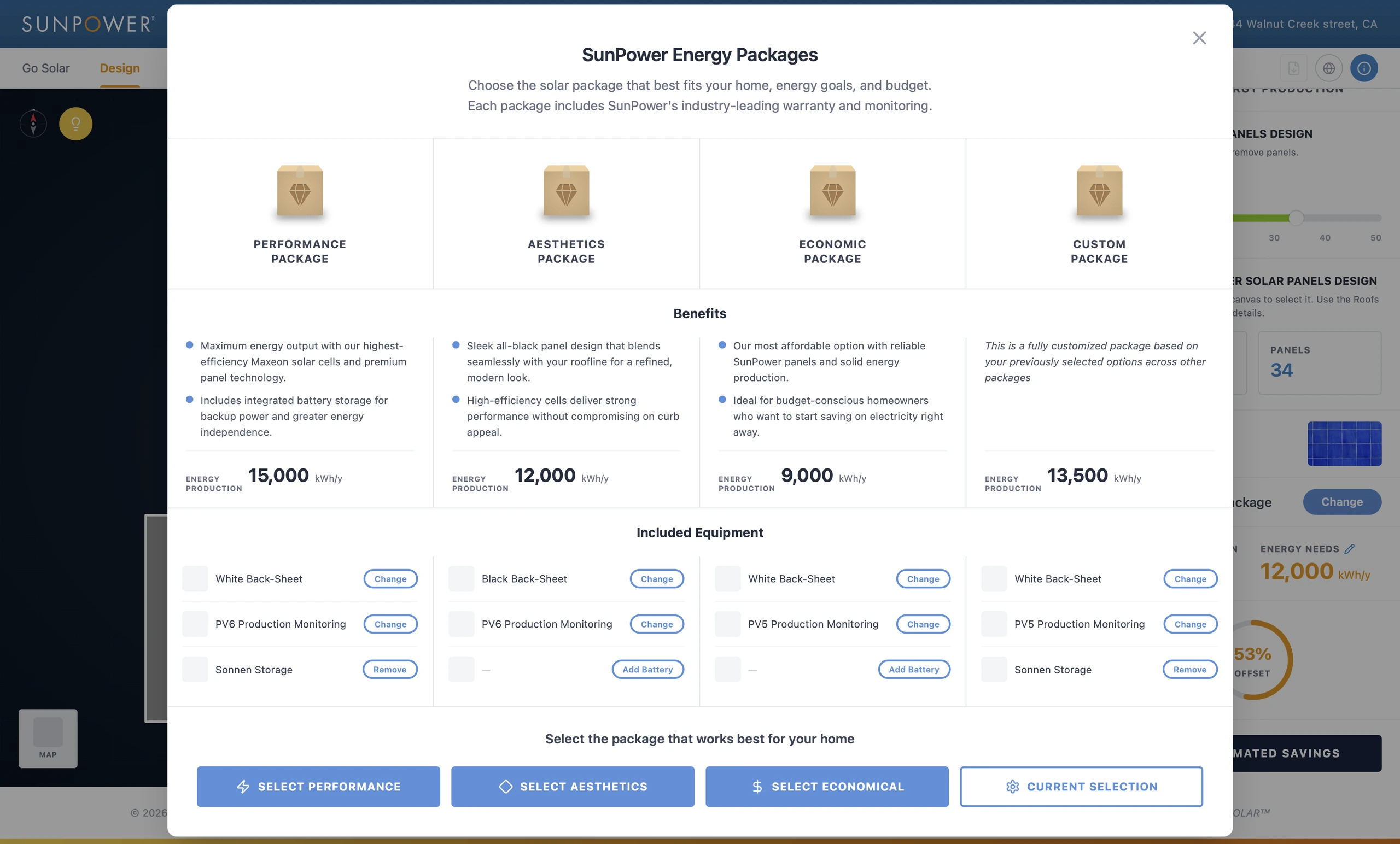
Packages turned a technical configuration into a buying decision. Performance, aesthetics, economics, and custom choices helped users compare paths without requiring solar expertise.
Connecting savings, proposal, and contract flow
The Savings section translated the design into financial language. Homeowners could compare cash, loan, and lease options, monthly utility impact, and long-term cost differences.
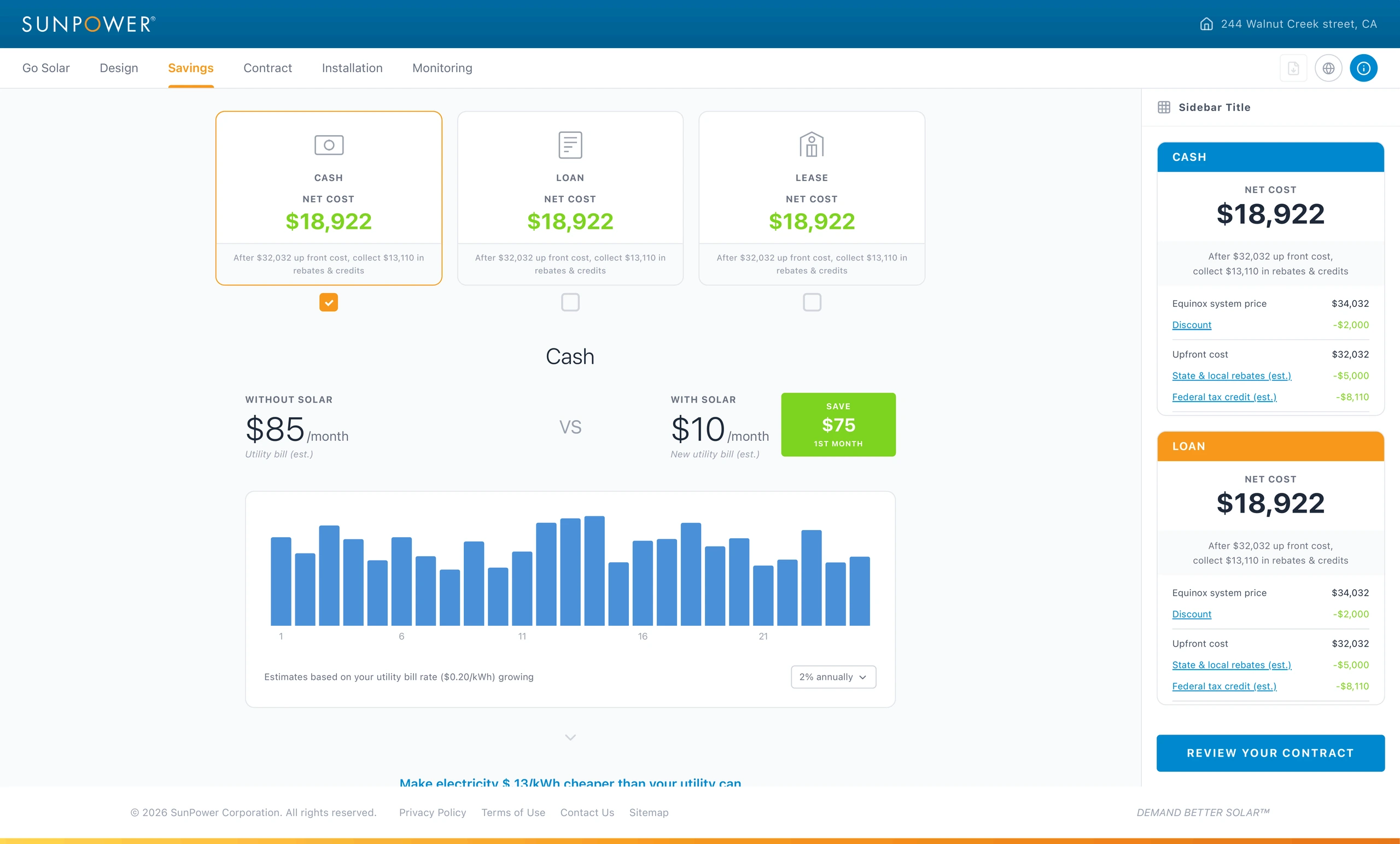
This shifted the experience from “what fits on my roof?” to “what does this mean for my life and budget?” That connection was essential for decision confidence.
The proposal output gave homeowners and sales teams a polished artifact that summarized the design and buying path.
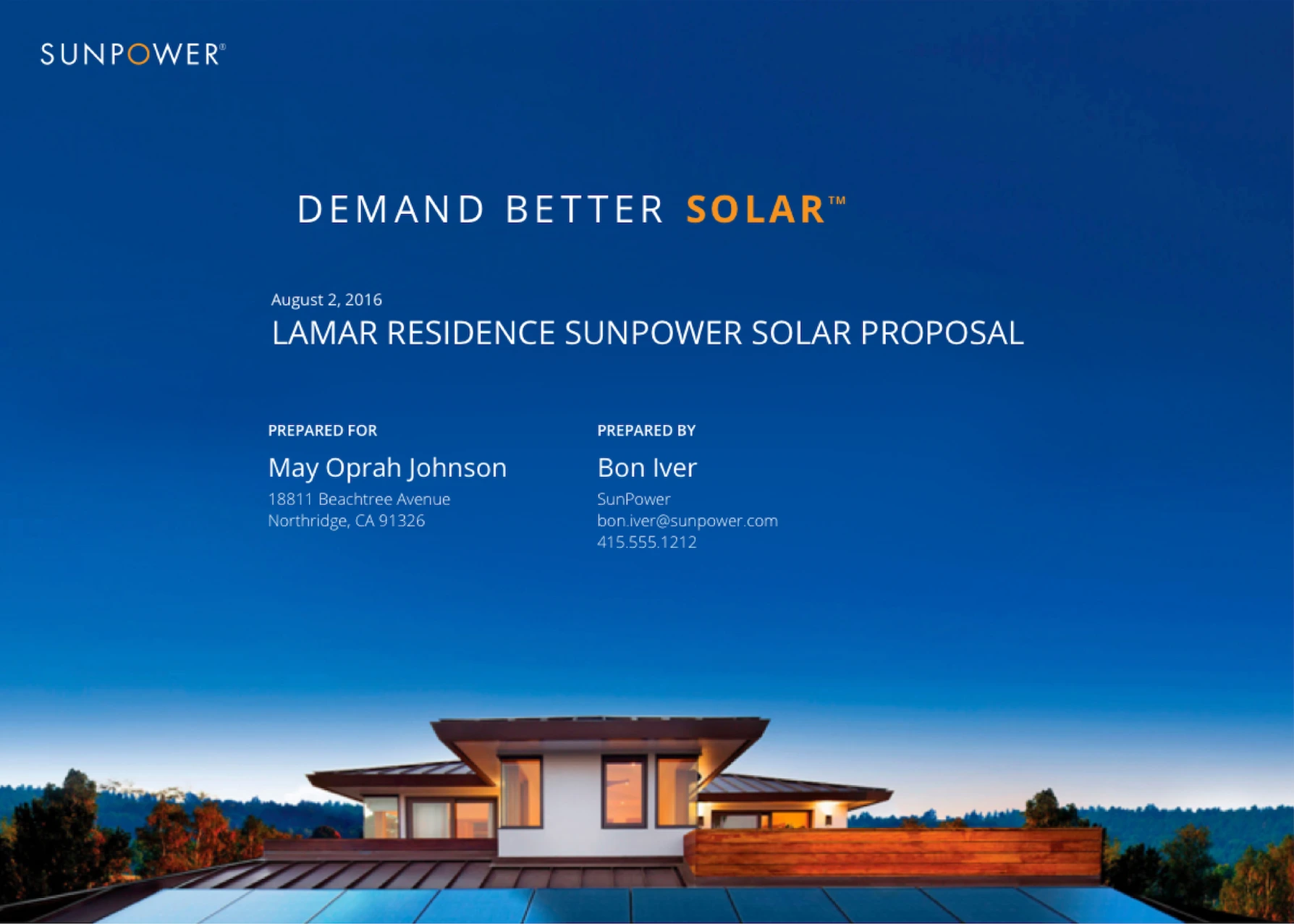
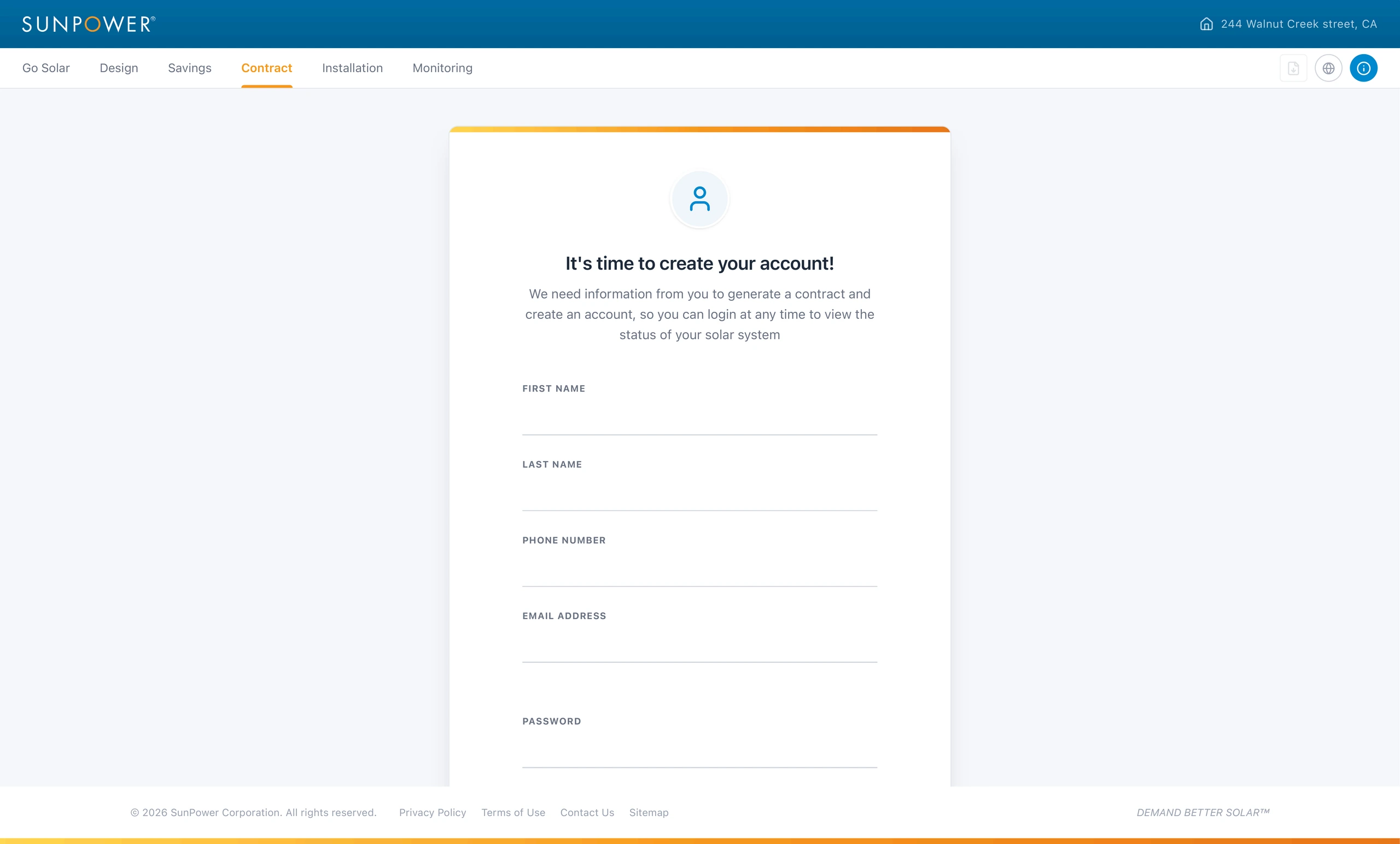
The contract flow moved the homeowner from exploration into commitment. Account creation helped the customer return later, view status, and continue through the solar journey.
Extending the journey beyond the sale
EDDiE also supported the homeowner after commitment. The installation flow explained milestones like getting started, site verification, permitting, installation, and system activation.
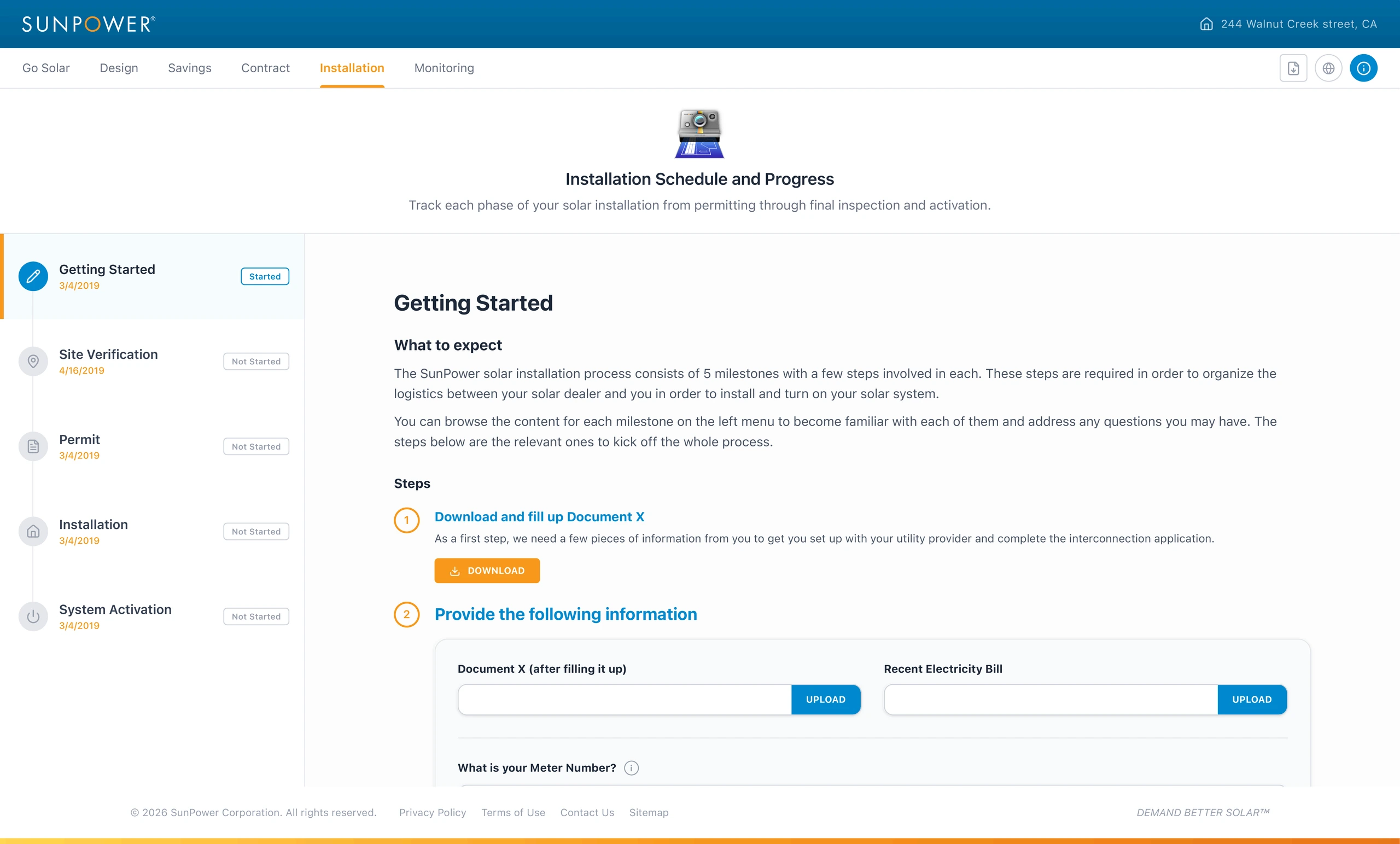
This mattered because the solar purchase does not end at contract signing. Homeowners still need clarity around forms, site verification, permitting, scheduling, inspection, and activation.
After installation, monitoring helped homeowners stay connected to the system’s performance and value.
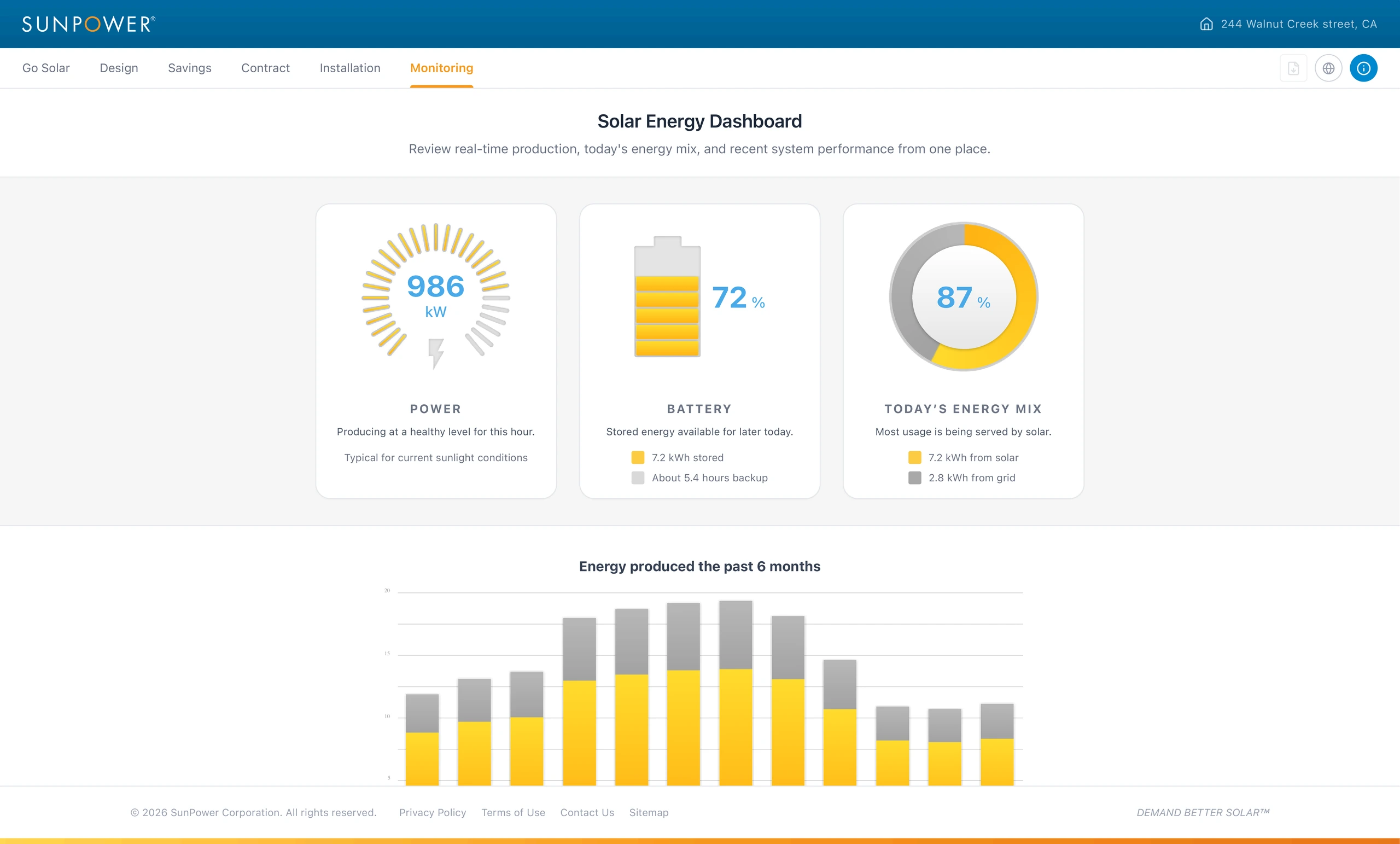
The experience closed the loop: learn, design, compare, commit, install, and monitor.
Related Projects
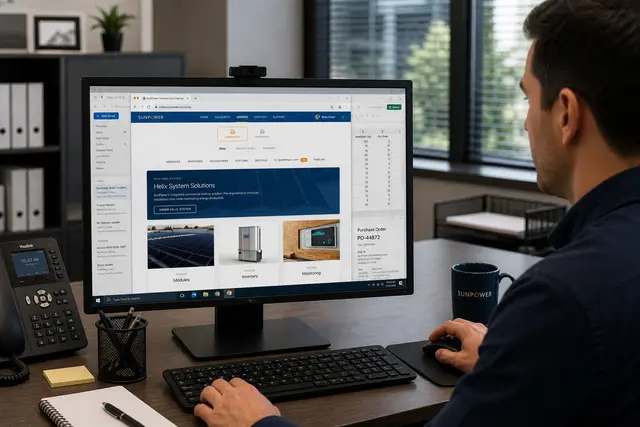
Commercial Ordering System
A redesigned commercial ordering workflow that turned complex solar BOMs into faster, reusable de...
Energy & Climate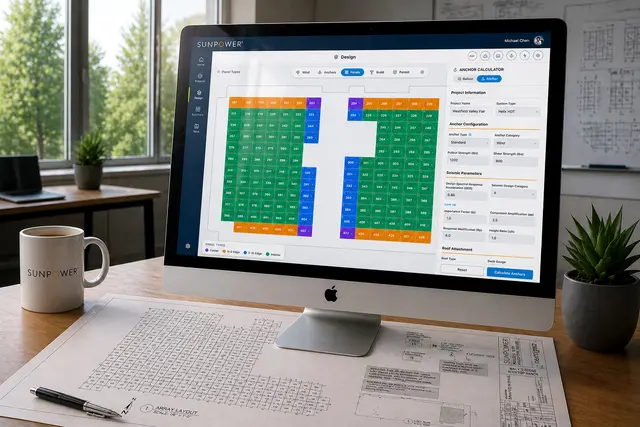
Helix Calculator
A CAD-like commercial solar design tool that helped dealers create accurate rooftop layouts in mi...
Energy & Climate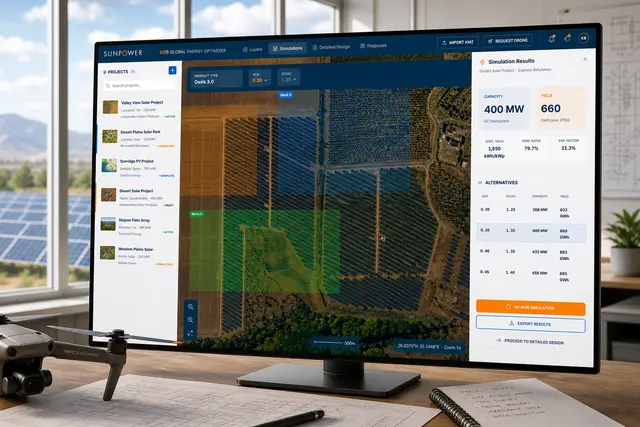
GEO – Global Energy Optimizer
A geospatial solar planning platform for defining sites, simulating layouts, optimizing system pa...
Energy & Climate