
Clients & Ventures

Product/systems design that turns AI tech into business results



















































Contact Us
Contact form or information will go here.
Project Detail



Rapid-App - Insurance Platform
Summary

A guided agent platform that made life insurance applications and underwriting faster, clearer, and easier to complete.
Life insurance applications were slow, error-prone, and difficult for agents to complete consistently. The process depended on long forms, eligibility rules, payment details, beneficiary data, and signature steps that could easily break down.
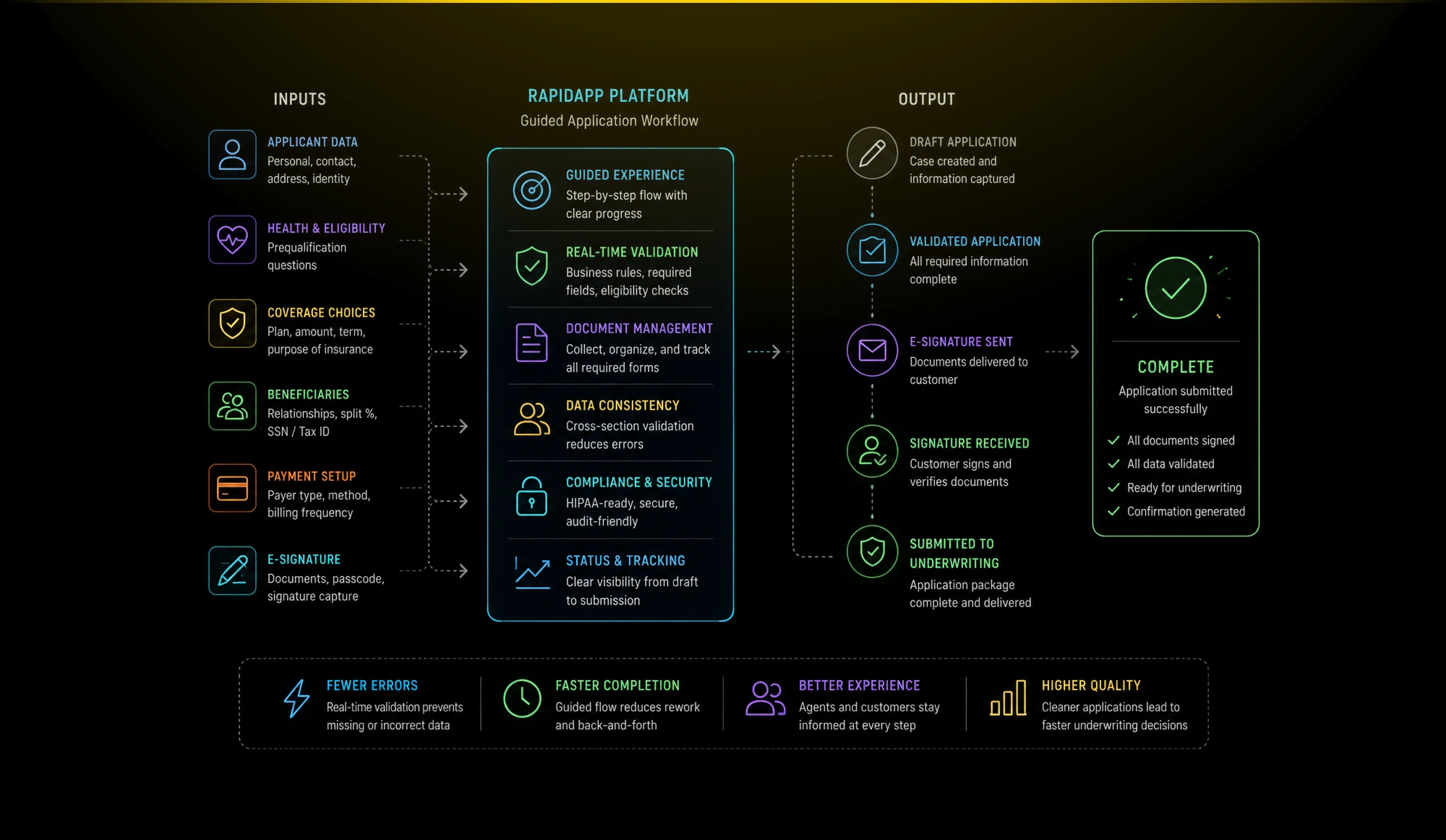
I helped design RapidApp as a guided application workflow for Fidelity Life agents. The product turned a complex insurance intake process into a structured digital path with clear steps, validation, status tracking, and e-signature readiness.
Outcome
A faster, clearer path from intake to submission.
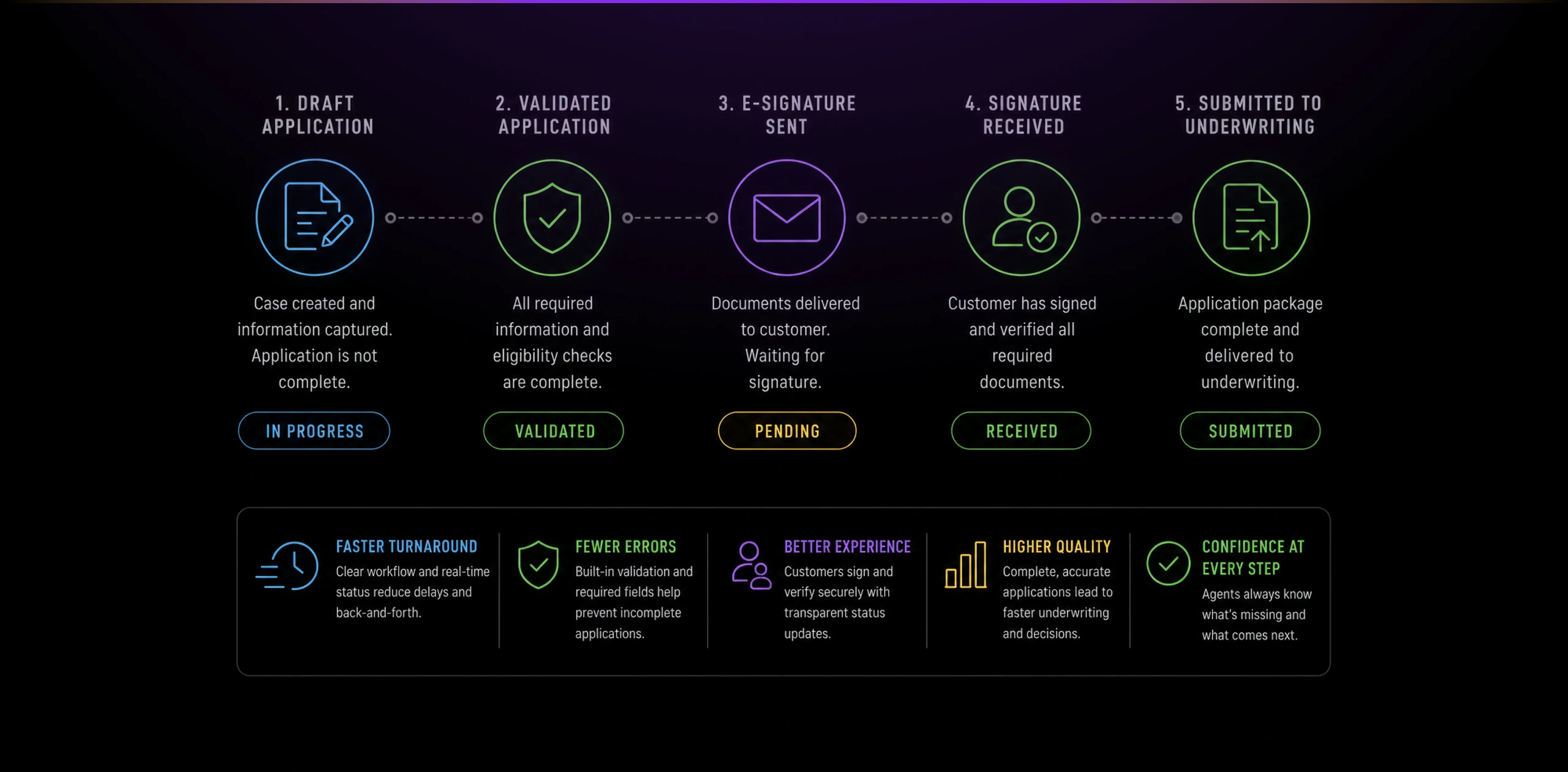
RapidApp helped agents move through a life insurance application with more structure and fewer unknowns. The product reduced ambiguity by showing progress, enforcing required information, and connecting e-signature status directly to the application workflow.
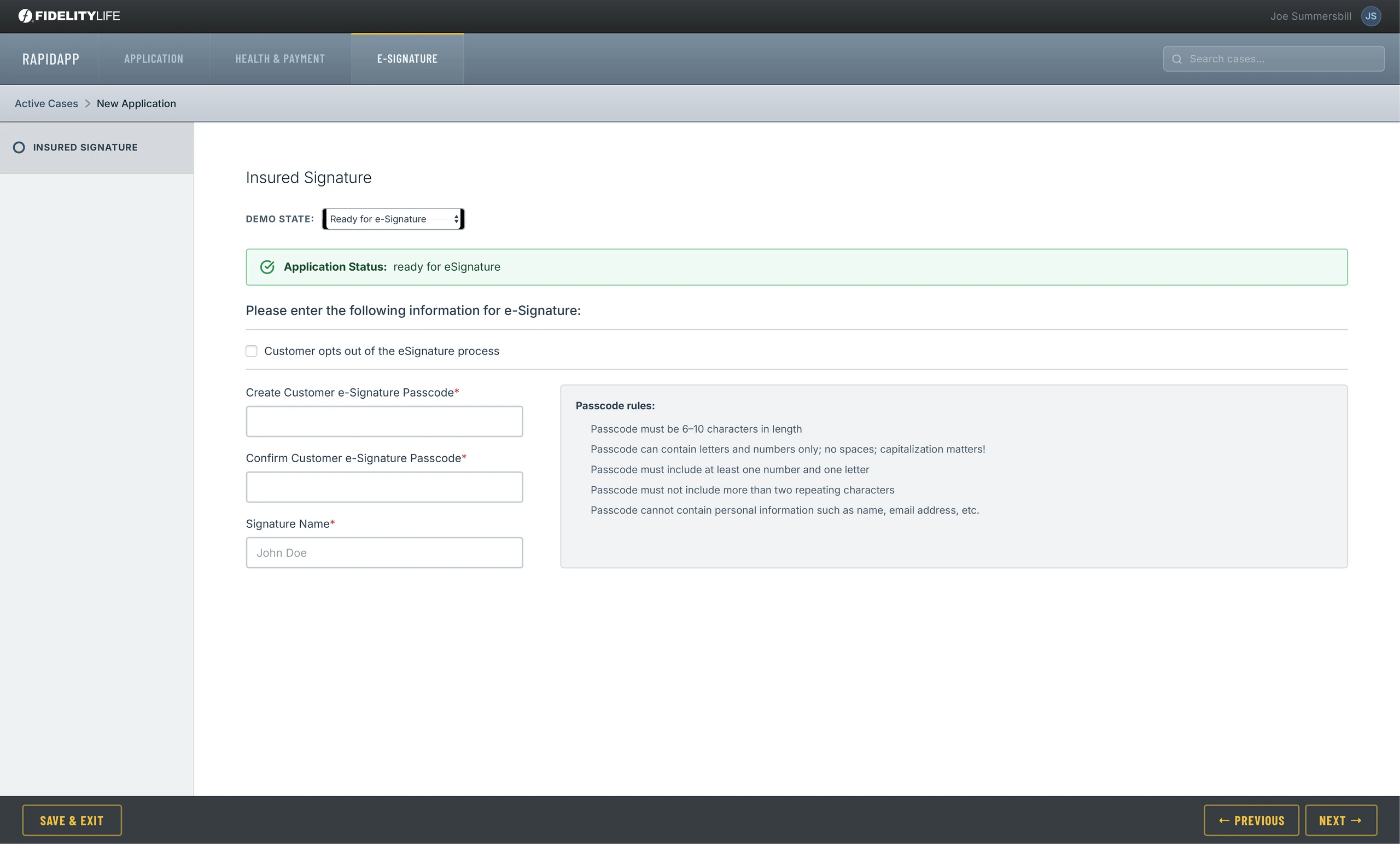
The e-signature flow was especially important. The interface made it clear when an application was incomplete, when signature details had been sent, when the customer had signed, and when the application was ready to submit.
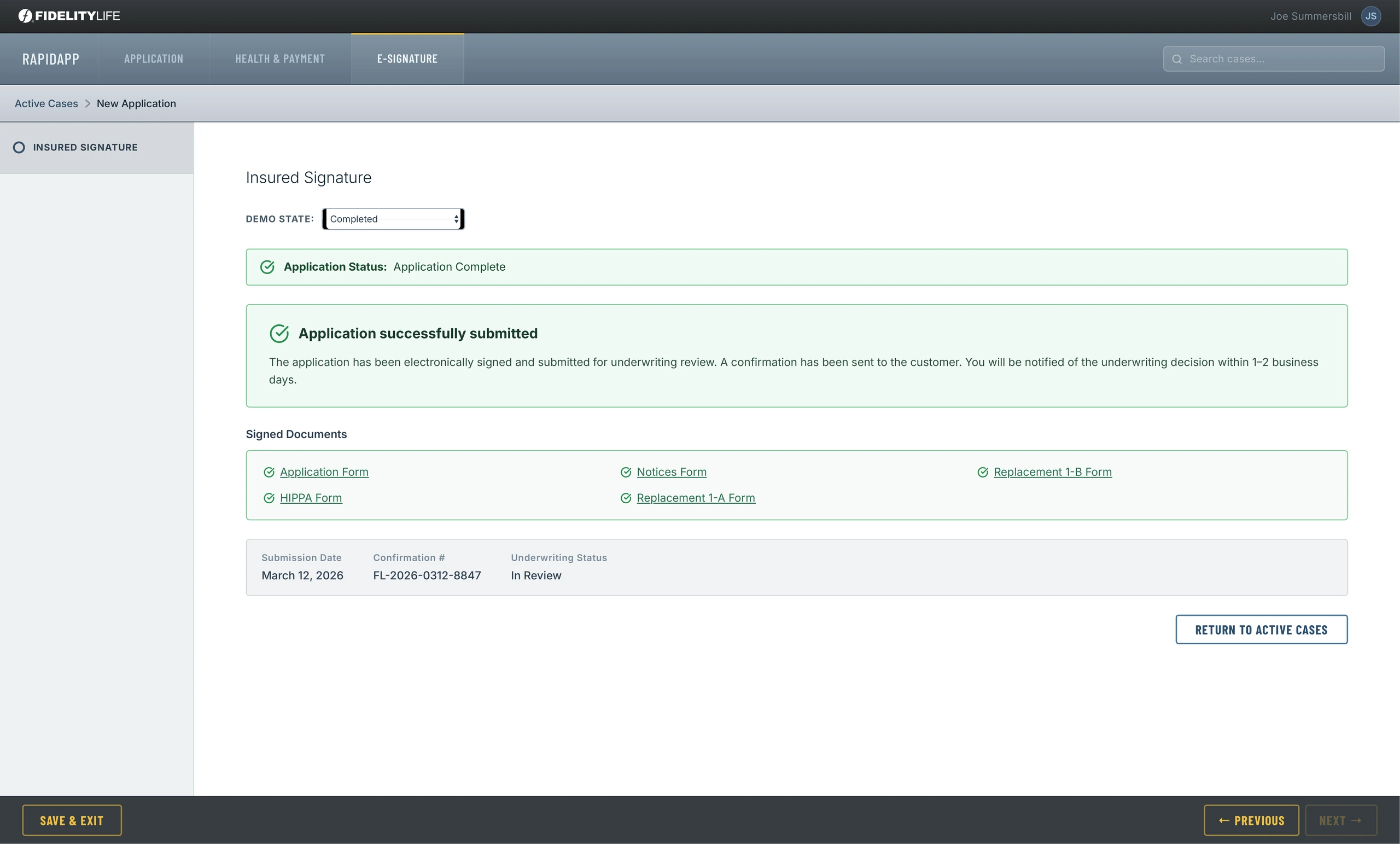
The final experience gave agents a clear confirmation state with signed documents, submission date, confirmation number, and underwriting status. This created a more trustworthy endpoint for a process that previously depended on scattered paperwork and manual follow-up.
Impact
- Reduced application ambiguity for agents.
- Made missing information easier to detect before signature.
- Connected intake, payment, beneficiaries, and e-signature into one flow.
- Improved confidence before submitting applications to underwriting.
- Created a reusable pattern for regulated, multi-step financial workflows.
The Problem
A long application process with too many places to fail.
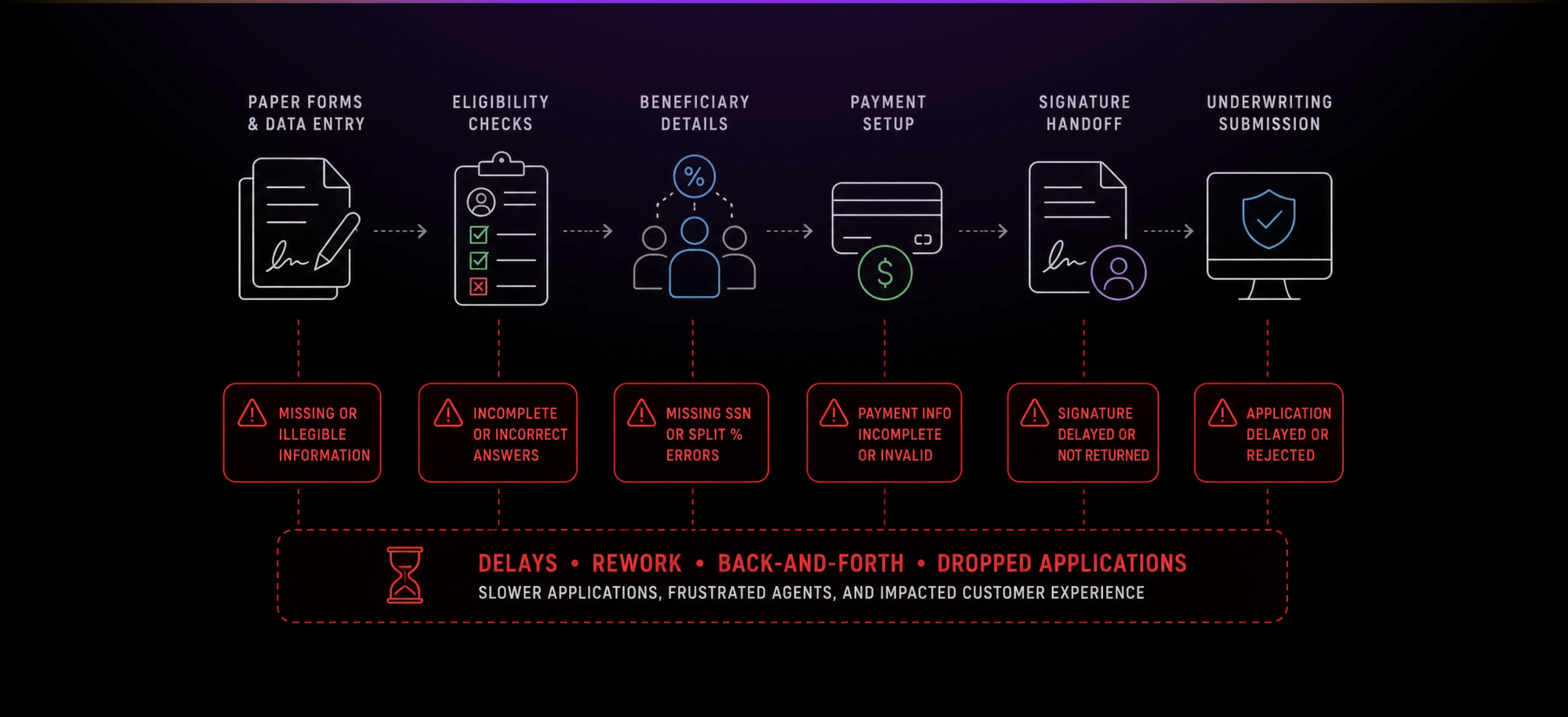
Applying for life insurance required agents to collect personal details, health information, coverage preferences, beneficiary data, payment information, and signature confirmation. Each step carried compliance risk and could delay the application if information was missing or inconsistent.
The real challenge was not simply digitizing a form. The product needed to guide agents through a regulated workflow while helping them avoid mistakes, understand application status, and move customers toward submission without unnecessary back-and-forth.
Solution
A structured path for agents to complete applications with confidence.
I designed RapidApp around a simple idea: agents should always know where a case stands, what information is missing, and what step comes next. Instead of treating the application as one long form, the interface broke the process into clear sections with persistent navigation and completion states.
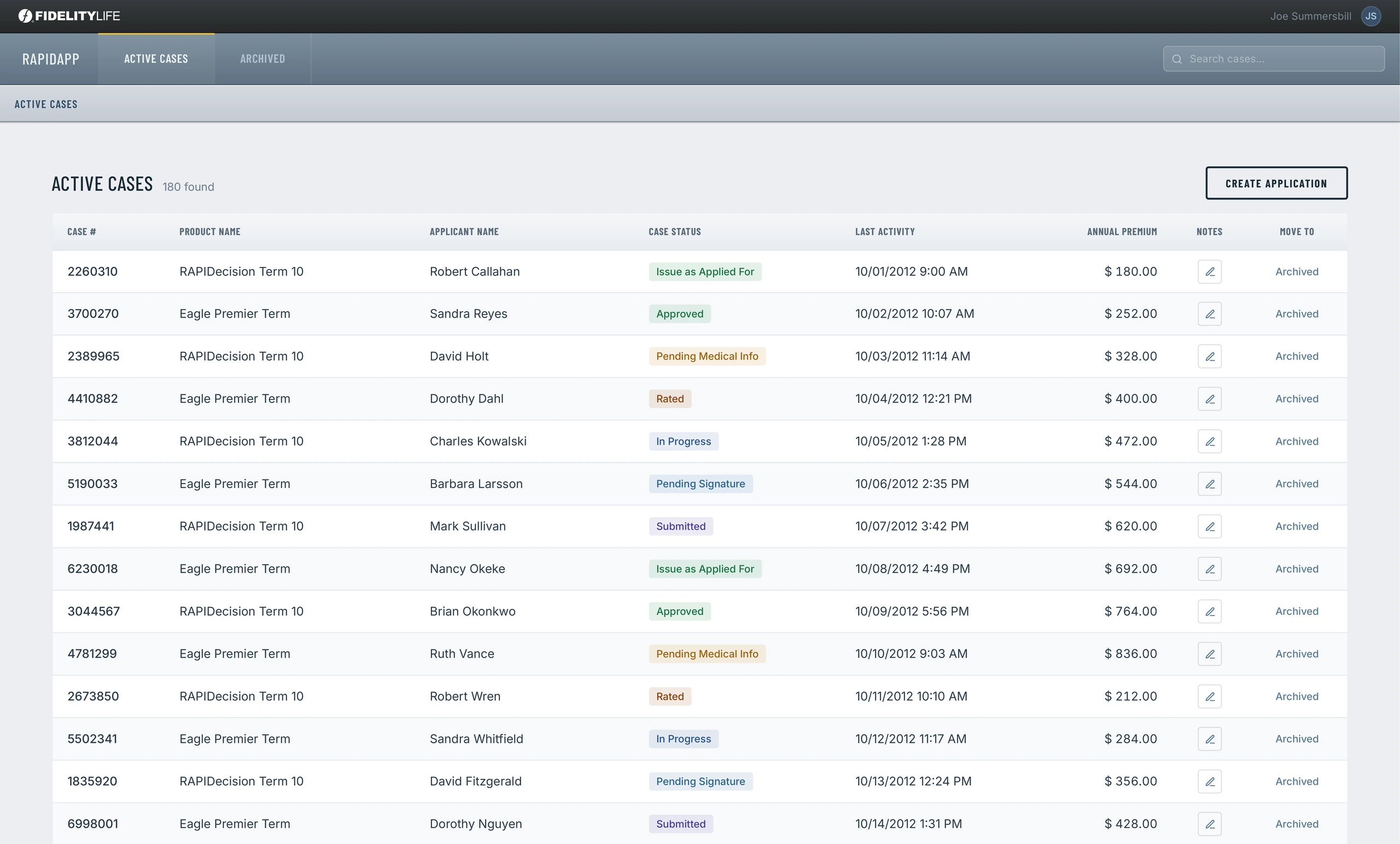
The experience started with a case management screen where agents could search, review, archive, or create new applications. This turned the application process into an operational workspace, not just a data-entry tool.
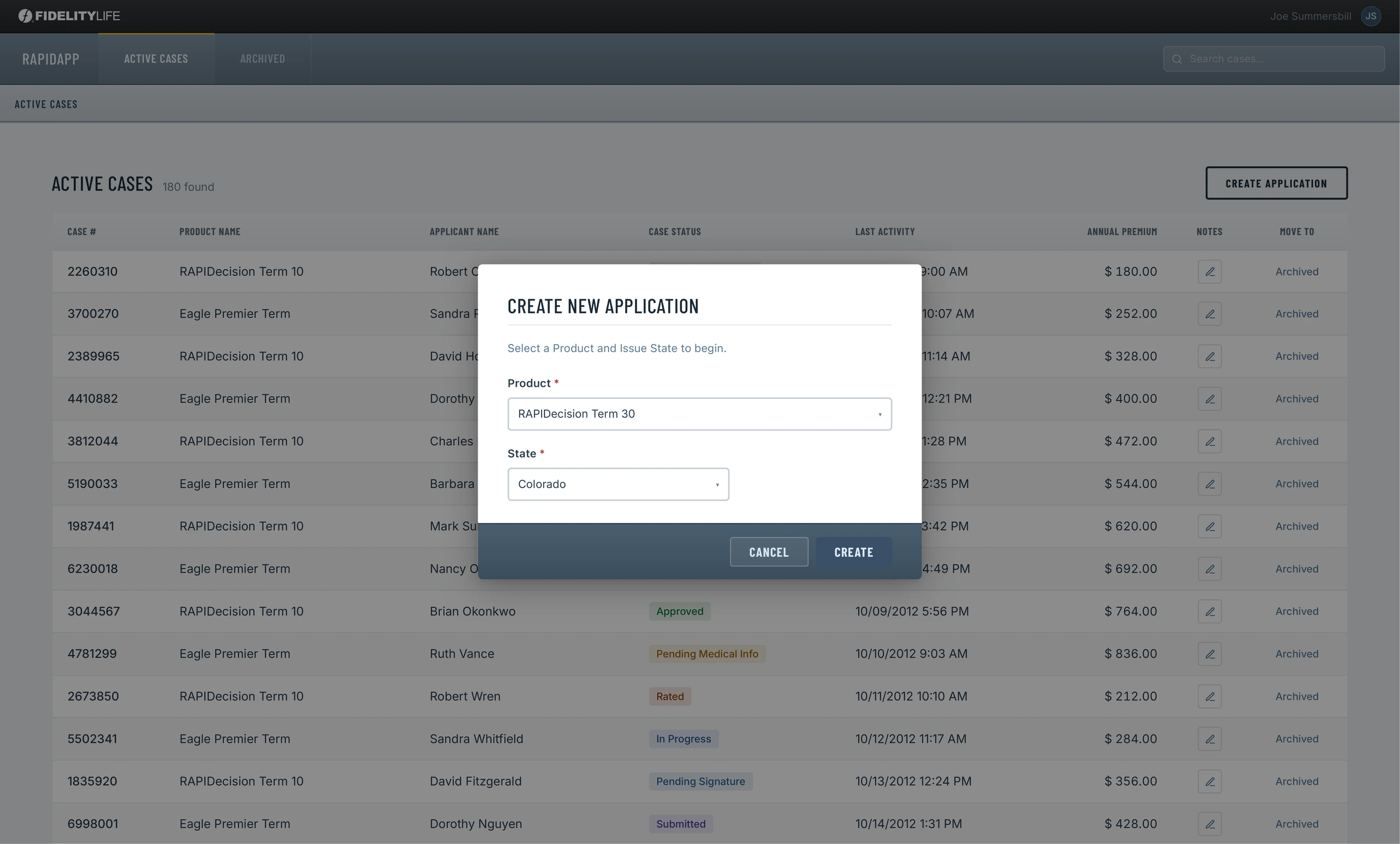
From there, the flow captured the insurance product and state before opening the application. This mattered because insurance rules and available products depend on location, eligibility, and product configuration.
The application itself used a left-side stepper to show progress across Basic Information, Contact Information, Prequalification Questions, Coverage Applied For, Other Coverage, Beneficiary Information, Owner Information, Additional Information, and Agent Declaration.
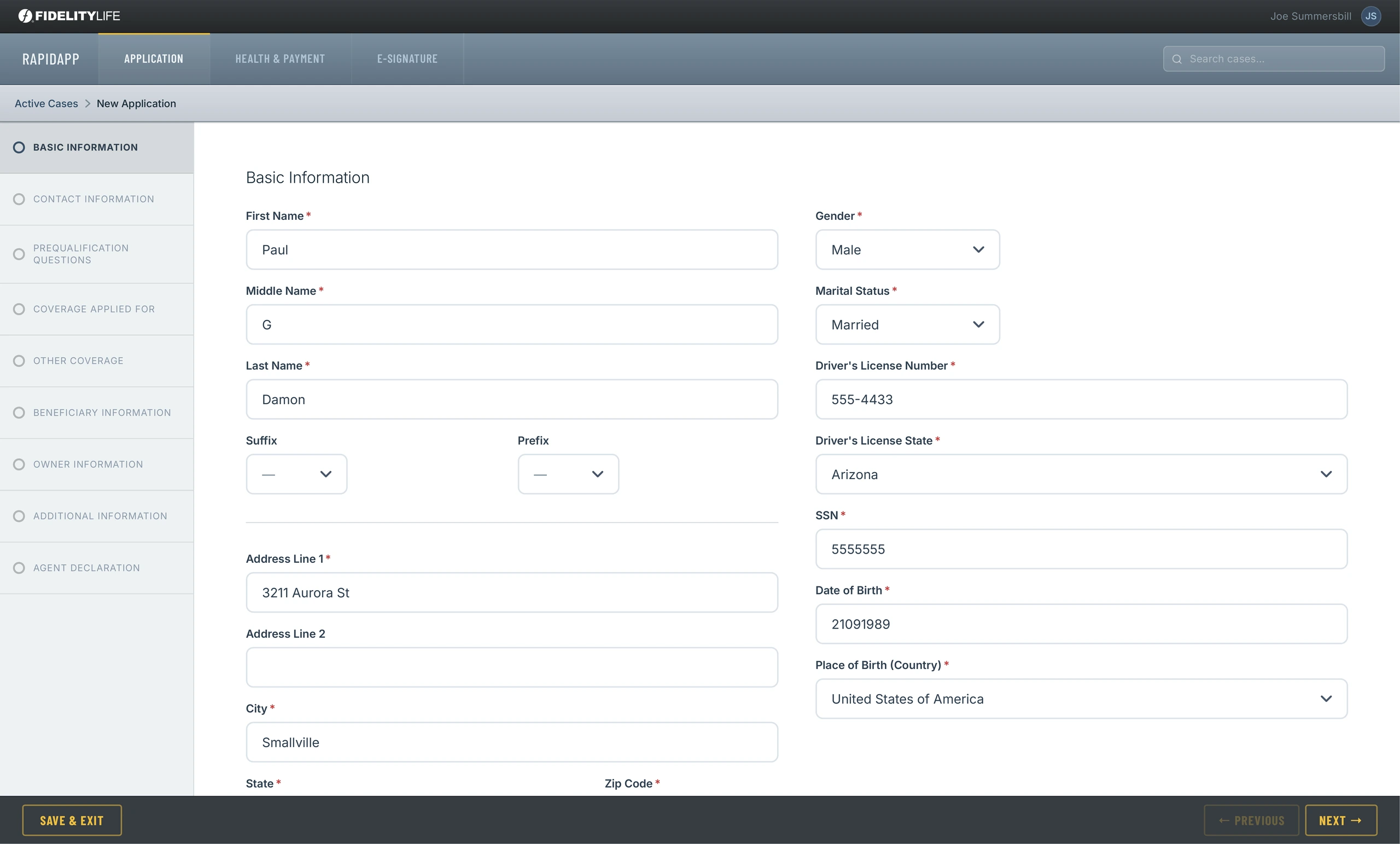
This structure gave agents a predictable path while keeping the application flexible enough for complex insurance scenarios.
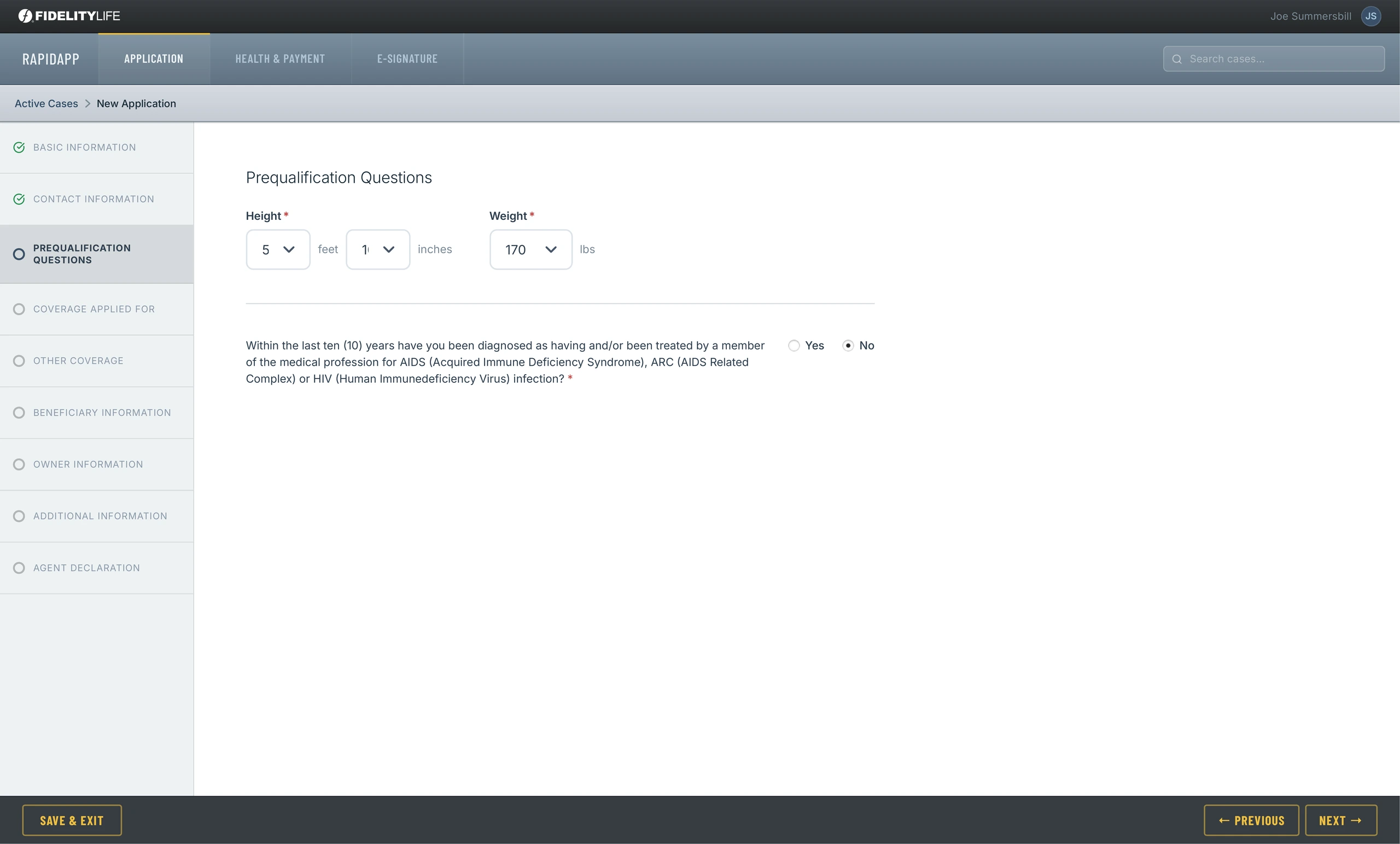
A key part of the design was moving critical eligibility questions earlier in the workflow. Instead of discovering problems at the end, agents could answer prequalification questions and understand whether the application could proceed.
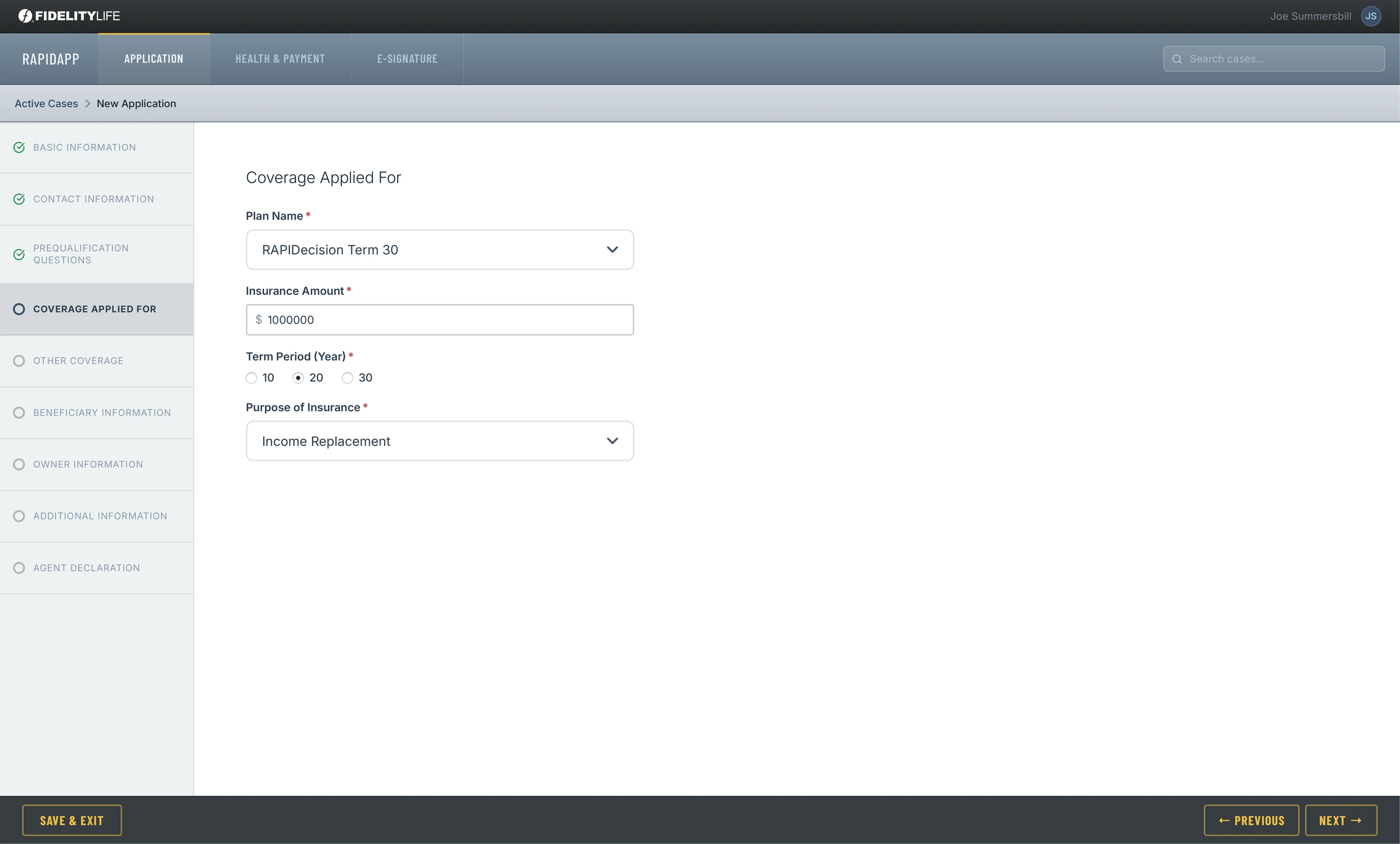
The coverage step translated product selection into concrete application details. Agents could configure the plan, insurance amount, term period, and purpose of insurance in a clean, focused view.
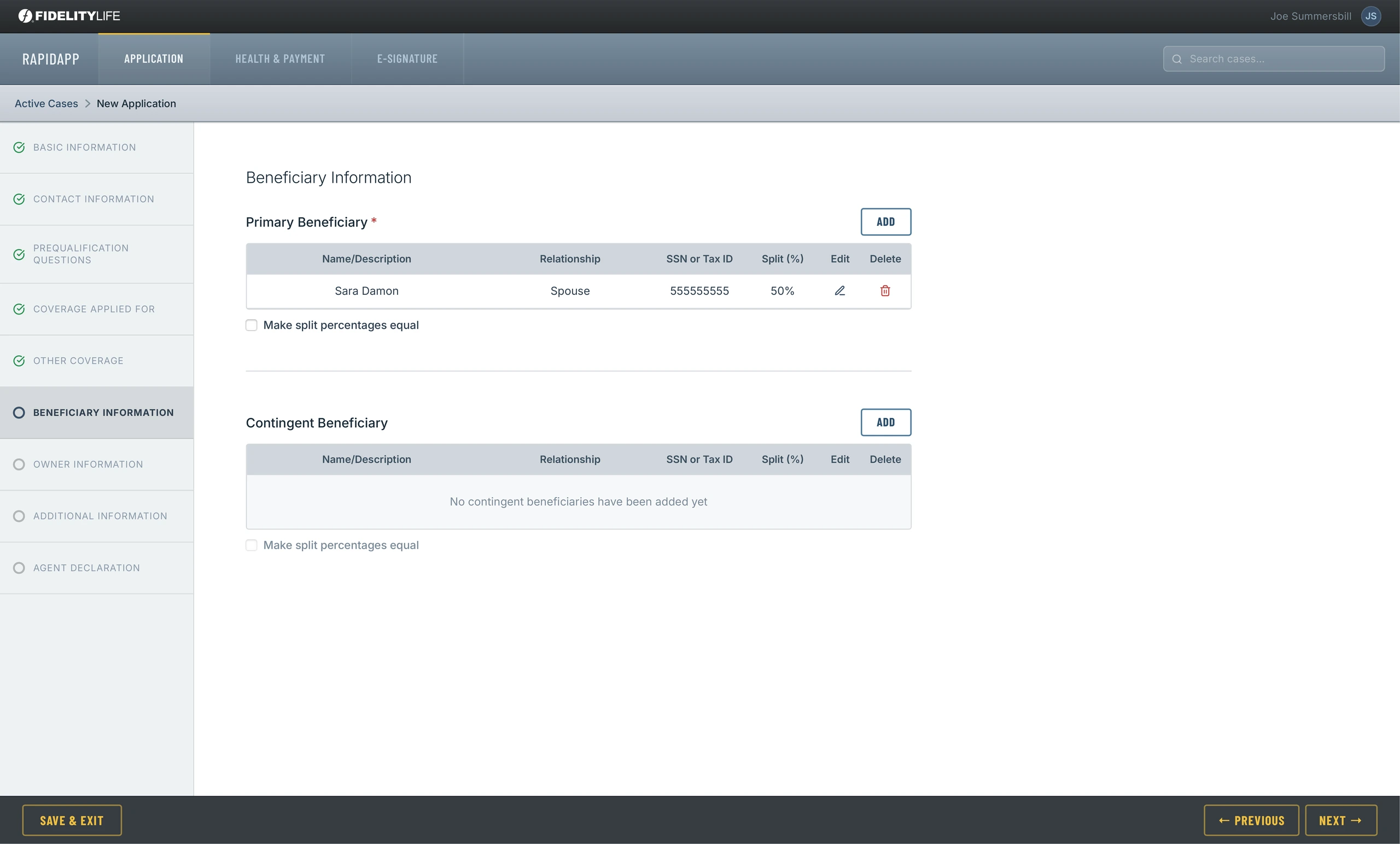
For beneficiary information, I used a table-based pattern with modal entry. This kept the main screen readable while supporting required details like relationship, SSN or tax ID, and split percentage.
Related Projects
Exchange Bidding System
An account management system that clarified user roles, carrier access, and permissions across an...
FinTech
Product-Config - Insurance Builder
A product configuration tool that helped teams build insurance applications without redesigning e...
FinTech
Consumer-Direct - Life Insurance
A direct-to-consumer life insurance experience that helped customers quote, qualify, sign, and su...
FinTech